SDG 13
Climate Action
Rajamangala University of Technology Lanna (RMUTL) | Sustainability Report 2025
SDG 13 Highlights 2025
In 2025, Rajamangala University of Technology Lanna (RMUTL) strengthened climate action through applied research, disaster risk reduction, environmental education, greenhouse gas reduction initiatives, and community partnerships. The university integrated academic expertise with local government cooperation and community engagement to improve climate resilience, support sustainable resource management, and promote practical responses to environmental challenges across Northern Thailand.
Strengthening Flood Preparedness and Climate Resilience. RMUTL Lampang advanced the “Lampang Su Nam” initiative, a participatory flood-management program that integrates water-level information, disaster data, and early-warning mechanisms to support local preparedness and decision-making. The initiative also promoted community-based disaster management through the development of Area Disaster Managers (ADMs), who receive training in weather information, flood-risk mapping, warning systems, and emergency preparedness. These activities strengthened local capacity to understand and respond to climate-related hazards.
Advancing Climate Adaptation through Local Government Partnerships. RMUTL collaborated with Lampang City Municipality, provincial agencies, and local administrative organizations to improve the practical application of flood-management research. In November 2025, researchers and municipal officials discussed integrating disaster information, monitoring systems, and research-based technologies into local flood-response operations. This collaboration demonstrated the university’s role in connecting academic research with public-sector planning and community resilience.
Promoting Greenhouse Gas Reduction and Environmental Awareness. RMUTL Lampang promoted climate awareness through waste separation, recycling, upcycling, and carbon-footprint education. These activities encouraged students and staff to understand the relationship between resource consumption, waste management, and greenhouse gas emissions. One environmental activity received recognition for achieving a greenhouse gas reduction of 1.967 metric tons of carbon dioxide equivalent (tCO₂e), demonstrating the potential of practical environmental initiatives to support climate change mitigation.
Supporting Forest Restoration and Low-Carbon Communities. In June 2025, RMUTL Phitsanulok participated in the “Community Forest Conservation toward a Low-Carbon Society” initiative at Ban Nam Pad Community Forest in Phitsanulok Province. The activity formed part of a collaborative program targeting the planting of 20,000 trees. By bringing together educational institutions, government agencies, private organizations, and local communities, the initiative promoted forest restoration, environmental awareness, and community participation in climate action.
Strengthening Climate Education and Institutional Sustainability. RMUTL integrated climate-related knowledge into community training, environmental learning, and institutional development initiatives. The university also advanced planning related to greenhouse gas measurement, emission reduction, carbon neutrality, and mechanisms such as the Thailand Voluntary Emission Reduction Program (T-VER). These efforts helped establish a foundation for more systematic climate action and future institutional sustainability planning.
Together, these initiatives demonstrate RMUTL’s commitment to addressing climate change through research, education, local government cooperation, and community engagement. By combining disaster preparedness, greenhouse gas reduction, forest conservation, and climate-related capacity building, the university supports more resilient communities and the transition toward sustainable, low-carbon development.
Strengthening Climate Resilience through Education, Disaster Preparedness and Community Partnership
Rajamangala University of Technology Lanna (RMUTL) advances SDG13 through an area-based approach that connects applied research, environmental education, disaster-risk reduction, technological innovation and collaboration with local authorities and communities. Across Northern Thailand, the University uses its academic and technical expertise to strengthen community capacity to understand climate-related risks, prepare for extreme events, and apply practical solutions that improve local resilience.
A major focus of RMUTL’s climate action is flood-risk management in Lampang Province. RMUTL Lampang has developed the “Lampang Su Nam” initiative as part of a participatory research program on flood-disaster management. The work integrates disaster information from multiple agencies into a common platform and provides practical information such as water quantity, water levels and warning information for timely decision-making. The program also develops locally appropriate innovations and knowledge materials to support communities before, during and after flood events.
Community education is embedded in this work. Through the development of Area Disaster Managers (ADM), RMUTL helps build local leaders who can interpret weather and rainfall information, understand flood scenarios, prepare community disaster maps, connect warning systems with local response plans and participate in disaster exercises. This approach turns research outputs into practical learning processes that help communities learn, prepare, adapt and reduce potential losses to property, livelihoods and quality of life.
RMUTL also works directly with local government on cooperative planning for climate-related disasters. The Lampang research team has collaborated with Lampang City Municipality, provincial agencies, local administrative organizations and disaster-prevention personnel to discuss how research findings and technology can be integrated into operational flood-management systems. The collaboration includes the integration of disaster data, coordination of management mechanisms, analysis of response arrangements and the practical use of research outputs to improve preparedness and response.
The University’s role extends beyond producing information to supporting government decision-making. Through the Lampang flood platform and related research, RMUTL provides knowledge, data and technology that can strengthen monitoring, early warning and flood response. In November 2025, the research team and Lampang City Municipality discussed the integration of disaster information and management systems so that research results could be applied in real operational settings. This illustrates RMUTL’s role as a regional knowledge partner linking academic research with public-sector climate resilience.
RMUTL’s climate-related activities also include mitigation-oriented environmental education. Waste separation, carbon-footprint learning, recycling and upcycling activities at RMUTL Lampang have been used to connect everyday environmental practices with greenhouse-gas reduction. One activity received recognition for a greenhouse-gas reduction of 1.967 tCO₂e, providing a practical example of how environmental education can link resource management with climate mitigation.
RMUTL’s mitigation-oriented climate action also extends to community forest restoration. In June 2025, RMUTL Phitsanulok participated in the ‘Community Forest Conservation toward a Low-Carbon Society’ initiative at Ban Nam Pad Community Forest, Phitsanulok, as part of a 20,000-tree planting programme. The activity promoted forest conservation and restoration alongside greenhouse-gas reduction and brought together government, private-sector, civil-society and educational partners. It also strengthened environmental awareness and university-community participation in climate action.
Beyond disaster management, RMUTL works with external partners on clean energy and environmental challenges in highland communities. In January 2026, RMUTL’s Clean Energy Research Center and the Royal Project supporting program worked with the Electricity Generating Authority of Thailand (EGAT) in Wat Chan Hospital and Royal Project areas. The field work examined energy management, biomass management to reduce open burning, air-pollution and PM2.5 reduction, cleaner energy systems and longer-term energy security. These activities demonstrate a broader regional partnership model in which university research and academic services are applied to real environmental and community needs.
RMUTL is also developing institutional work related to carbon neutrality, including university-level indicators on progress toward carbon neutrality and activities associated with greenhouse-gas reduction mechanisms such as the Thailand Voluntary Emission Reduction Program (T-VER). Publicly available evidence reviewed for this report demonstrates active institutional direction in this area, although a publicly stated carbon-neutral target year covering the required emissions scopes was not identified in the reviewed evidence. Accordingly, this report presents these activities as evidence of ongoing institutional development rather than as confirmation of a completed carbon-neutral commitment under the THE methodology.
Overall, RMUTL’s contribution to SDG13 is strongest where climate knowledge is translated into place-based action. The Lampang flood-management program demonstrates how education, applied research, local capacity building, government collaboration, monitoring and early-warning systems can be integrated to strengthen climate resilience. Complementary work on greenhouse-gas education, clean energy, biomass management and environmental partnerships broadens this contribution from disaster preparedness toward a more comprehensive regional approach to climate action.
Activity and Evidence Highlights
The most significant contribution of Rajamangala University of Technology Lanna (RMUTL) to Sustainable Development Goal 13 is its implementation of strategic frameworks for greenhouse gas (GHG) measurement, planning, emission reduction, and climate impact management. These efforts demonstrate the University’s commitment to reducing GHG emissions while strengthening its evidence base for future submissions to the Times Higher Education (THE) Impact Rankings. Moving forward, RMUTL will continue to develop and strengthen its institutional plans, with clearer targets and implementation frameworks to support effective climate action and long-term sustainability
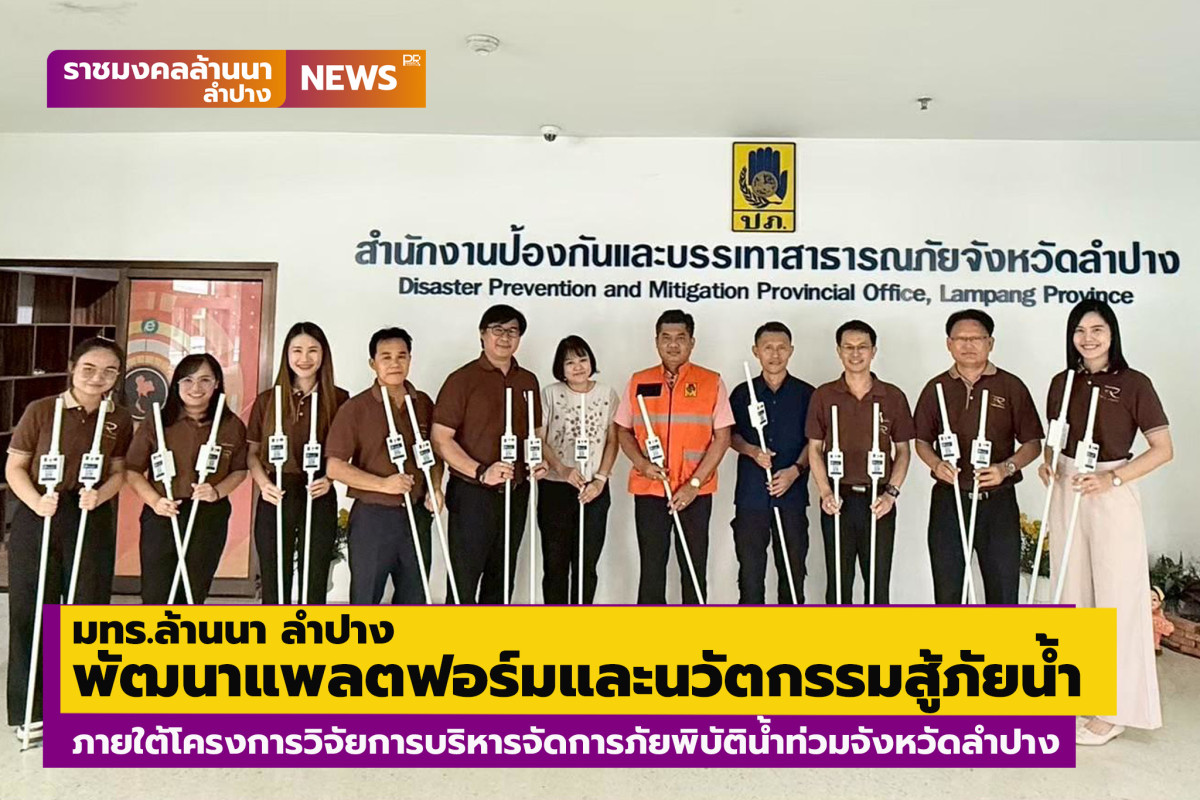
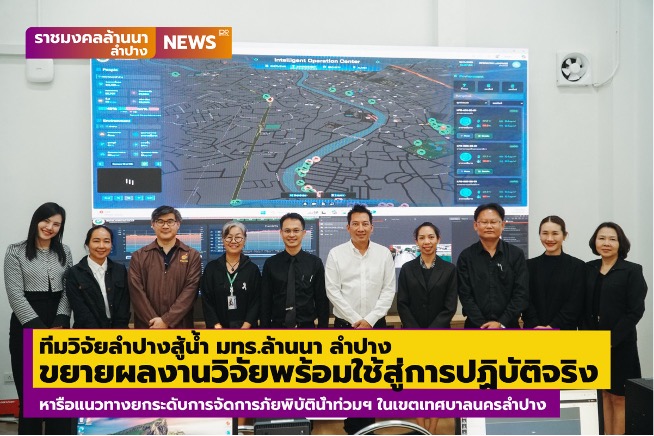
Lampang Su Nam Flood-Management Platform
RMUTL Lampang developed a participatory flood-disaster management platform integrating water and disaster information, warning information and community-oriented innovations. The project is designed to help local people learn, prepare, adapt and reduce flood impacts.
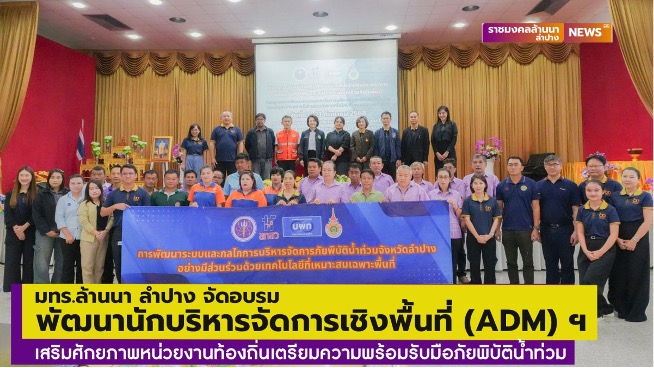
Area Disaster Manager (ADM) Capacity Building
Training and local capacity development support community-based disaster management, including interpretation of rainfall and weather information, flood-scenario exercises, community disaster mapping, warning-system design and preparedness drills.
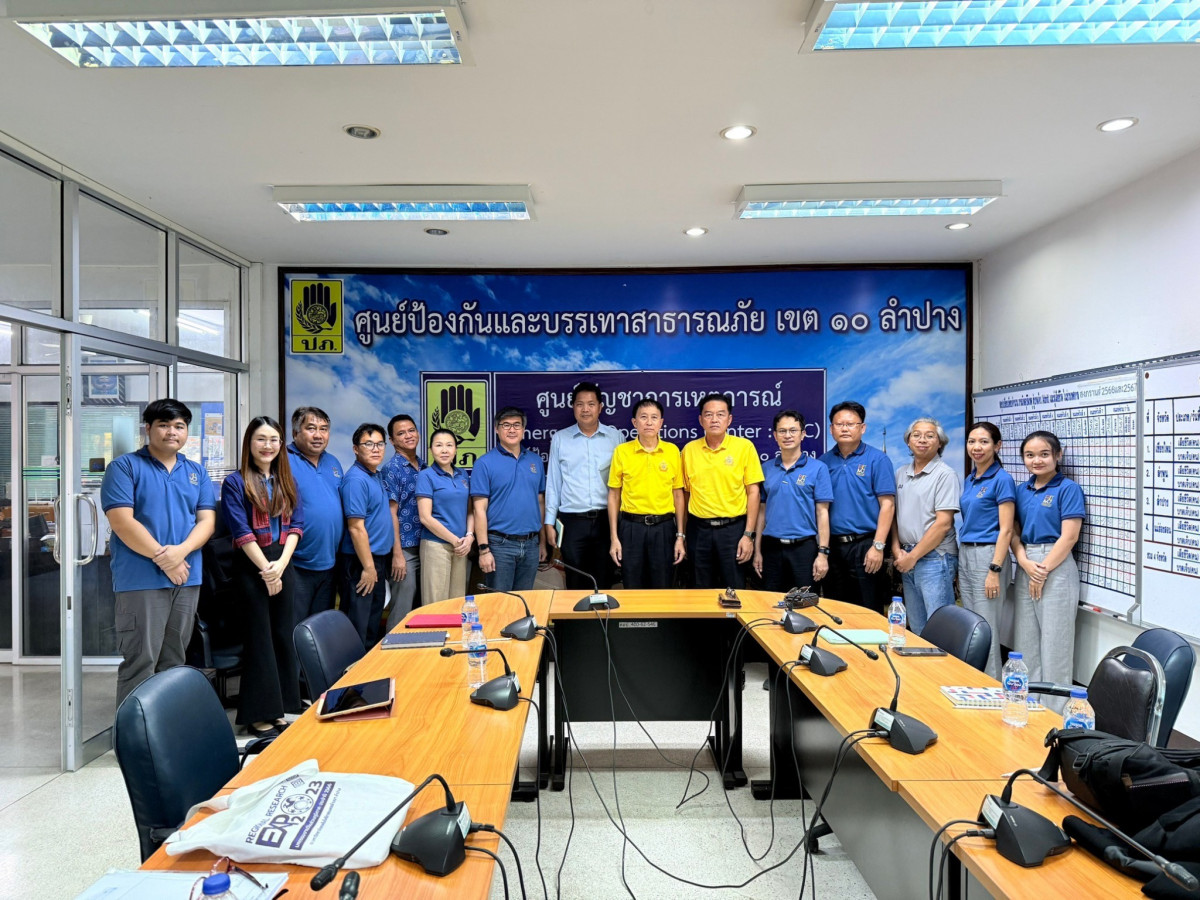
Co-operative Planning with Lampang City Municipality
RMUTL researchers and municipal officials jointly considered how disaster data, management systems and research outputs could be integrated into practical monitoring and flood-response arrangements.
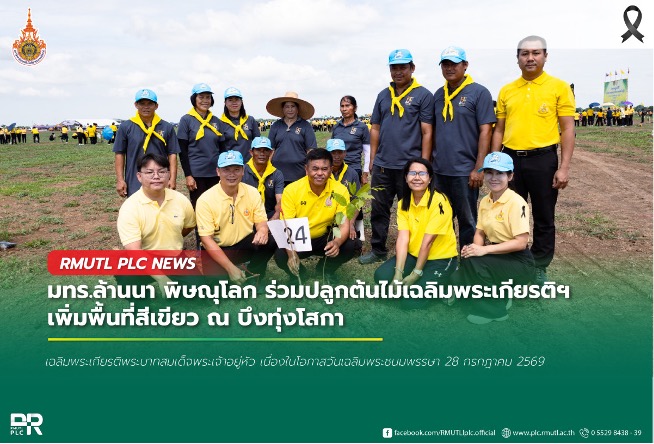
Community Forest Restoration for a Low-Carbon Society
RMUTL Phitsanulok joined a 20,000-tree planting initiative at Ban Nam Pad Community Forest to promote forest conservation and restoration alongside greenhouse-gas reduction, environmental awareness and cross-sector participation.
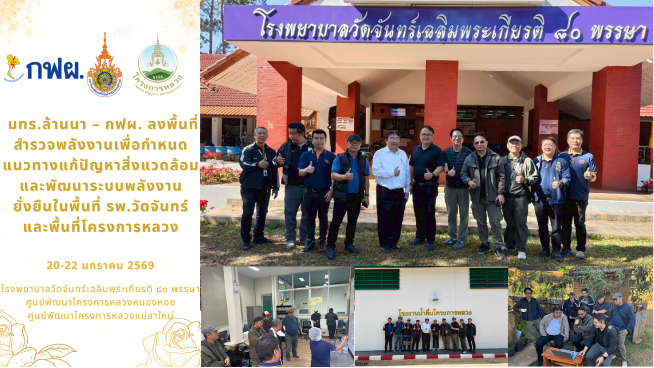
Clean Energy and Environmental Partnership with EGAT
RMUTL and EGAT conducted field work in Wat Chan Hospital and Royal Project areas on energy management, biomass management, reduction of open burning and PM2.5, cleaner energy and energy security.
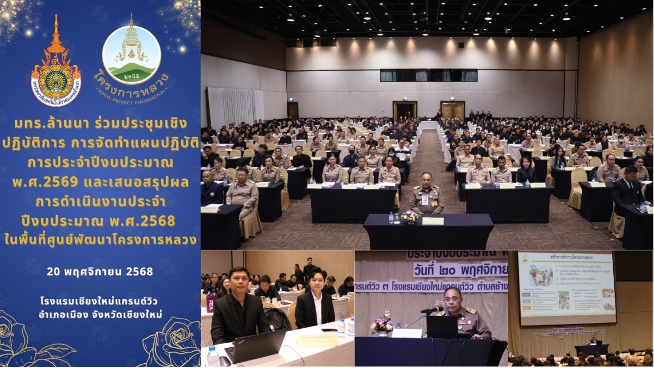
Environmental Action Planning with the Royal Project Network
RMUTL joined the Royal Project Foundation and partner agencies in developing an annual action plan for Royal Project development-center areas, including environmental and sustainable highland-development work. This is retained as supporting partnership evidence and is not treated as automatic proof of climate adaptation.
Moving Forward
Advancing Climate Resilience and Low-Carbon Development
RMUTL aims to strengthen its long-term commitment to climate action by integrating climate change adaptation, greenhouse gas reduction, disaster preparedness, and environmental innovation into university operations and community development. Building on its existing flood-management initiatives, environmental education programs, and partnerships with local authorities, the university will focus on developing measurable and sustainable approaches to climate resilience.
1. Strengthening Community-Based Climate Adaptation and Disaster Preparedness. RMUTL will continue developing the Lampang Su Nam flood-management initiative and supporting community-based disaster preparedness. Greater emphasis will be placed on improving early-warning information, community risk assessments, disaster mapping, and the practical application of research findings to strengthen local preparedness and response capabilities.
2. Advancing Greenhouse Gas Monitoring and Carbon Reduction. The university will strengthen institutional greenhouse gas accounting, establish clearer emission reduction targets, and develop systematic approaches to monitoring progress toward carbon neutrality. These efforts will support evidence-based climate planning and encourage the adoption of appropriate greenhouse gas reduction mechanisms, including T-VER where applicable.
3. Promoting Resource Efficiency and Low-Carbon Campus Practices. RMUTL will expand environmental awareness and practical initiatives related to energy efficiency, waste reduction, recycling, and sustainable resource management. Greater integration of climate education into campus operations will encourage students and staff to participate in reducing environmental impacts and adopting more sustainable daily practices.
4. Expanding Forest Conservation and Nature-Based Climate Solutions. RMUTL will strengthen collaboration with government agencies, community organizations, and environmental partners to promote forest restoration and nature-based approaches to climate mitigation and adaptation. Future activities will place greater emphasis on monitoring restoration outcomes, community participation, and the long-term environmental benefits of conservation initiatives.
5. Strengthening Climate Partnerships and Long-Term Impact Assessment. The university will deepen collaboration with local governments, research organizations, public agencies, and communities to support climate-related research, technology transfer, and capacity development. Improved monitoring of project outcomes, greenhouse gas reductions, disaster preparedness, and community resilience will help guide future planning and strengthen institutional accountability.
Through these priorities, RMUTL seeks to establish a more integrated and sustainable approach to climate action that connects research, institutional management, and community development. By improving climate-related monitoring, strengthening local preparedness, and promoting low-carbon practices, the university aims to reduce environmental risks, enhance regional resilience, and contribute to sustainable development over the long term.