SDG 12
Responsible Consumption and Production
Rajamangala University of Technology Lanna (RMUTL) | Sustainability Report 2025
SDG 12 Highlights 2025
In 2025, Rajamangala University of Technology Lanna (RMUTL) promoted responsible consumption and sustainable resource management through waste reduction, recycling, digital innovation, and environmental education. The university integrated practical waste management initiatives with student participation, industry partnerships, and institutional sustainability efforts to encourage resource efficiency and support the development of a circular economy.
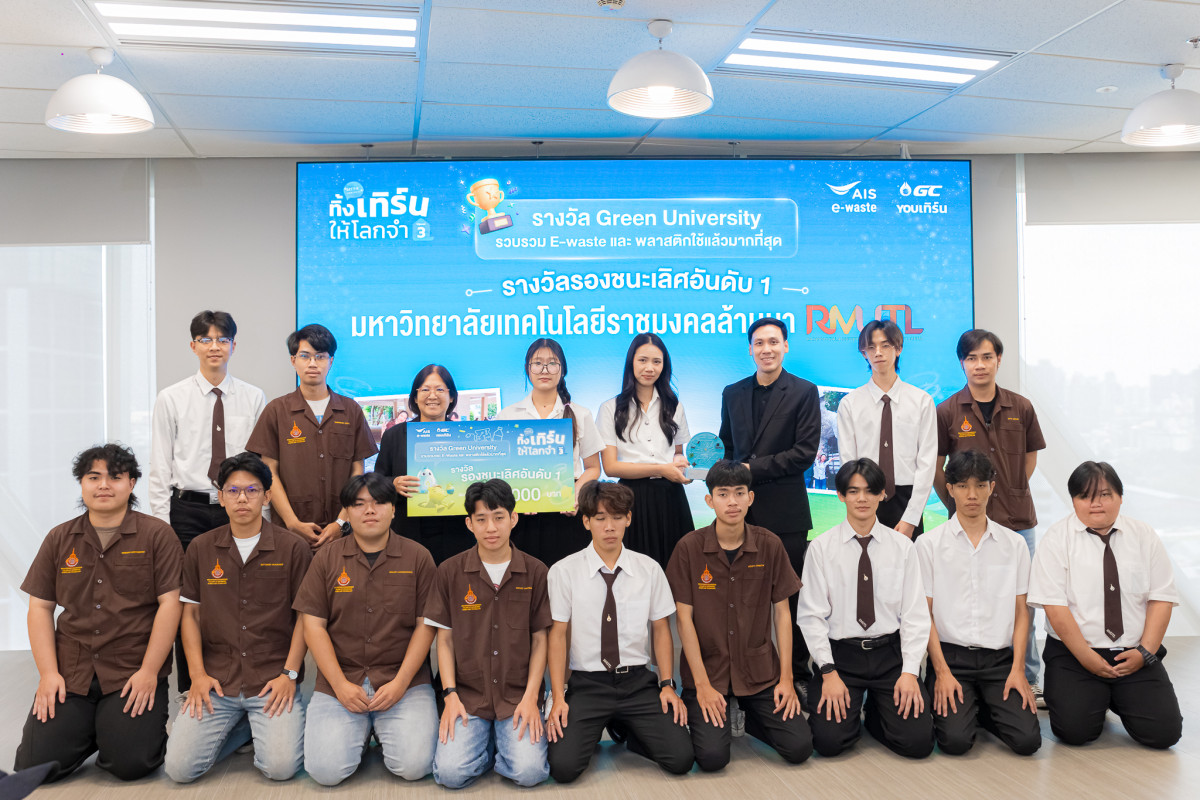
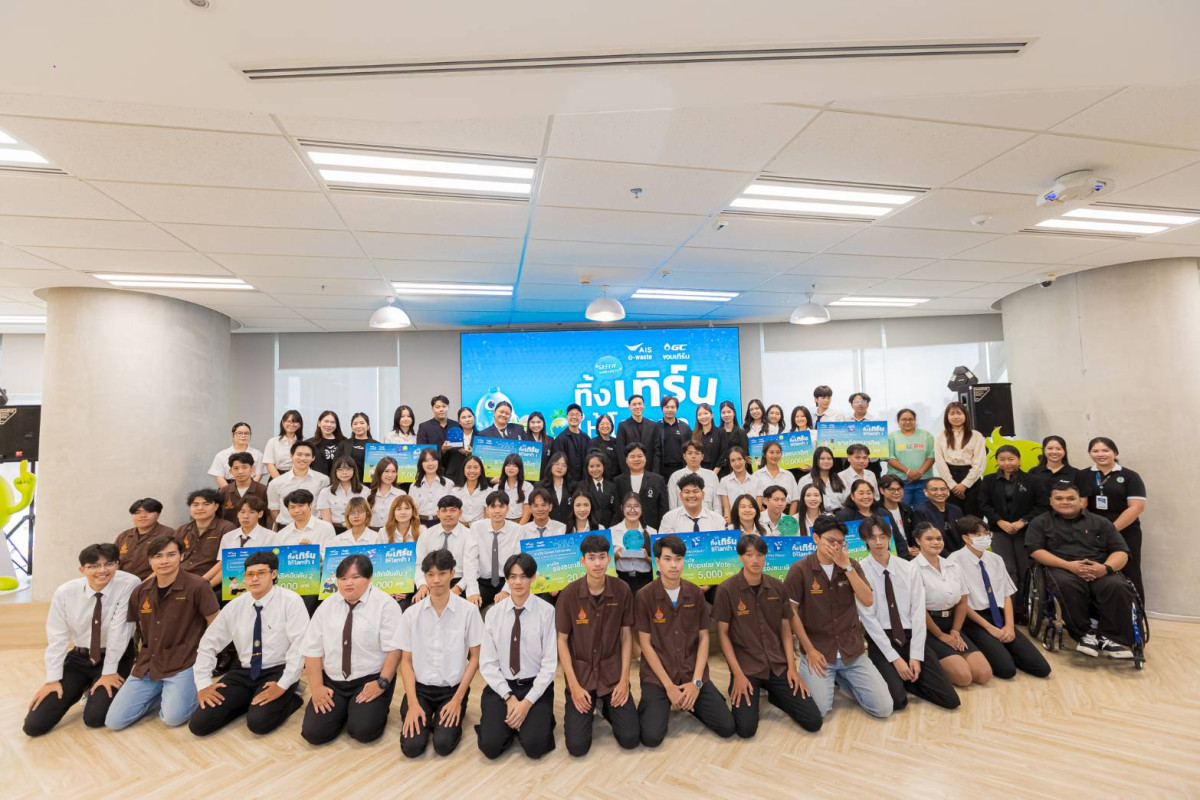
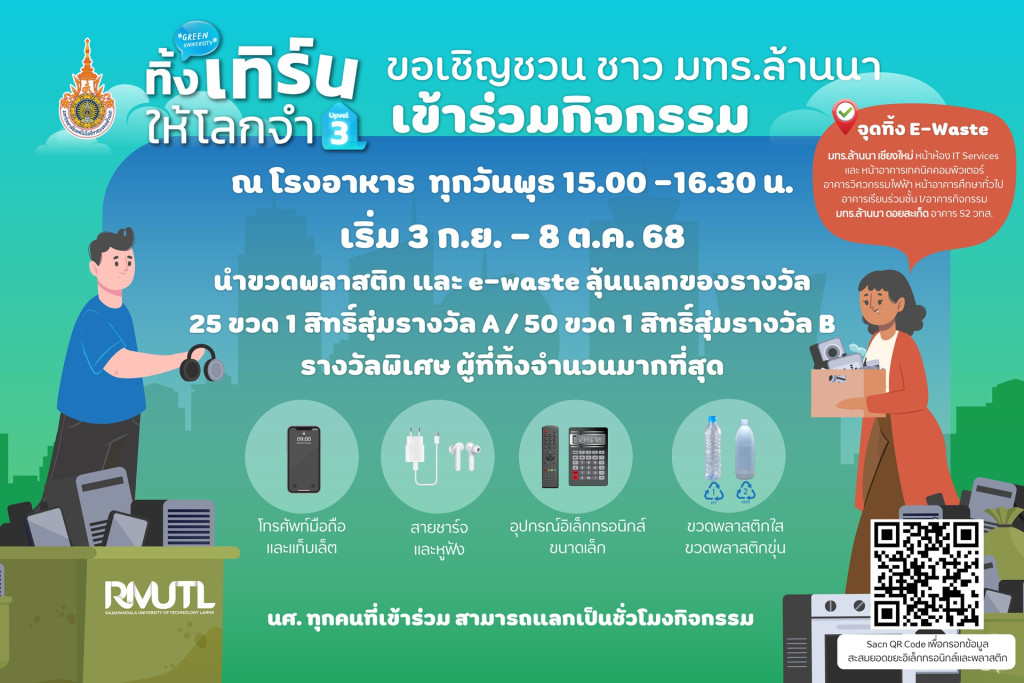
Promoting Waste Separation and Recycling through Green University Initiatives. RMUTL collaborated with Advanced Info Service (AIS) and PTT Global Chemical (PTT GC) through the “Ting Turn Hai Lok Jam” Green University campaign. Collection points for plastic bottles and electronic waste were established at multiple university locations in Chiang Mai and Doi Saket. Reward-based recycling activities encouraged students and staff to participate in waste separation and resource recovery. In November 2025, RMUTL received first runner-up recognition in the Green University campaign, reflecting its active participation in promoting environmentally responsible behavior.
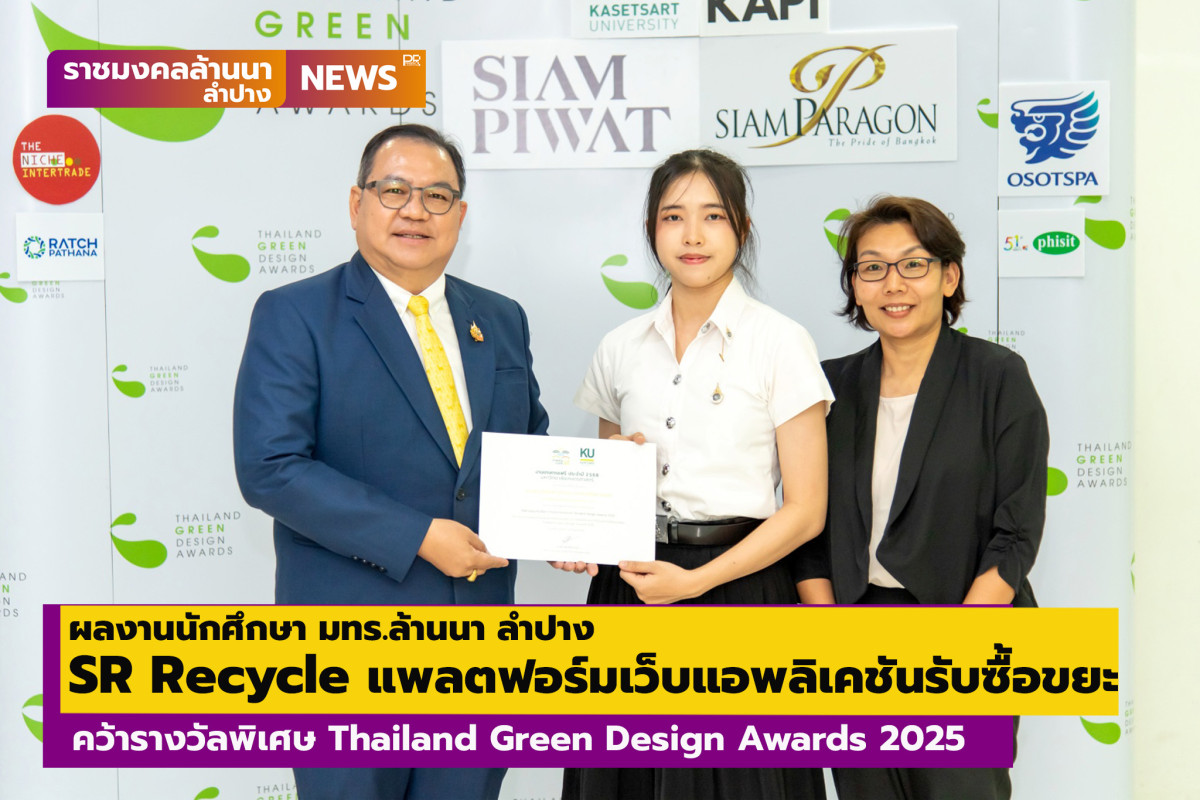
Advancing Digital Innovation for Circular Waste Management. Students at RMUTL Lampang developed SR Recycle, a web-based platform designed to improve recyclable waste collection and management. The system integrates LINE Official Account registration, QR code scanning, waste separation information, and reward points to encourage recycling participation. Piloted at RMUTL Lampang, the platform demonstrates how digital technology can make waste management more accessible and support community participation. In February 2025, SR Recycle received a special award at the Thailand Green Design Awards 2025.
Reducing Environmental Impacts through Recycling and Upcycling. RMUTL Lampang implemented waste separation and resource recovery activities based on the 3R principles of Reduce, Reuse, and Recycle. Recycling and upcycling activities conducted between May and October 2025 achieved a certified greenhouse gas reduction of 1.967 metric tons of carbon dioxide equivalent (tCO₂e). These efforts demonstrate the potential of campus-based waste management practices to reduce environmental impacts and promote more efficient resource use.
Strengthening Sustainable Campus Operations and Green Office Development. RMUTL incorporated waste management into its broader Green University and Green Office initiatives. Campus activities encouraged waste separation at the source, recycling, and greater environmental awareness among students and staff. Institutional planning also identified opportunities to develop more consistent waste management practices across university campuses and administrative units, providing a foundation for more systematic and sustainable resource management.
Enhancing Institutional Capacity for Sustainability Reporting. From October 28 to 31, 2025, RMUTL organized a sustainability reporting workshop based on the Times Higher Education (THE) Sustainability Impact Ratings framework. Personnel from different university units participated in training and knowledge exchange to strengthen institutional capacity for sustainability data collection, monitoring, and reporting. The initiative supported more coordinated approaches to documenting environmental performance and improving evidence-based sustainability management.
Together, these initiatives demonstrate RMUTL’s commitment to integrating responsible consumption into university operations, education, technological innovation, and community engagement. By promoting waste separation, recycling, digital resource management, and institutional sustainability practices, the university contributes to reducing environmental impacts and developing a more resource-efficient and sustainable campus environment.
Advancing Responsible Consumption through Waste Reduction, Recycling and Sustainable Resource Management
Rajamangala University of Technology Lanna (RMUTL) contributes to SDG12 through practical waste-management activities, recycling initiatives, environmental education and the development of digital tools that encourage more responsible use of resources. Across its campuses and units, the University has promoted waste separation, recycling, reuse and participation by students and staff as part of its broader Green University and Green Office activities.
“Ting Turn Hai Lok Jam” Green University campaign.
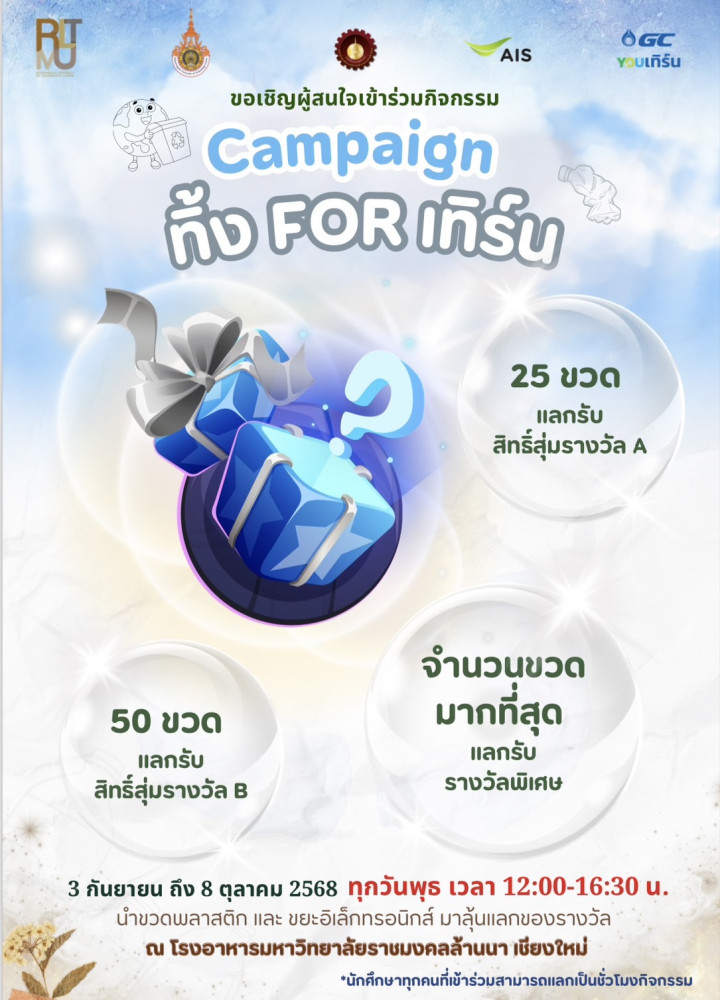
A visible component of RMUTL’s work is the “Ting Turn Hai Lok Jam” Green University campaign. In 2025, RMUTL worked with AIS and PTT Global Chemical (PTT GC) to encourage students, staff and communities to manage waste correctly and sustainably. Collection points for plastic bottles and electronic waste were installed at multiple university locations in Chiang Mai and Doi Saket, including the canteen, academic buildings, student activity facilities and the library. The campaign also used a reward-based activity to encourage students to return plastic bottles for recycling. The University’s participation in this campaign demonstrates how waste separation and resource recovery can be incorporated into everyday campus life. In November 2025, RMUTL received first runner-up recognition in the Green University “Ting Turn Hai Lok Jam” program. The reported activities included collection points for used plastic and e-waste, regular student participation activities and environmental communication intended to strengthen a culture of waste separation and circular use of resources.
RMUTL also supports innovation in recycling through student-led technology. At RMUTL Lampang, students developed “SR Recycle”, a web-application platform for recyclable-waste purchasing and management. The platform was designed in response to practical barriers such as limited waste separation, lack of knowledge and insufficient incentives. Users can register through Line Official, receive information on waste separation, bring recyclable materials to collection points, scan QR codes and accumulate points. The system can also support management of waste types, purchasing conditions and reward points at collection locations.
SR Recycle has been piloted within RMUTL Lampang and was designed so that it can be expanded to communities, educational institutions and other organizations. The platform promotes reuse and recycling while using accessible digital technology to make participation easier. In February 2025, the project received a special award at the Thailand Green Design Awards 2025, illustrating how student innovation can connect digital technology with responsible resource management and environmental awareness.
At campus level, RMUTL Lampang has also implemented source-separation activities based on the 3R principles of Reduce, Reuse and Recycle. The University’s reviewed evidence records recycling and upcycling activities and reports that activities conducted between May and October 2025 received certification for greenhouse-gas reduction of 1.967 tCO2e. These activities provide practical examples of how waste management, resource recovery and environmental learning can be linked with wider sustainability outcomes. Institutionally, RMUTL has identified waste management as an element of its Green Office development. University planning evidence reviewed for this report refers to Green Office implementation and the potential development of a common approach across RMUTL areas, with waste management included among the operational components. This provides an institutional context for the campus activities described above.
RMUTL is also strengthening its capacity to document and communicate sustainability performance. From 28 to 31 October 2025, the University organized a workshop on preparation of the 2025 Sustainability Report under the Times Higher Education Sustainability Impact Ratings framework. Personnel from different university units participated in learning and exchanging approaches for sustainability reporting. The activity supports institutional capacity for sustainability monitoring and reporting; however, the workshop itself is not treated in this report as evidence that a qualifying Sustainability Report for the THE 2020–2024 reference period had already been publicly published. The available evidence therefore demonstrates active RMUTL engagement in waste separation, recycling, e-waste collection, resource-recovery innovation, Green Office development and sustainability capacity building. At the same time, the reviewed public evidence does not establish all policy and quantitative requirements used by the THE Sustainability Impact Ratings 2026. In particular, the reviewed evidence does not confirm an ethical sourcing policy, a plastic- or disposable-item minimisation policy meeting the specified reference-year requirement, university-wide 2024 figures for waste generated, recycled and sent to landfill, or a qualifying publicly available Sustainability Report for the required reference period. These limitations are retained explicitly so that operational activities are not presented as policies or measurements that the available evidence does not support.
Overall, RMUTL’s contribution to SDG12 is most clearly demonstrated through practical participation and innovation: providing collection channels for recyclable and electronic waste, engaging students in waste separation, developing the SR Recycle digital platform, applying 3R approaches and building institutional knowledge for sustainability reporting. Together, these activities show a developing responsible-consumption ecosystem that connects campus operations, student innovation, environmental education and collaboration with external partners.
Moving Forward
Advancing Circular Economy Practices and Sustainable Resource Management
RMUTL aims to strengthen its commitment to responsible consumption and production by integrating waste reduction, recycling, resource efficiency, and circular economy principles into university operations and community engagement. Building on its existing Green University initiatives, student-led innovations, and environmental partnerships, the university will focus on developing more systematic and measurable approaches to sustainable resource management.
1. Strengthening University-Wide Waste Management and Reduction. RMUTL will work toward establishing more consistent waste management practices across its six campus areas, with greater emphasis on waste separation at the source, recycling, and reducing waste sent to landfills. The university will seek to strengthen the collection of waste management data to monitor waste generation, recycling performance, and opportunities for improvement.
2. Expanding Digital Innovation and Circular Economy Solutions. The university will build on the development of the SR Recycle platform and other student-led innovations to improve recyclable waste collection and participation. Opportunities to expand digital waste management systems to additional campuses, educational institutions, and local communities will be explored to support wider adoption of circular economy practices.
3. Promoting Responsible Procurement and Reducing Single-Use Materials. RMUTL will seek to strengthen institutional policies and practices that encourage responsible purchasing, efficient resource use, and the reduction of single-use plastics and disposable materials. Greater consideration will be given to environmentally responsible products, reusable alternatives, and sustainable consumption practices in university operations.
4. Strengthening Environmental Awareness and Community Participation. RMUTL will continue promoting environmental education, student engagement, and practical activities based on the 3R principles of Reduce, Reuse, and Recycle. Collaboration with industry partners, local authorities, and communities will support knowledge exchange and encourage sustainable waste management practices beyond university campuses.
5. Improving Sustainability Monitoring and Institutional Reporting. The university will strengthen sustainability data collection, documentation, and reporting across its campuses and administrative units. Greater emphasis will be placed on developing reliable indicators for waste generation, recycling, resource efficiency, and environmental performance. These improvements will support evidence-based planning, institutional accountability, and continuous evaluation of sustainability initiatives.
Through these priorities, RMUTL seeks to develop a more integrated and sustainable resource management system that connects campus operations, technological innovation, environmental education, and community participation. By reducing waste, improving resource efficiency, and strengthening institutional monitoring, the university aims to promote responsible consumption, support circular economy development, and contribute to long-term environmental sustainability.