SDG 6
Clean Water and Sanitation
Rajamangala University of Technology Lanna (RMUTL) | Sustainability Report 2025
SDG 6 Highlights 2025
In 2025, Rajamangala University of Technology Lanna (RMUTL) promoted access to clean water, improved wastewater management, and supported the sustainable use of water resources through applied research, technology transfer, and community partnerships. The university integrated engineering expertise, environmental innovation, and academic services to improve water quality, reduce pollution, and strengthen the capacity of communities and local enterprises to manage water resources sustainably.
Expanding Access to Safe Drinking Water in Highland Communities. RMUTL transferred its Hydro Pure clean-water production technology to highland communities through practical training and community-based learning. In October 2025, the university conducted training at the Phra Bat Huai Tom Royal Project Development Center in Lamphun Province, covering water filtration, reverse osmosis (RO), ultraviolet (UV) treatment, and household drinking-water production. The initiative strengthened local knowledge of water treatment and supported access to safer drinking water in remote communities.
Improving Wastewater Treatment and Resource Efficiency. RMUTL supported wastewater-treatment improvements at two livestock farms in Fang District, Chiang Mai Province, through the Innovation and Technology Assistance Program (ITAP). The projects focused on improving anaerobic wastewater-treatment systems, reducing pollution and odors, and recovering biogas for energy use. Following system improvements, the two farms reported a combined annual increase of 17,290 cubic meters in biogas production, with estimated energy cost savings of THB 224,285 per year. These results demonstrate the potential of integrating wastewater management with renewable energy recovery and more resource-efficient livestock production.
Providing Emergency Drinking Water to Flood-Affected Communities. In July 2025, RMUTL Chiang Rai Campus delivered 2,000 bottles of drinking water through local rescue and emergency medical service networks to support residents affected by flooding in Thoeng District, Chiang Rai Province. The initiative helped address immediate drinking-water needs during the emergency and demonstrated the university’s cooperation with local organizations in disaster response and community assistance.
Strengthening Technical Knowledge and Community Partnerships. RMUTL collaborated with government agencies, technical experts, agricultural enterprises, and local communities to promote practical water management solutions. Activities combined technical consultation, water-treatment training, and the application of appropriate technologies to address local environmental and public health needs. These partnerships supported knowledge exchange, strengthened local technical capacity, and encouraged more sustainable water management practices.
Together, these initiatives demonstrate RMUTL’s commitment to improving clean-water access and environmental sustainability through education, research, technology transfer, and community engagement. By connecting water-treatment technologies with resource recovery, disaster assistance, and local capacity development, the university contributes to healthier communities and more resilient water management systems.
Hydro Pure Training on Clean Drinking-Water Production
for Highland Communities in Lamphun
Through research, teaching, stewardship, and community outreach, RMUTL promotes access to safe drinking water, improves wastewater treatment, reduces water pollution, and encourages the sustainable management of water resources. Key initiatives include improving wastewater-treatment systems and biogas utilization in livestock farming, transferring Hydro Pure water-filtration technology to remote and highland communities, providing clean drinking water during emergencies, and delivering practical training on water quality, monitoring, and treatment. By integrating technical expertise, innovation, education, and collaboration with government agencies and local communities, RMUTL contributes to improving environmental sustainability, strengthening community capacity, and enhancing public health and quality of life.
From 27 to 29 October 2025, RMUTL, through its Community Technology Transfer Institute, conducted an academic-service activity under the Hydro Pure: Clean Drinking-Water Production System for Communities project at the Phra Bat Huai Tom Royal Project Development Center in Li District, Lamphun Province. The initiative aimed to promote knowledge of clean drinking-water production, improve hygiene, and enhance the quality of life of highland communities.
The workshop combined theoretical instruction and practical training on water filtration, reverse osmosis (RO), ultraviolet (UV) treatment, and household drinking-water production. University lecturers, researchers, technicians, and students shared their expertise and provided guidance to community members. The activity reflects RMUTL’s commitment to transferring appropriate technologies to remote communities and promoting sustainable access to clean water.
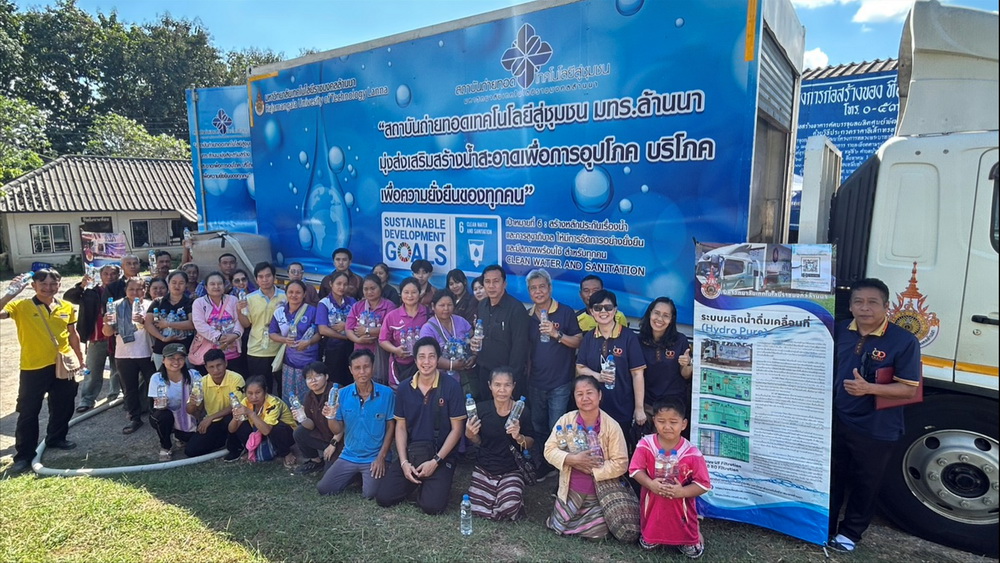
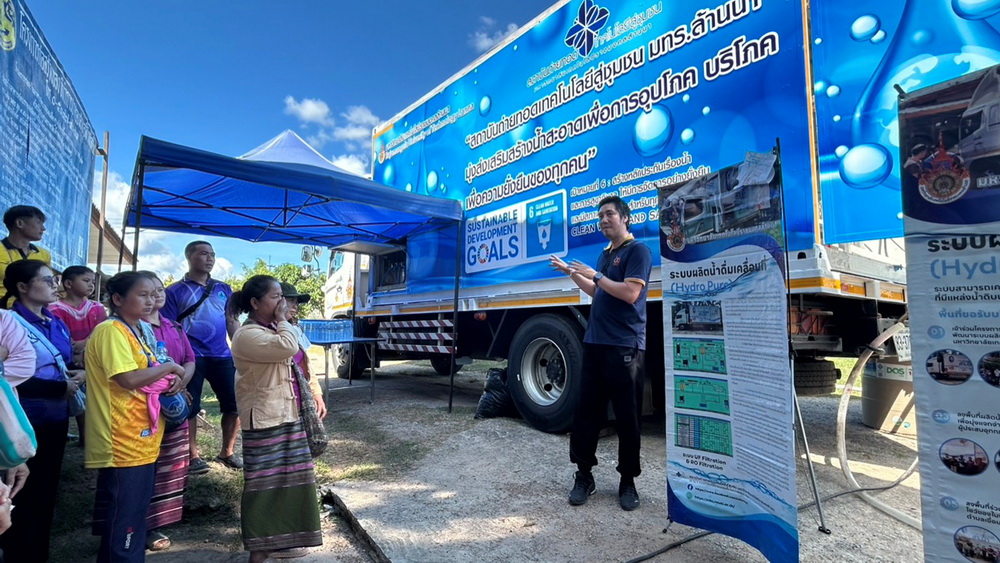
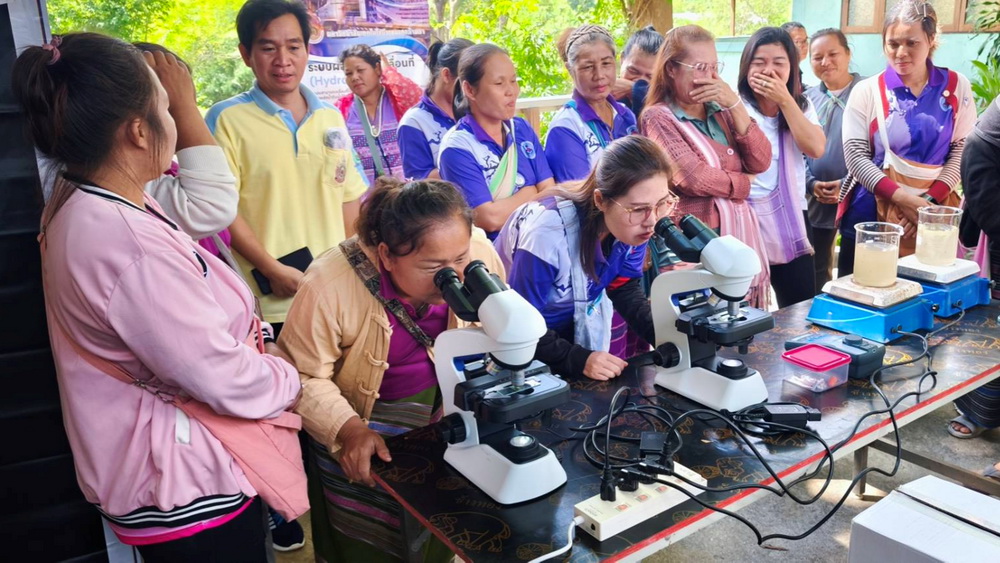
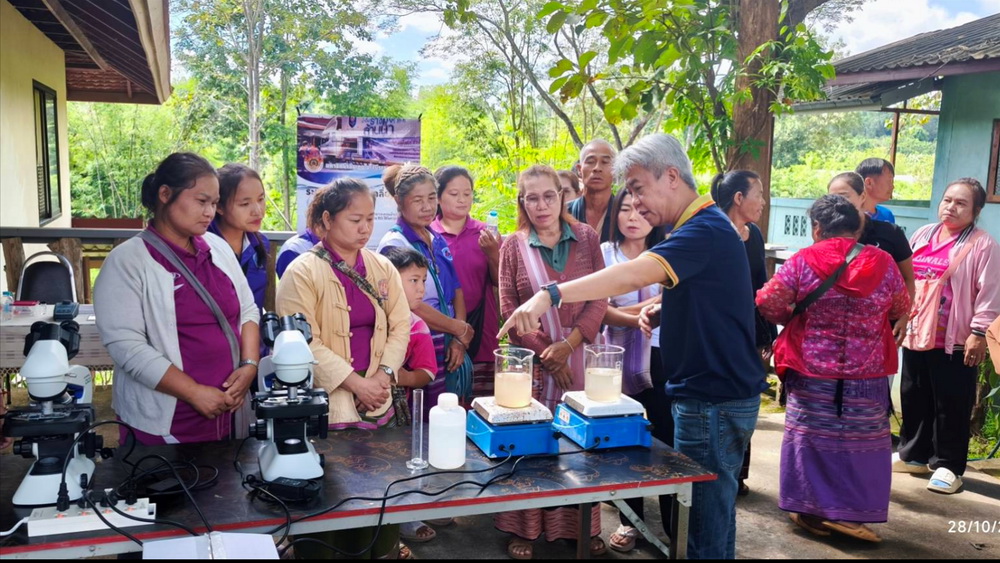
Hydro Pure Training on Clean Drinking-Water Production
ITAP Wastewater Treatment Improvement at Pig Farms:
Pollution Reduction, Biogas Utilization, and Sustainable Livestock Production
RMUTL, through its SPU Strategy Group and as a network partner of the Innovation and Technology Assistance Program (ITAP), conducted project-closing assessments on 22–23 December 2025 for wastewater-treatment improvement projects at Tipyawann Trading and Phuangthong Farm in Fang District, Chiang Mai Province. The projects were implemented under a regional industrial upgrading and consultancy initiative for 2024–2025 to improve wastewater management in livestock operations.
The projects aimed to enhance anaerobic wastewater-treatment systems to reduce water pollution, unpleasant odors, and adverse environmental impacts. They also focused on utilizing the biogas generated to power ventilation fans, thereby reducing reliance on conventional fuels, lowering energy costs, and mitigating greenhouse-gas emissions. Technical consultation and system-development work was led by Thanadej Theerasunthornkul of Chiang Mai University’s Nakornping Energy Research and Development Institute, while Assistant Professor Kittikorn Sasujit of Maejo University served as an expert evaluator, reviewing project outcomes and providing recommendations for further development.
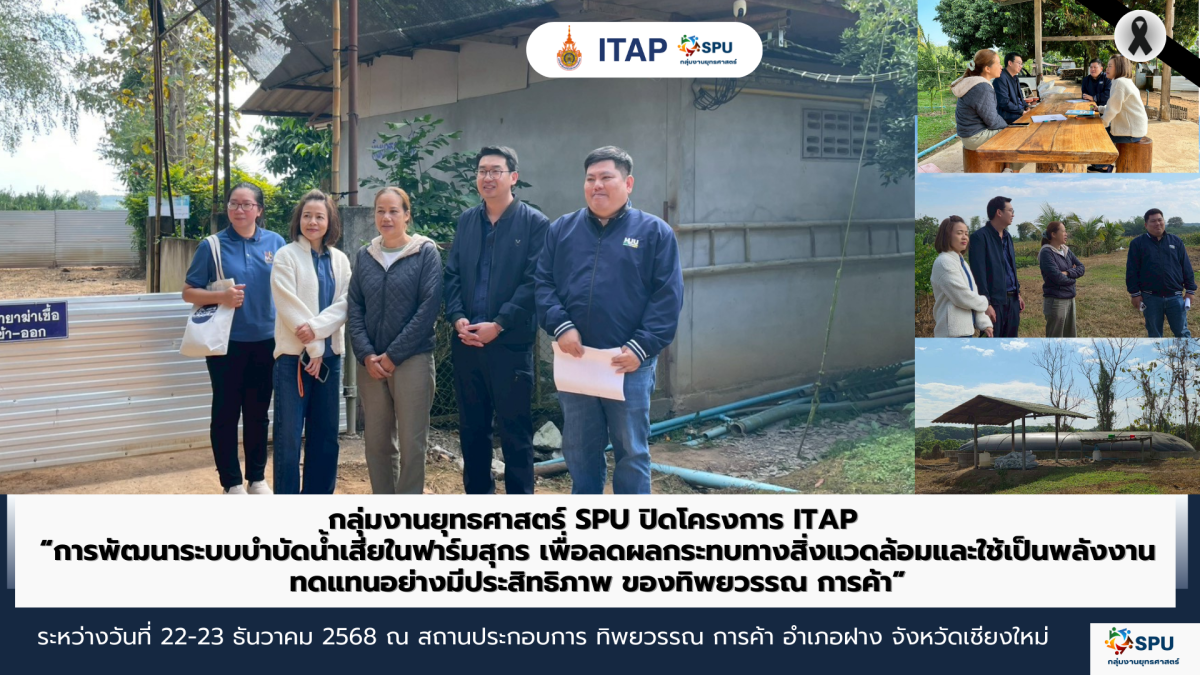
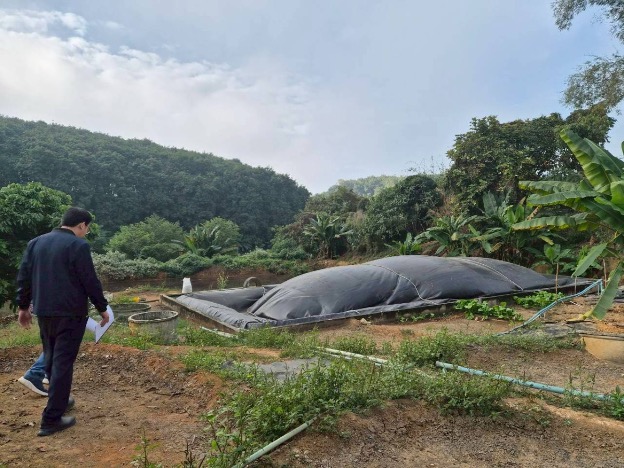
At Phuangthong Farm, improvements enabled annual livestock capacity to increase by 720 animals, from 2,160 to 2,880, generating an additional THB 440,000 in income. Annual biogas production increased by 9,450 cubic metres, equivalent to 4,347 kilograms of liquefied petroleum gas (LPG), resulting in estimated annual energy cost savings of THB 122,585. At the farm operated by Tipyawann Trading, livestock capacity increased by 600 animals, from 1,800 to 2,400, generating an additional THB 356,250 in income. Biogas production increased by 7,840 cubic metres annually, equivalent to 3,606 kilograms of LPG, with estimated annual savings of THB 101,700.
Overall, the projects demonstrate how collaboration between the university, technical experts, and the livestock sector can apply technological innovation to improve wastewater treatment, promote resource and energy efficiency, reduce environmental impacts, and strengthen business productivity and competitiveness.
Delivery of 2,000 Bottles of Drinking Water to Flood-Affected Residents
in Thoeng District
Continued rainfall in northern Thailand caused flash flooding in several districts, where many residents urgently needed clean water and essential supplies. The delivery represented cooperation between the education sector and members of the public to provide immediate relief and express concern for affected communities. On 24 July 2025, Rajamangala University of Technology Lanna, Chiang Rai, prepared and delivered 2,000 bottles of drinking water to the Phan Rescue Unit and Sai Khao Subdistrict Emergency Medical Service. The water was intended for people affected by flooding in Thoeng District, Chiang Rai Province.
The university emphasized that even a modest contribution can offer encouragement and remind people affected by disaster that they are not alone. RMUTL also expressed its support for affected residents and reaffirmed its willingness to work with other sectors through academic assistance, resources, and volunteer service.
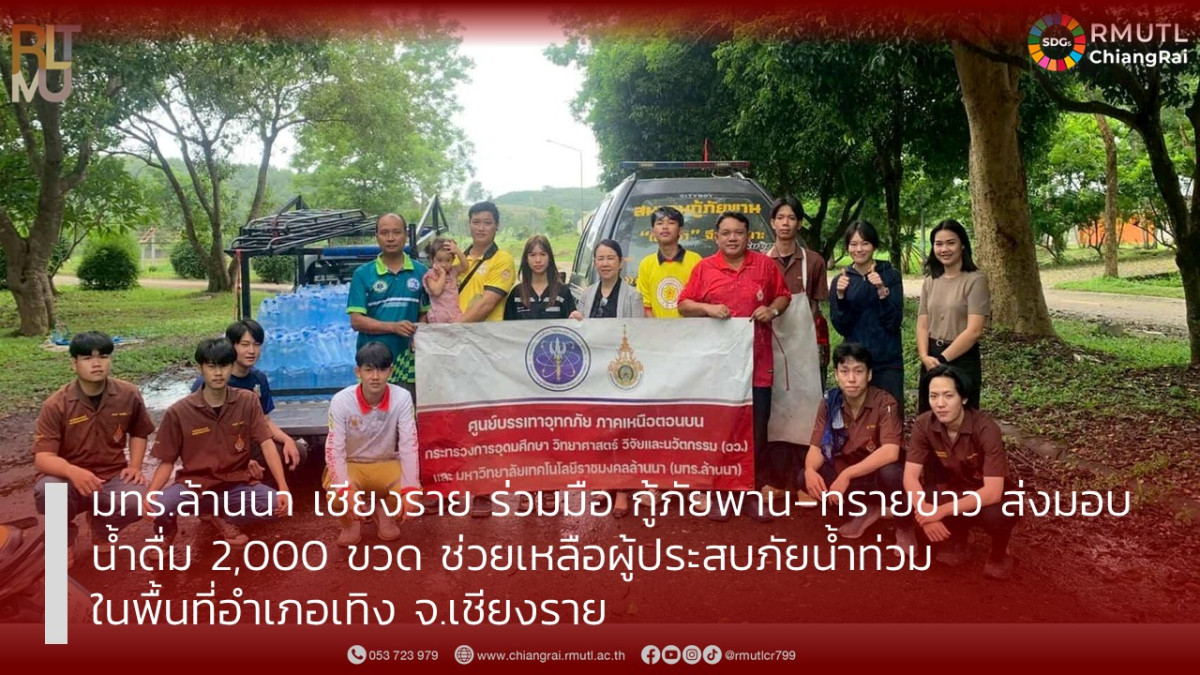
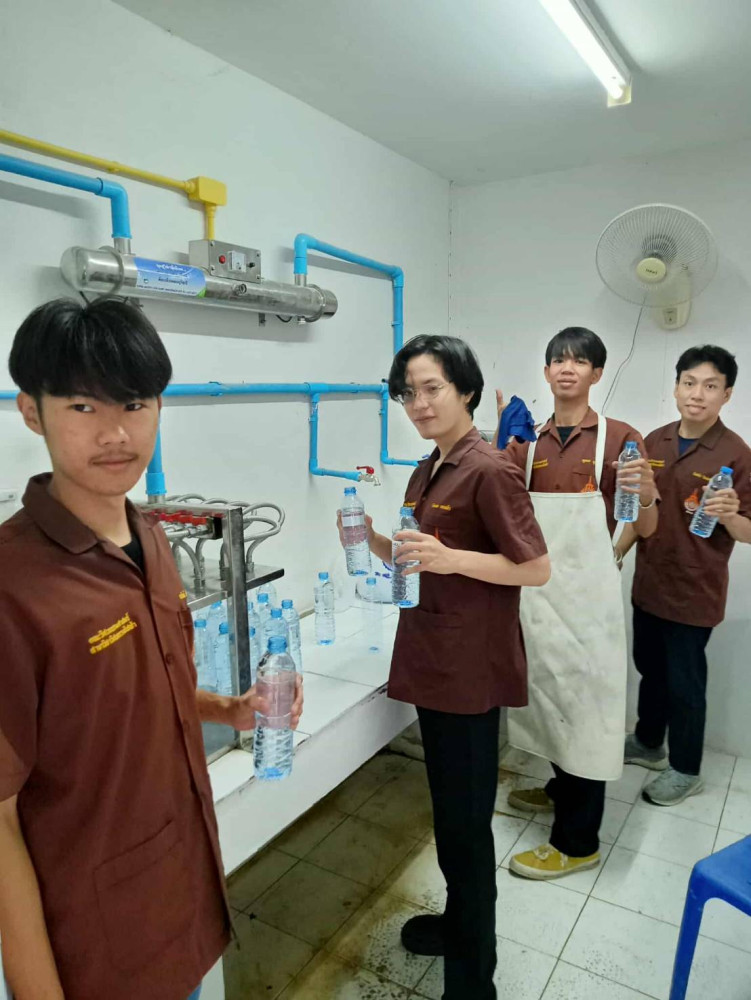
Delivery of 2,000 Bottles of Drinking Water
Cross-Sector Collaboration for Wildfire Prevention and Clean Water
in Chiang Dao
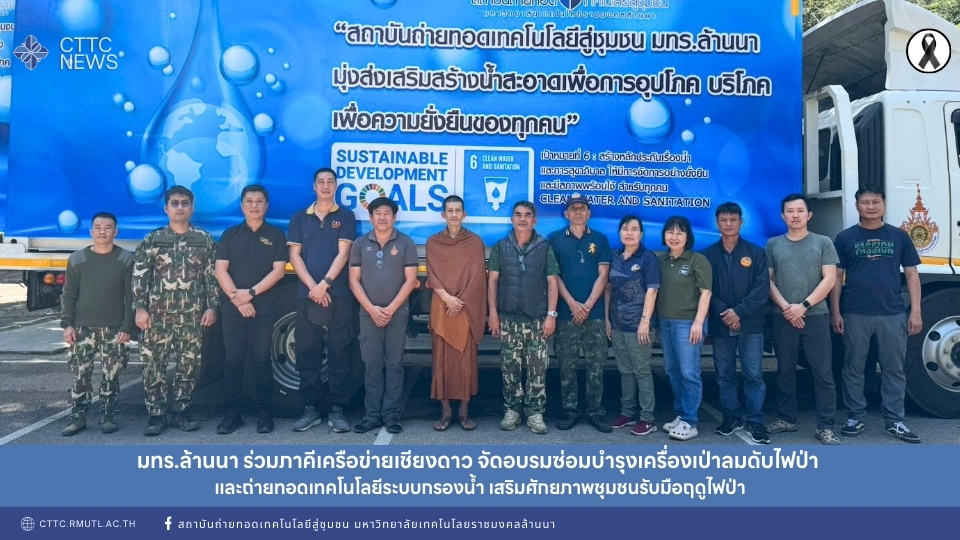
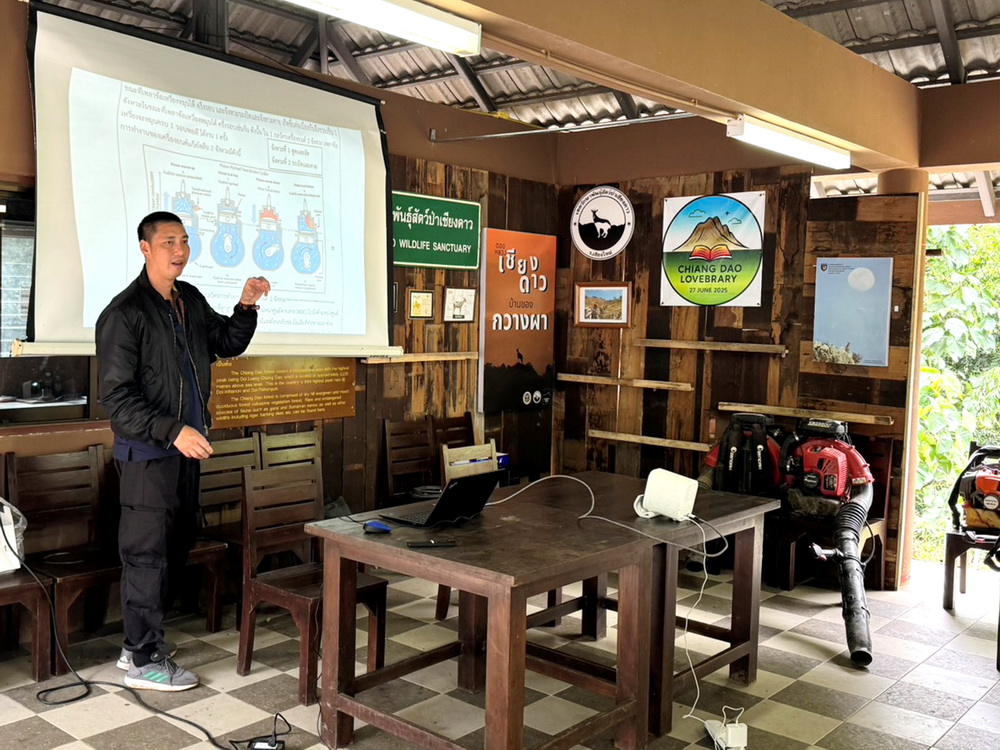
From 25 to 27 February 2026, RMUTL, through its Community Technology Transfer Institute, worked with Chiang Dao Wildlife Sanctuary and local community networks to strengthen cooperation in wildfire prevention, environmental management, and clean-water access in Chiang Dao District, Chiang Mai Province.
The initiative brought together the university, a government agency, and community networks for knowledge exchange, capacity building, and collaborative problem-solving. A practical workshop trained 40 participants in small-engine maintenance, fault diagnosis, preventive maintenance, and preparing wildfire leaf blowers before the fire season. In total, 60 leaf blowers belonging to local organizations were inspected and maintained. University lecturers, technical staff, and engineering students contributed technical expertise, while local partners shared operational experience and knowledge of local conditions. RMUTL also transferred knowledge about the Hydro Pure water-filtration system to support clean drinking water for wildfire-prevention and firefighting networks. The initiative provided 3,000 bottles of drinking water to local communities and volunteer networks.
Hydro Pure Clean-Water Technology Transfer to
the Mok Cham Royal Project Community, Mae Ai
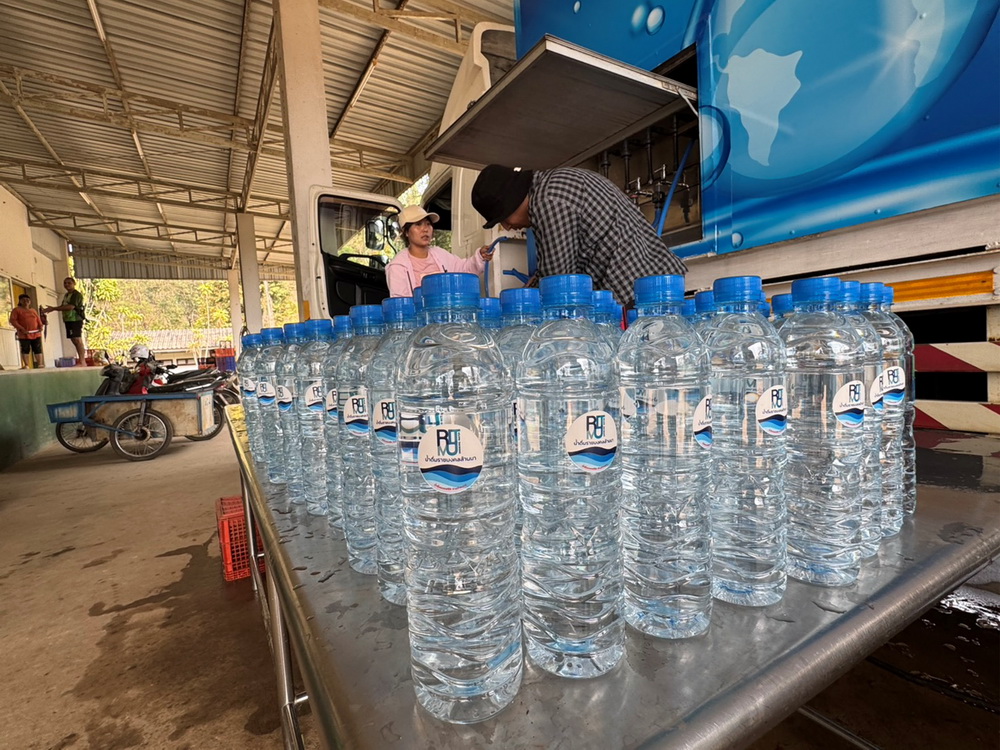
From 18 to 20 February 2026, RMUTL’s Community Technology Transfer Institute and the Under the Royal Patronage Planning Group conducted training on the Hydro Pure water-filtration system and provided drinking water through a mobile water-production vehicle at the Mok Cham Royal Project Development Center, Tha Ton Subdistrict, Mae Ai District, Chiang Mai Province. More than 60 residents and leaders of local water-user groups participated. The project was led by Methas Phatthiyathanee, Assistant Director of the institute, with researchers, technical staff, lecturers, and students from Environmental Engineering and Electric Vehicle Engineering. The team integrated engineering knowledge, technology, and academic service to address local needs.
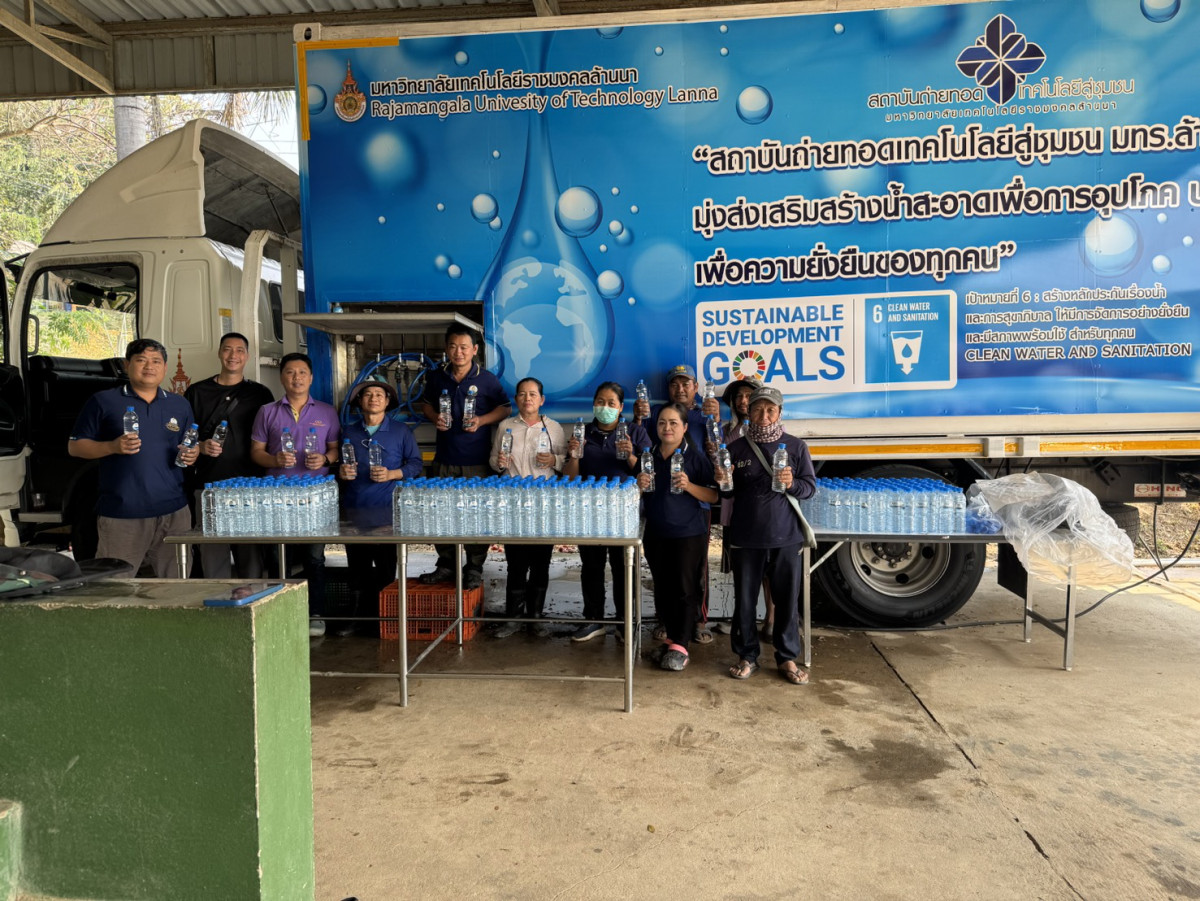
Environmental Engineering specialists explained local water-quality conditions and risks from agricultural chemicals and residual organic substances in the Tha Ton River basin. They discussed water-quality monitoring, screening, and treatment before consumption, with the aim of helping residents manage water safely. The activity connected academic service with teaching and research, giving students opportunities to learn from real-world conditions while contributing to community development.
The initiative helped residents gain practical knowledge and approaches to water management that could be applied locally. It also strengthened cooperation among the university, local organizations, and residents to support sustainable quality of life in highland communities.
Moving Forward
Advancing Sustainable Water Management and Community Resilience
RMUTL aims to strengthen its commitment to sustainable water management by expanding access to clean drinking water, improving wastewater treatment, and promoting the efficient use of water resources. Building on its existing Hydro Pure technology transfer, wastewater management, and community assistance initiatives, the university will focus on developing practical, locally appropriate solutions that support public health, environmental protection, and long-term community resilience.
1. Expanding Access to Safe Drinking Water. RMUTL will continue promoting appropriate water-treatment technologies, particularly the Hydro Pure filtration system, in rural, highland, and underserved communities. Greater emphasis will be placed on practical training, local system maintenance, and cooperation with community organizations to improve the reliability and sustainability of clean-water access.
2. Strengthening Wastewater Treatment and Resource Recovery. The university will build on its collaboration with agricultural enterprises and technical partners to promote efficient wastewater-treatment systems and the recovery of useful resources, including biogas. These efforts will support pollution reduction, resource efficiency, and the adoption of more sustainable production practices in agricultural and livestock operations.
3. Improving Water Quality Monitoring and Technical Capacity. RMUTL will seek to strengthen community knowledge and technical skills in water-quality assessment, monitoring, filtration, and treatment. Training activities will encourage local participation in identifying water-related risks, maintaining treatment systems, and adopting appropriate practices to protect drinking-water quality.
4. Strengthening Water Security and Disaster Preparedness. The university will enhance cooperation with local authorities, emergency response organizations, and community networks to support access to safe drinking water during floods and other emergencies. Building on previous assistance activities, RMUTL will promote the application of mobile and community-based water-treatment solutions to improve preparedness and response capacity.
5. Expanding Community Partnerships and Long-Term Impact Monitoring. RMUTL will strengthen collaboration with government agencies, local communities, research institutions, and private-sector partners to support sustainable water management initiatives. Greater attention will be given to monitoring water quality, system performance, community participation, and the long-term effectiveness of technology transfer to guide future improvements.
Through these priorities, RMUTL seeks to advance an integrated and sustainable approach to water management that connects academic knowledge, technological innovation, environmental responsibility, and community development. By strengthening local capacity and expanding practical water-management solutions, the university aims to improve access to safe water, reduce environmental impacts, and support healthier and more resilient communities.