SDG 9
Industry, Innovation and Infrastructure
Rajamangala University of Technology Lanna (RMUTL) | Sustainability Report 2025
SDG 9 Highlights 2025
In 2025, Rajamangala University of Technology Lanna (RMUTL) strengthened sustainable industrial development through applied research, technological innovation, industry collaboration, intellectual property management, and entrepreneurship development. The university integrated its research infrastructure, academic expertise, and partnerships with public and private organizations to support industrial competitiveness, resource efficiency, and the practical application of research and innovation.
Strengthening University–Industry Collaboration and Applied Research. RMUTL promoted collaboration with industry through the Innovation and Technology Assistance Program (ITAP) and Talent Mobility initiatives. Across the 2025–2026 reporting period, seven projects received combined budgets of THB 11.56 million, including THB 7.44 million from industry and THB 4.12 million from government funding. These projects supported technology development, engineering problem-solving, and improvements in industrial production processes. Notable outcomes included wastewater-treatment and biogas-system improvements at two livestock enterprises in Chiang Mai, contributing to increased production capacity, renewable energy recovery, and estimated operating cost savings.
Advancing Engineering and Medical Technology Innovation. RMUTL conducted interdisciplinary research in engineering, biomedical devices, and advanced materials to address industrial and societal needs. Research initiatives included the development of patient lifting and walking-assistance devices, supported by collaboration with Chiang Mai University and an industrial partner. These projects demonstrated the university’s capacity to integrate engineering expertise with practical applications in health care and industrial technology.
Strengthening Intellectual Property Management and Research Utilization. RMUTL enhanced its institutional intellectual property (IP) management system through the development of the RMUTL e-IP platform, operational procedures, and professional IP support services. In fiscal year 2025, the university recorded 63 IP applications and 14 protected works. IP-related utilization income reached THB 329,847.72 during the same fiscal year. These developments strengthened the university’s capacity to protect research outputs, manage intellectual property rights, and support the translation of innovations into practical applications.
Developing Innovation Infrastructure and Entrepreneurial Capacity. RMUTL strengthened its innovation ecosystem through 11 Centers of Excellence, specialized research laboratories, the Research and Development Institute, the Technology Licensing and Transfer Office (TLO/TTO), the Strategic Planning Unit (SPU), and the University Business Incubator (UBI). These mechanisms supported research development, prototype testing, intellectual property protection, business incubation, and potential commercialization. The university’s Reinventing University initiative further promoted collaboration across engineering, agriculture, technology, creative innovation, and entrepreneurship education.
Expanding Technology Transfer and Community-Based Innovation. RMUTL promoted the application of research and appropriate technologies to address challenges faced by local enterprises and communities. Through community technology-transfer mechanisms, the university supported more than 17 projects and maintained a portfolio of over 60 technologies. These initiatives connected academic knowledge with local needs, helping communities and enterprises explore opportunities to improve productivity, strengthen technical capabilities, and develop sustainable livelihoods.
Together, these initiatives demonstrate RMUTL’s commitment to strengthening an integrated innovation ecosystem that connects research, industry, entrepreneurship, and community development. By promoting technology adoption, intellectual property management, and industry collaboration, the university supports more resilient industries, sustainable innovation, and long-term economic development.
Research Collaboration, Industry Funding and Applied Innovation
Research income and industry-supported projects
Rajamangala University of Technology Lanna (RMUTL) advances sustainable industrial development through applied research, engineering innovation, industry partnerships, intellectual property (IP) management, technology transfer and entrepreneurial capacity development. Its innovation ecosystem links faculties, research laboratories and Centers of Excellence (CoEs) with the Research and Development Institute, Strategic Planning Unit (SPU), Technology Licensing/Transfer Office (TLO/TTO), University Business Incubator (UBI) and community technology-transfer mechanisms. Together, these units support a pathway from technical problem identification and research development to IP protection, prototyping, enterprise adoption and potential commercialization.
The SPU project compilation documents seven industry-engagement projects across the 2025–2026 reporting period: five Innovation and Technology Assistance Program (ITAP) projects and two Talent Mobility projects. Their combined project budgets total THB 11,555,403, comprising THB 7,436,696 from industry and THB 4,118,707 from government. The reported combined budget is not equivalent to industry-only research income.
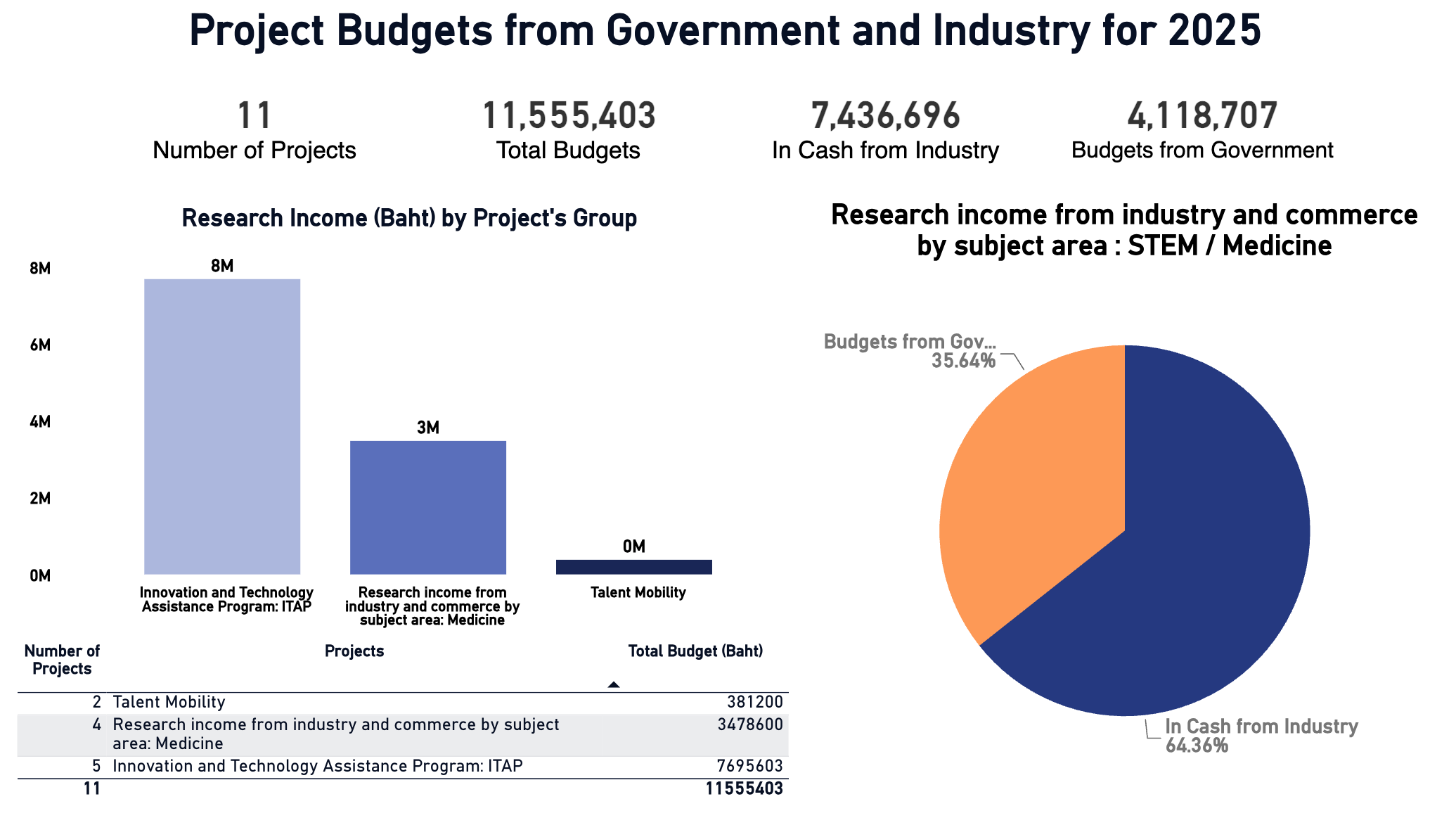
Project Budgets from Government and Industry Dashboard
Within this SPU dataset, funding is classified under STEM. The supported projects cover agriculture and biotechnology, food processing, and other industries. These classifications do not imply an absence of research in other disciplines across the university.
University–industry collaboration mechanisms
ITAP provides specialized consultation, engineering problem analysis, system design and technology deployment for enterprises seeking to improve manufacturing performance and competitiveness. Talent Mobility places research expertise in enterprise contexts to diagnose production and business development needs and formulate tailored R&D strategies. These mechanisms strengthen research-to-industry linkages and create opportunities to translate university expertise into practical solutions.
Industrial outcomes
At Phuangthong Farm in Fang District, Chiang Mai, an ITAP-supported anaerobic wastewater treatment and biogas system was evaluated on 22–23 December 2025. The source reports an increase in annual livestock capacity from 2,160 to 2,880 pigs, additional annual income of approximately THB 440,000 and additional biogas output of 9,450 m³ annually, equivalent to 4,347 kg of LPG. Estimated annual energy-cost savings were THB 122,585. The intervention improved wastewater and odor management while promoting renewable energy use.
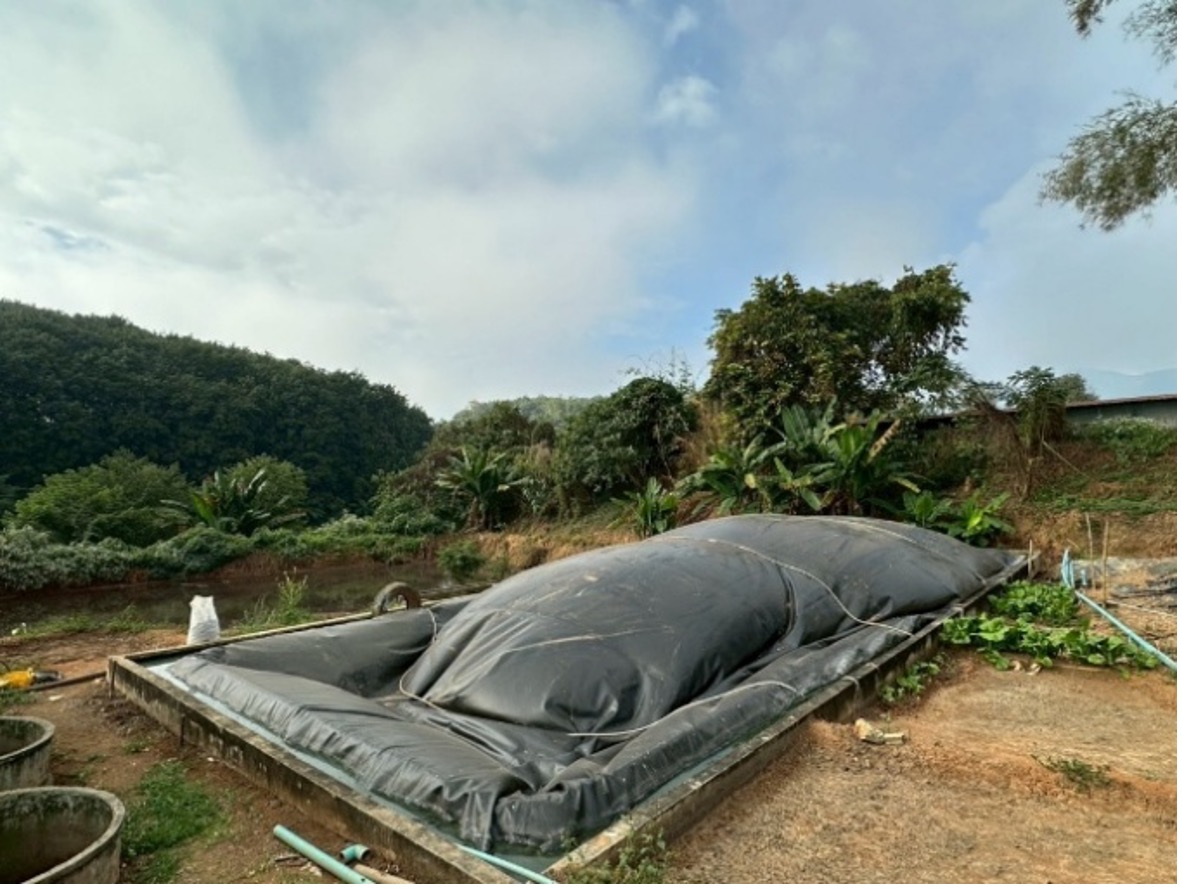
Anaerobic treatment and biogas facility at Phuangthong Farm (SPU supplied photograph).
A related ITAP intervention at Tipyawann Karnka in Fang District was assessed on the same dates. Reported production capacity increased from 1,800 to 2,400 pigs per year, with approximately THB 356,250 in additional annual income. Additional annual biogas output was 7,840 m³, equivalent to 3,606 kg of LPG, with estimated annual energy savings of THB 101,700.
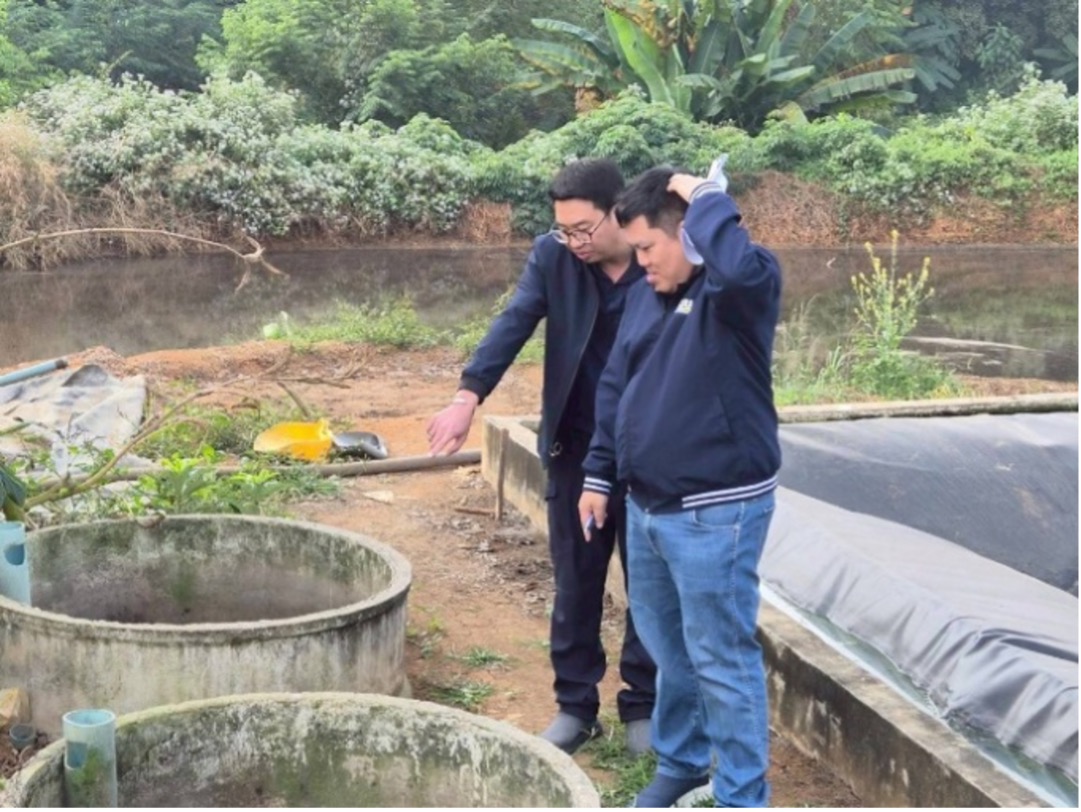
Technical site assessment of wastewater-treatment infrastructure at Tipyawann Karnka.
Engineering and Medical Technology Research
RMUTL research units address industrial and social needs through biomedical devices, novel materials, and interdisciplinary engineering. The patient lifting and walking-assistance project ran from 1 October 2024 to 30 September 2025, supported by a THB 278,600 Fundamental Fund allocation and THB 50,000 co-investment from Multi Engineering & Supply Co., Ltd. (total THB 328,600). The Department of Rehabilitation Medicine, Faculty of Medicine, Chiang Mai University, collaborated on the project.
Research project | Implementation period | Total budget (THB) | Reported partners / funding |
Patient lifting and walking assistance device | Oct 2024–Sep 2025 | 328,600 | Fundamental Fund; Multi Engineering & Supply; Chiang Mai University |
Piezo-thermoelectric materials and devices | Oct 2025–Sep 2026 | 1,550,000 | Fundamental Fund; P.N. Ceramic co-investment; hospitals |
CoreSense multimodal biofeedback system | Jan 2026–Dec 2027 | 1,500,000 | TED Fund; VISECORE co-investment |
Wheelchair foot-support device | Oct 2025–Apr 2026 | 100,000 | Department of Medical Services; Vejjarak Lampang Hospital |
Intellectual Property Management and Technology Transfer
Strengthening institutional IP management capacity
RMUTL has progressively strengthened its intellectual property management system to ensure that research outputs, innovations, inventions and creative works developed by researchers, staff and students receive appropriate legal protection and are managed systematically. The university established an IP Portfolio database, the RMUTL e-IP information system, operational guidelines and IP management workflows, together with manuals and supporting materials for protection applications. These mechanisms support the process from invention disclosure, document screening and rights protection to institution-wide IP monitoring.
The university has also adapted its IP procedures to align with Thailand’s Research and Innovation Utilization Promotion Act, B.E. 2564 (2021). Its procedures address disclosure of research discoveries, ownership claims, rights administration and reporting on the utilization of research and innovation. The RMUTL e-IP platform provides a central mechanism for recording and tracking institutional IP information.
In terms of human-resource capacity, the supplied institutional account reports five patent agents supporting IP consultation, document examination, protection applications, patent searching, patent landscape analysis and advice on rights ownership. Additional competency development has covered IP valuation, patent analysis, market research, freedom to operate (FTO) and IP rights management, extending staff roles from document handling toward professional technology and IP assessment.
These improvements have created a more integrated process for identifying promising research, assessing novelty and potential, preparing protection applications, managing rights and tracking IP status. The next institutional priorities are clearer competencies and workflows across the IP value chain, more proactive technology scouting, integration of e-IP with utilization and return data, and transparent benefit-sharing procedures.
Intellectual property applications and protected works
The institutional historical series records 128 applications during fiscal years 2023–2025 (Thai fiscal years 2566–2568), including 63 in fiscal year 2025. Application statistics and registered/protected IP must be distinguished; an application does not itself indicate that protection has been granted.
IP category | FY2023 | FY2024 | FY2025 | Total |
Invention patents | 2 | 2 | 1 | 5 |
Design patents | 0 | 21 | 21 | 42 |
Petty patents (utility models) | 7 | 29 | 27 | 63 |
Copyright | 1 | 3 | 14 | 18 |
Total applications | 10 | 55 | 63 | 128 |
A separate protected-works table reports 27 works over fiscal years 2023–2025, including 14 works in fiscal year 2025. These figures are reported as institutional data and are not equated with 2025 calendar-year grants.
Protected IP category | FY2023 | FY2024 | FY2025 | Total |
Invention patents | 0 | 1 | 0 | 1 |
Design patents | 0 | 6 | 0 | 6 |
Petty patents | 2 | 1 | 0 | 3 |
Copyright | 0 | 3 | 14 | 17 |
Total protected works | 2 | 11 | 14 | 27 |
Extended-period IP registration and commercialization results
The updated historical table also includes fiscal year 2026 and reports 197 IP applications in fiscal years 2023–2026 (69 in fiscal year 2026). Because fiscal year 2026 extends outside the 2025 calendar reporting period, these values are provided as an extended institutional record, rather than being included in the 2025 annual totals.
IP category | FY2023 | FY2024 | FY2025 | FY2026 | Total |
Invention patents | 2 | 2 | 1 | 0 | 5 |
Design patents | 0 | 21 | 21 | 25 | 67 |
Petty patents | 7 | 29 | 27 | 26 | 89 |
Copyright | 1 | 3 | 14 | 18 | 36 |
Total applications | 10 | 55 | 63 | 69 | 197 |
IP-related revenue or commercial utilization income recorded in the supplied institutional table totaled THB 494,935.65 across fiscal years 2023–2026. Of this, THB 329,847.72 was attributed to fiscal year 2025. These figures are not automatically equivalent to licensing income alone, and they should not be reported as revenue for calendar year 2025 without date-level financial confirmation.
Fiscal year | IP/utilization income (THB) |
2023 (2566) | 4,080.00 |
2024 (2567) | 50,000.00 |
2025 (2568) | 329,847.72 |
2026 (2569) | 111,007.93 |
Total | 494,935.65 |
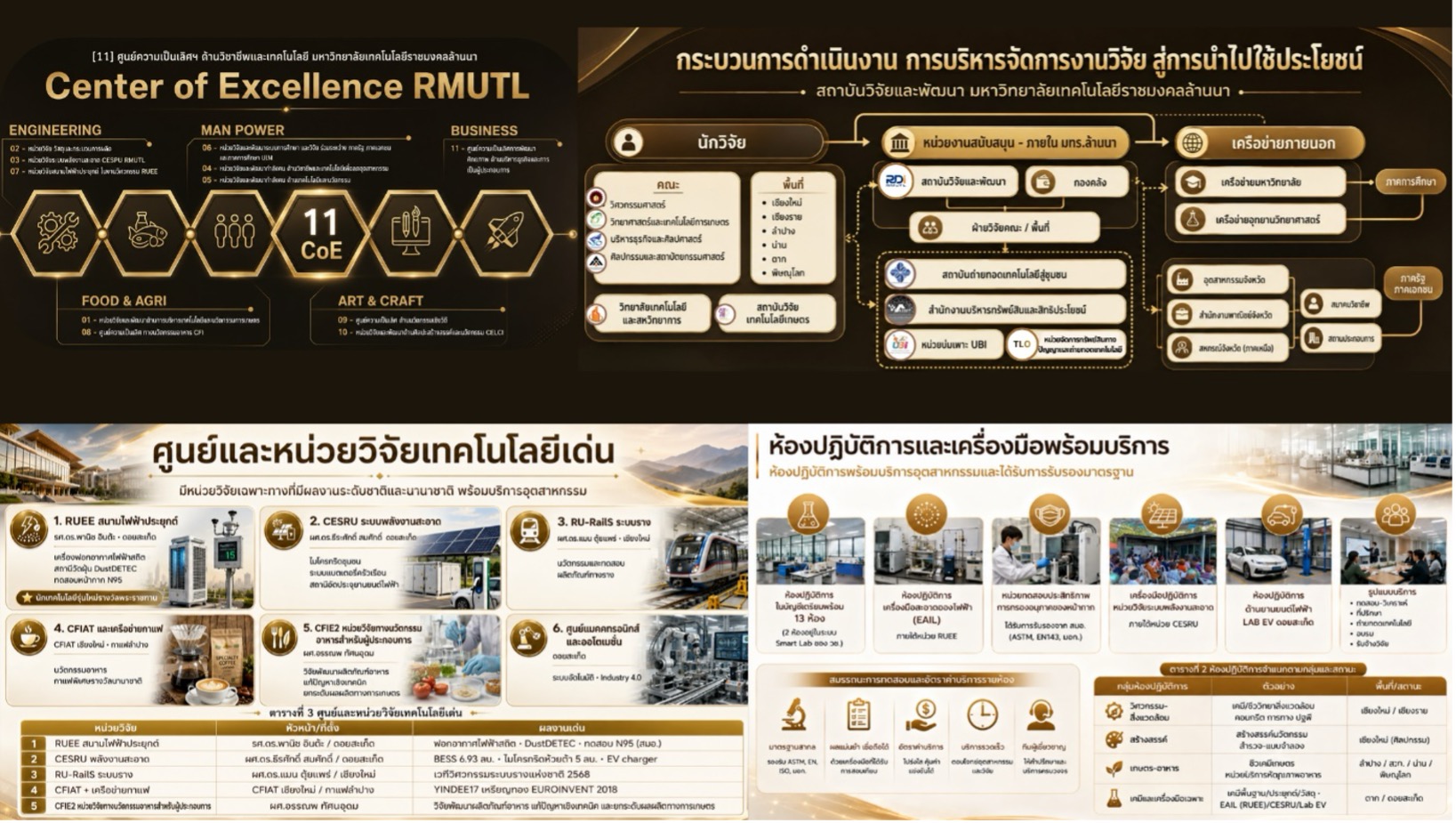
Institutional innovation and excellence infrastructure (image supplied in revised report).
Innovation Infrastructure, Entrepreneurship and Community Technology Transfer
RMUTL reports an academic and research personnel base of 1,098 across six provincial education areas and 11 Centers of Excellence. Together with laboratories and specialized facilities, this infrastructure supports materials characterization (including XRD/SEM), prototype development, testing, engineering validation and energy-system services. The Research and Development Institute, Agricultural Technology Research Institute, TLO/TTO, SPU, UBI and community technology transfer units provide complementary functions for research, IP protection, enterprise engagement, incubation and technology adoption.
Student and alumni innovation pathway
The entrepreneurship education (EDU) pathway develops entrepreneurial mindsets, identifies promising student and alumni innovations and facilitates their progression into UBI services. The supplied institutional narrative records a ten-module e-learning resource on innovation- and technology-based entrepreneurship and three general education entrepreneurship courses. Project-based learning and scouting activities identify potential ventures for business model development, market analysis, prototyping and incubation. Historical results include 29 outputs assessed for commercial potential, 10 entering IP processes and three student/alumni spin-offs or newly established businesses.
Researcher and staff technology commercialization pathway
For faculty members and research staff, research challenges and industrial needs feed into technical development through faculties, CoEs and research institutes. The TLO/TTO provides patent searches, IP protection and rights management, while SPU supports technology assessment, prototype validation, pilot implementation and potential scale-up. UBI can support ventures with commercial potential. The five patent agents and IP analytical competencies form part of the service capacity supporting this integrated pathway.
Place-based technology adoption and community impact
For community enterprises, local industry and area-based partners, RMUTL uses community technology-transfer mechanisms to match local problems with research expertise, CoEs and laboratory resources. RMUTL have been involved with more than 17 community technology-transfer projects and a catalogue of more than 60 technologies. Its Appropriate Technology approach considers technical maturity, adoption readiness and economic or social outcomes.
Reinventing University implementation in 2025
On 12 November 2025, RMUTL presented its six-month fiscal-year 2025 Reinventing University progress to the Ministry of Higher Education, Science, Research and Innovation. The program brought together IP management and technology transfer, startup incubation and acceleration, innovation themes in art and technology, food and agriculture, and engineering, as well as entrepreneurship education and instructor capacity development. This coordination strengthens the institutional mechanisms underlying SDG 9.
RMUTL demonstrates three complementary SDG 9 contributions: (1) improvements in enterprise productivity and resource efficiency through industry-facing technology assistance; (2) interdisciplinary R&D and industry/health-sector partnerships supporting engineering and medical innovation; and (3) stronger institutional innovation infrastructure through IP management, technology transfer, entrepreneurial education and incubation. Its structured IP management systems and service pathways support research utilization beyond isolated research projects.
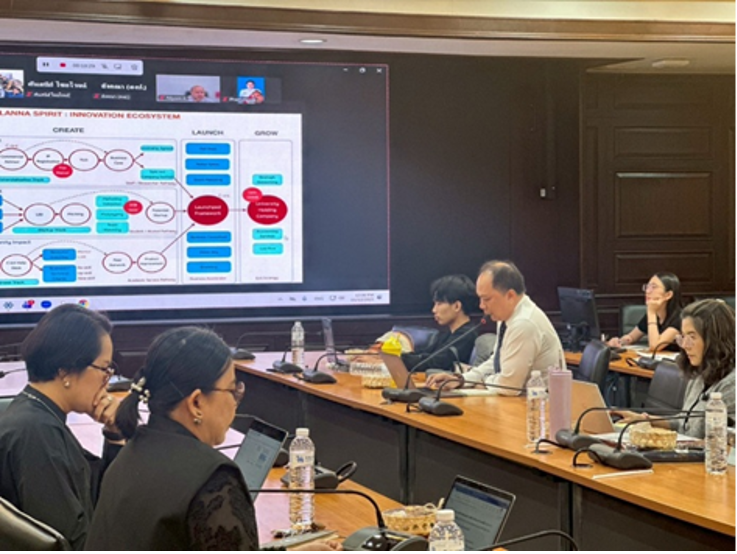
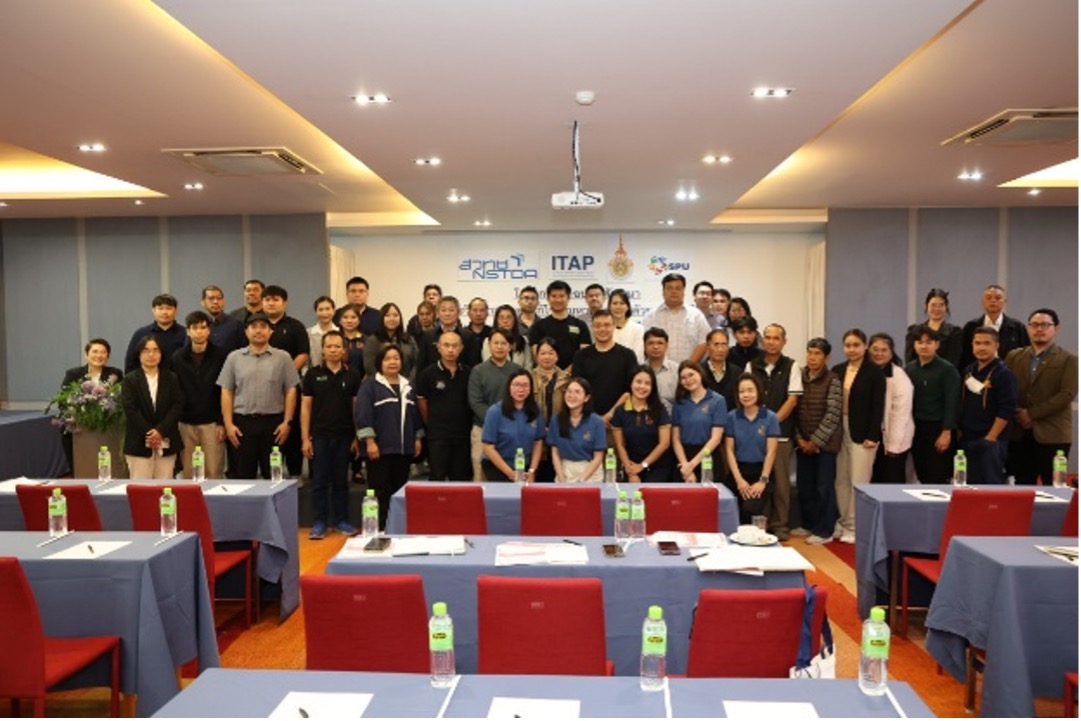
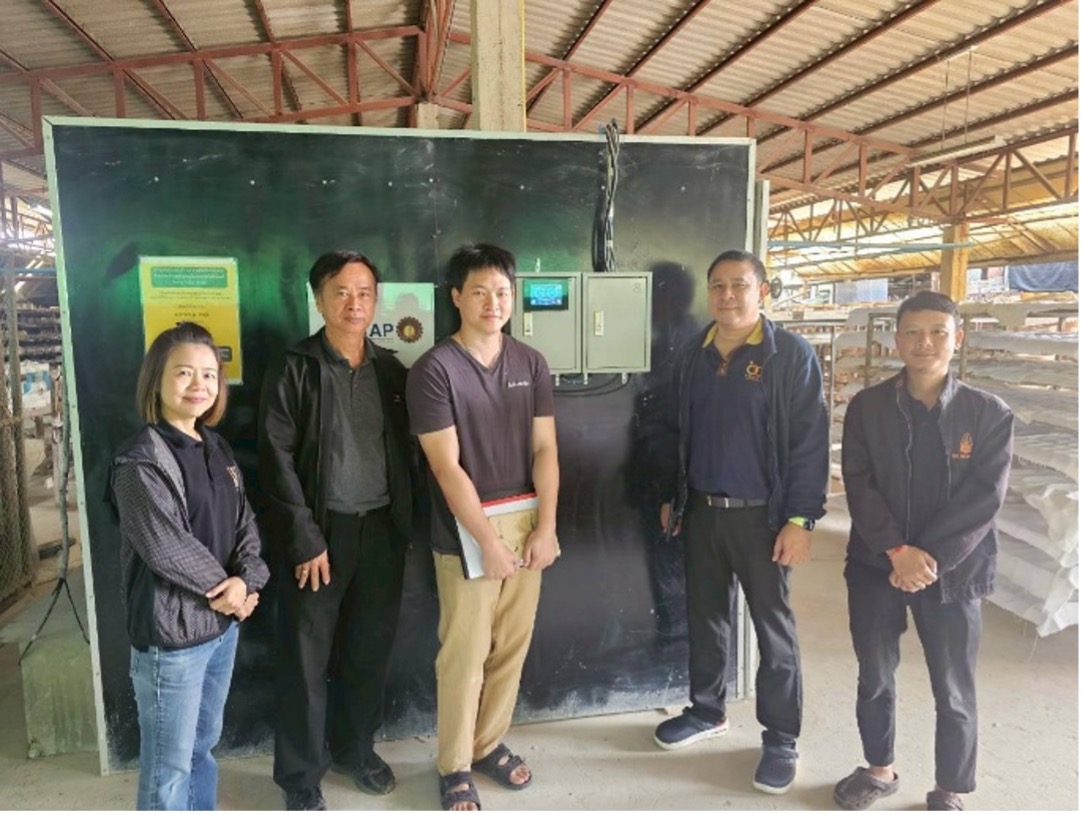
Reinventing University progress review and collaboration meeting, November 2025.
ITAP training on manufacturing problem analysis, January 2026.
Evaluation of process-control improvements at P.N. Ceramic, March 2026.
Moving Forward
Advancing Research Commercialization and Sustainable Innovation
RMUTL aims to strengthen its role as a university of technology and innovation by expanding industry-oriented research, improving intellectual property management, and accelerating the practical application of research outcomes. Building on its existing innovation infrastructure, industry partnerships, and technology-transfer mechanisms, the university will focus on developing an integrated innovation ecosystem that connects research and development with industrial applications, entrepreneurship, and sustainable community development.
1. Strengthening Industry–University Research Partnerships. RMUTL will expand collaboration with private-sector enterprises, government agencies, and industrial networks through applied research, ITAP, and Talent Mobility initiatives. Greater emphasis will be placed on identifying industry needs, developing practical technological solutions, and evaluating improvements in productivity, operational efficiency, and environmental performance.
2. Advancing Intellectual Property Management and Technology Commercialization. The university will continue strengthening its Technology Licensing and Transfer Office (TLO/TTO) and RMUTL e-IP platform to improve intellectual property identification, protection, valuation, and management. These efforts will support more proactive technology scouting, licensing opportunities, research utilization, and transparent management of benefits arising from university innovations.
3. Strengthening Innovation Infrastructure and Research Capabilities. RMUTL will further integrate its Centers of Excellence, specialized laboratories, research institutes, and innovation support units to strengthen interdisciplinary research and prototype development. Improved coordination of research facilities, technical expertise, and testing services will support the development and validation of technologies that respond to industrial and societal needs.
4. Accelerating Entrepreneurship and Innovation-Based Business Development. The university will strengthen the connection between entrepreneurship education, research development, intellectual property management, and business incubation. Through collaboration among academic faculties, TLO/TTO, SPU, and UBI, RMUTL will support students, researchers, and entrepreneurs in progressing from innovative ideas and prototypes to market validation, business development, and potential commercialization.
5. Expanding Appropriate Technology Transfer and Measuring Sustainable Impact. RMUTL will strengthen community-based technology transfer by matching research expertise with the needs of local enterprises, agricultural producers, and communities. Greater attention will be given to technology adoption, measurable economic and social benefits, and long-term monitoring of project outcomes. These efforts will help ensure that university innovations contribute to sustainable livelihoods, resource efficiency, and regional development.
Through these priorities, RMUTL seeks to establish a more connected and sustainable innovation ecosystem that transforms research knowledge into practical technologies, competitive enterprises, and measurable societal benefits. By strengthening collaboration among researchers, industry partners, entrepreneurs, and communities, the university aims to promote inclusive industrial development, enhance regional innovation capacity, and contribute to long-term economic sustainability.