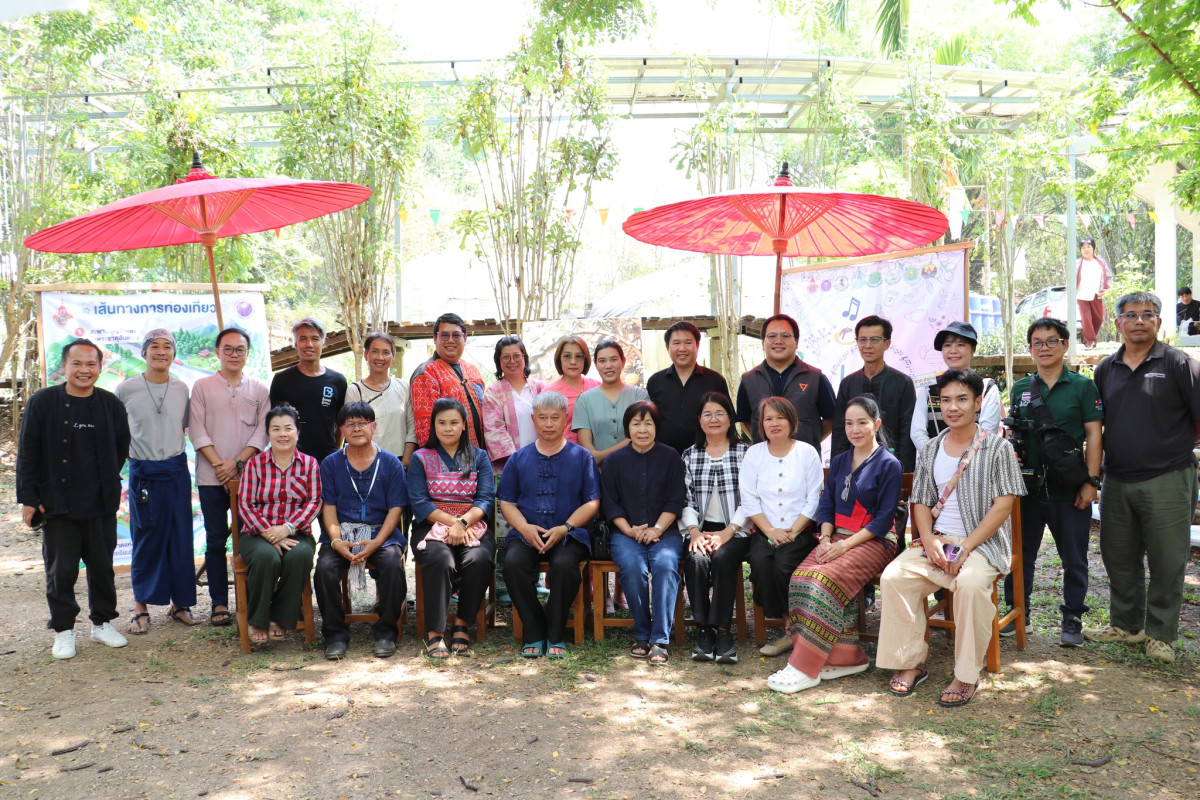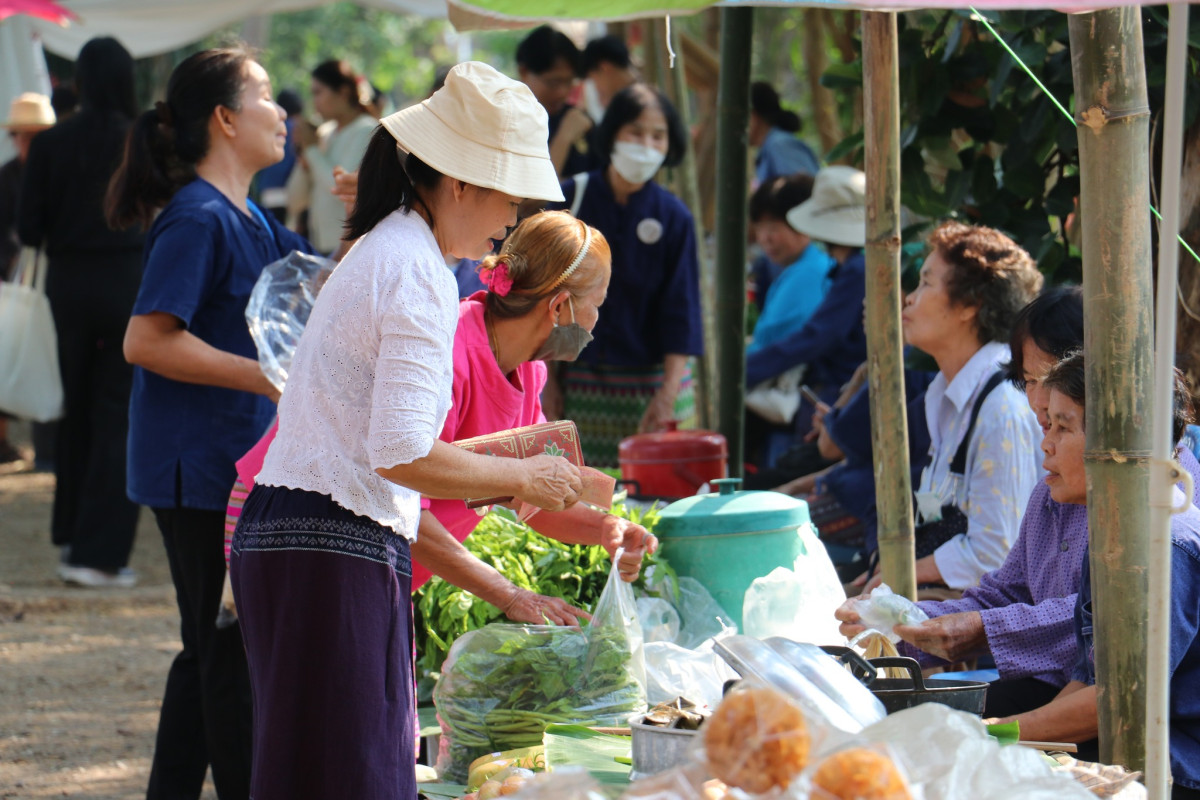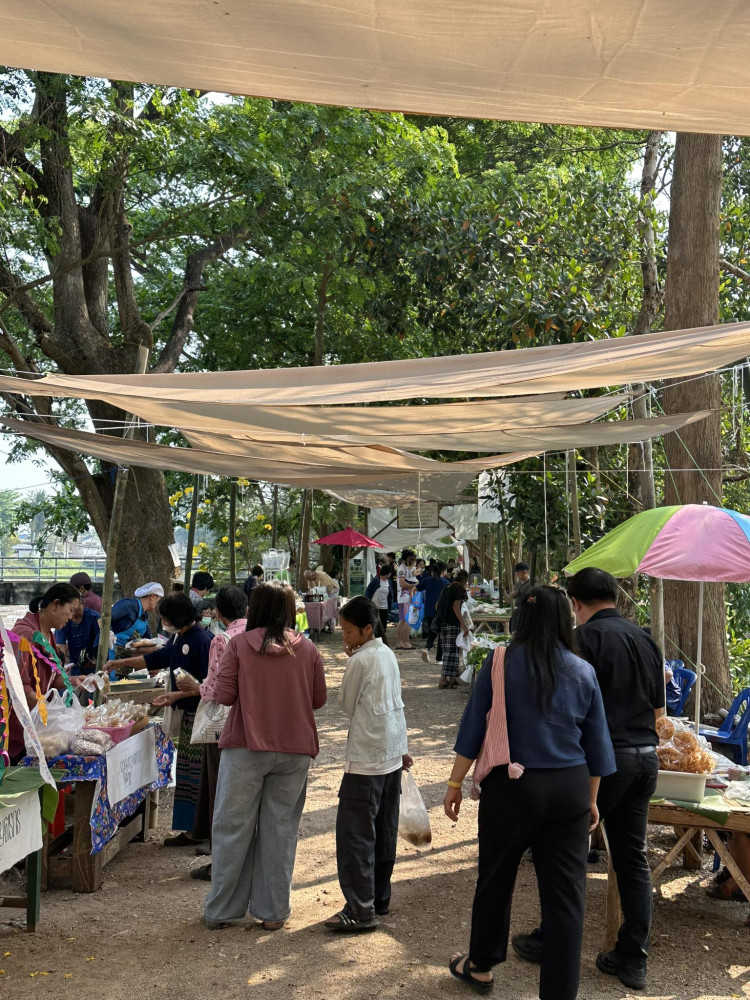
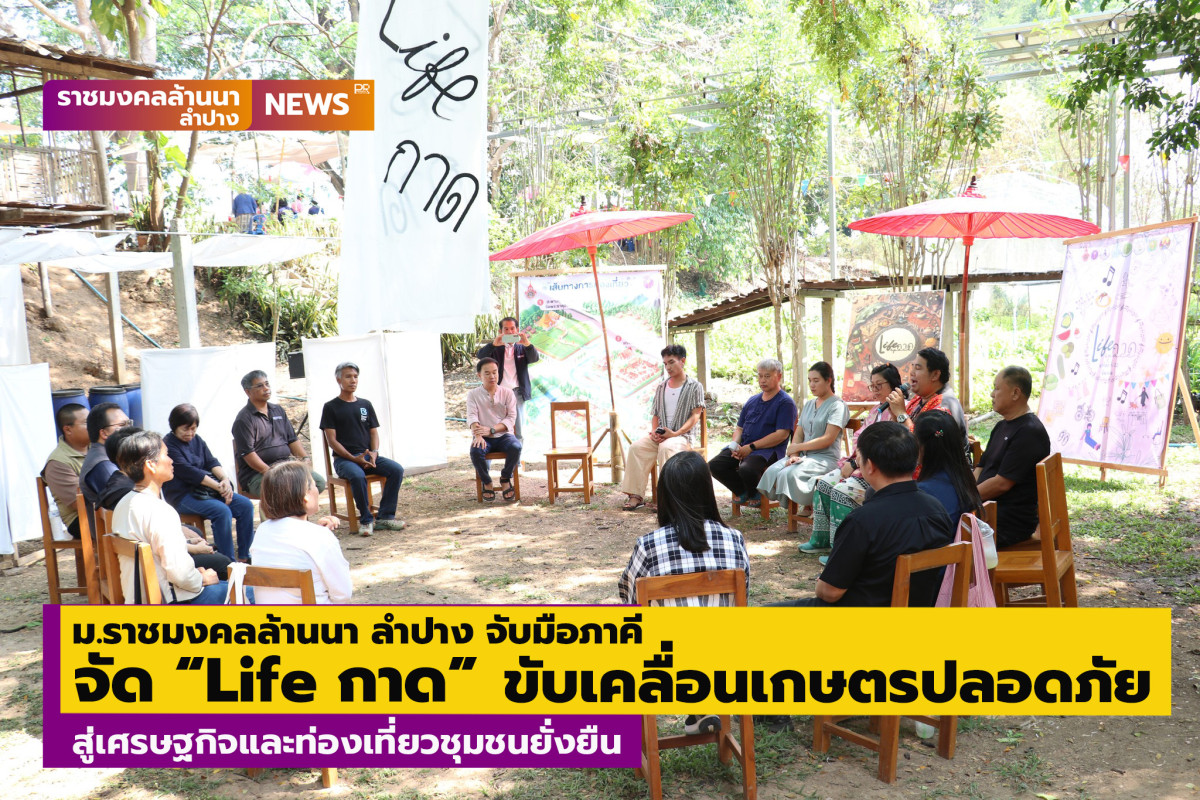
22 March 2026 – Rajamangala University of Technology Lanna (RMUTL), Lampang, in collaboration with the Lampang Farmers Rehabilitation and Development Fund and network partners, organized the green market “Market of Life, Market of Learning (Life Kad)” at Hug Nam Jang, Ban Kio Subdistrict, Mae Tha District, Lampang Province. The initiative aimed to promote safe agricultural products while creating a community-based learning space for local residents to exchange knowledge, experiences, and practical approaches to sustainable development.
The activity was conducted as part of the research project on the application of multiple technologies and innovations to drive the Bio-Circular-Green (BCG) Economy Model, with the objective of strengthening the local economy and improving rice production systems to respond sustainably to climate change. The research project is implemented by RMUTL researchers in collaboration with the National Science and Technology Development Agency (NSTDA).
Creating a Community-Based Learning Space for Sustainable Development
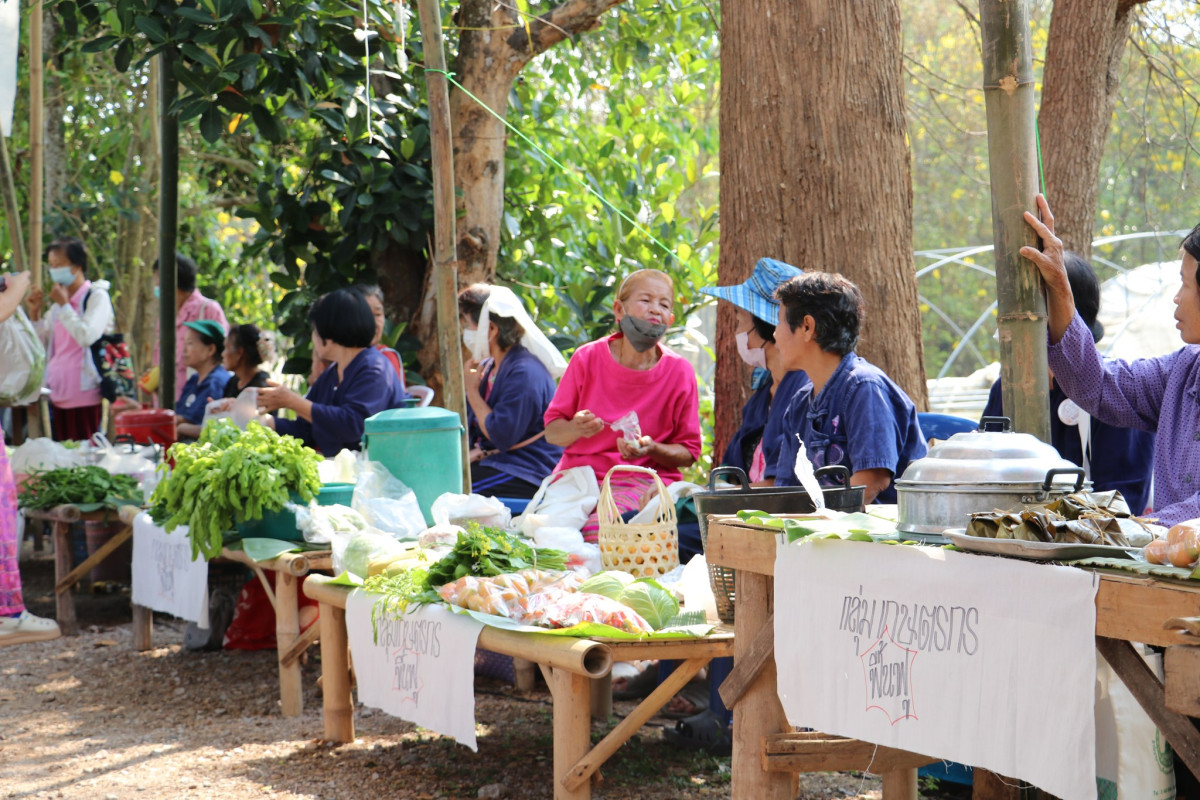
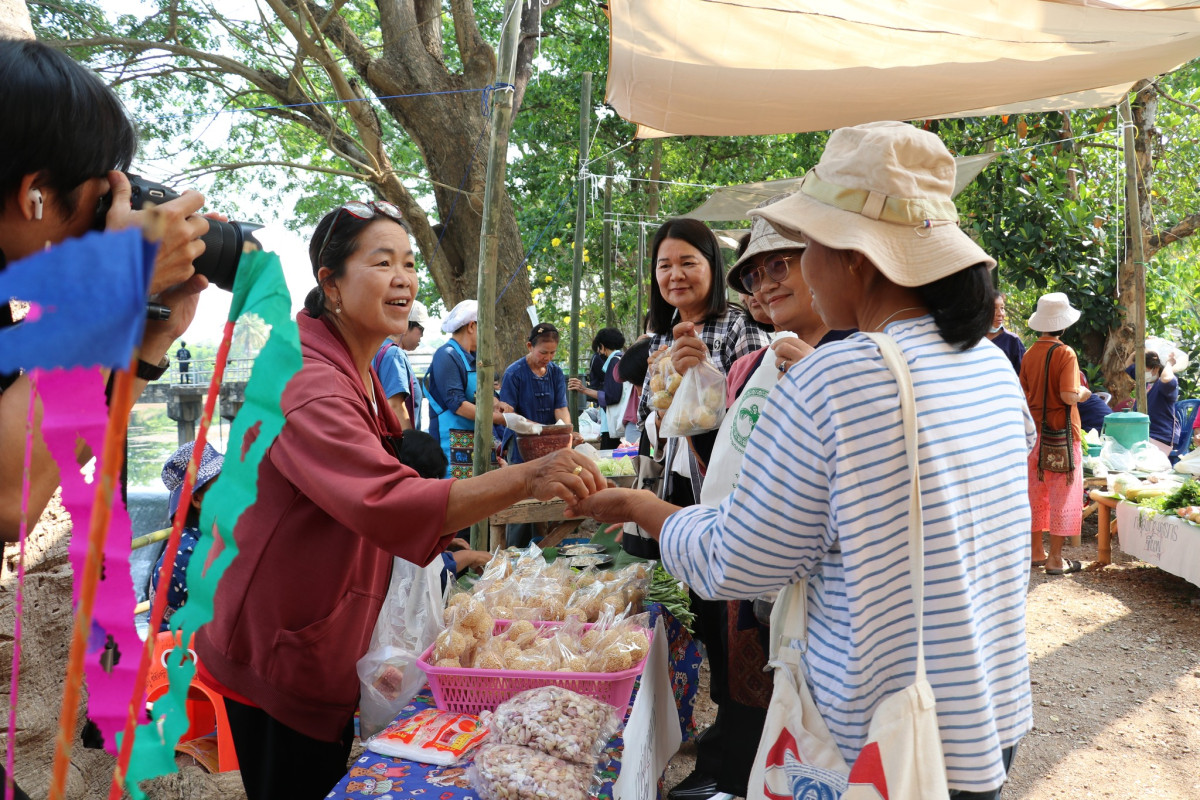
The Life Kad green market was designed not only as a marketplace for local agricultural products, but also as a community-based education and knowledge-sharing platform. It provided opportunities for local residents and community members to learn, exchange experiences, and strengthen their capacity to respond to social, economic, and environmental changes.
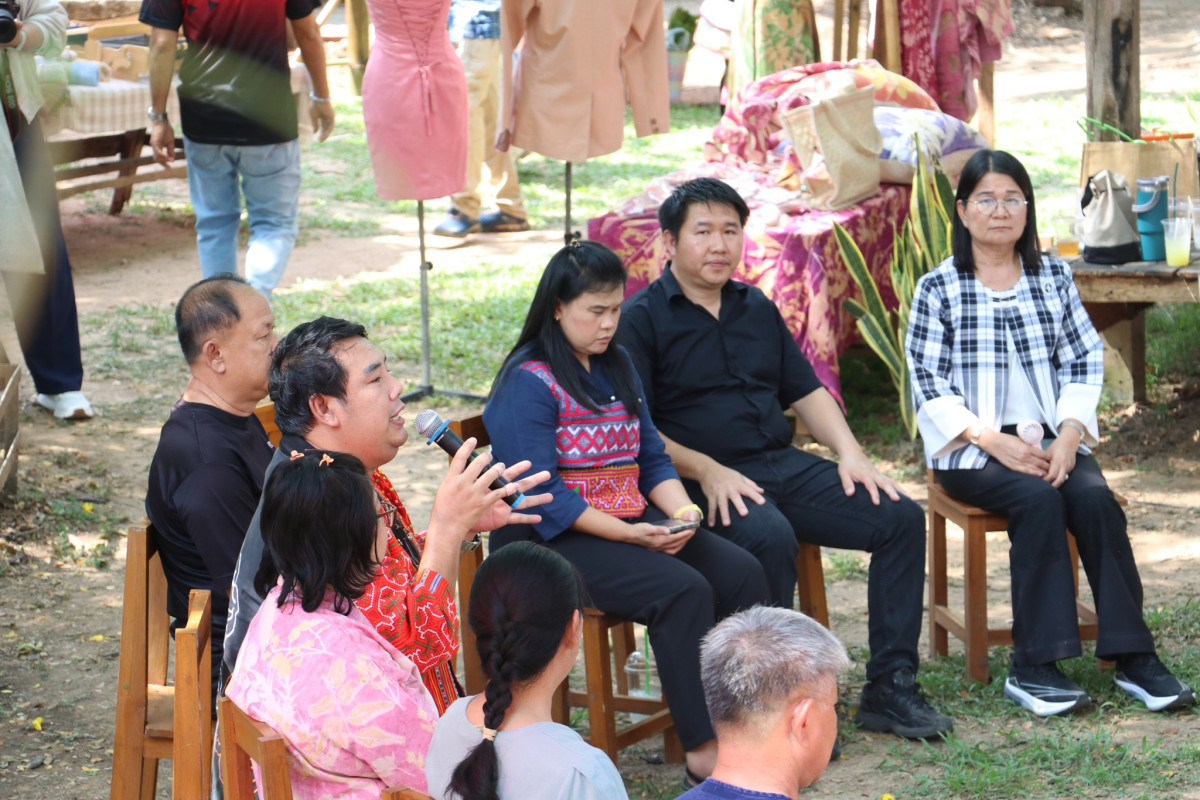
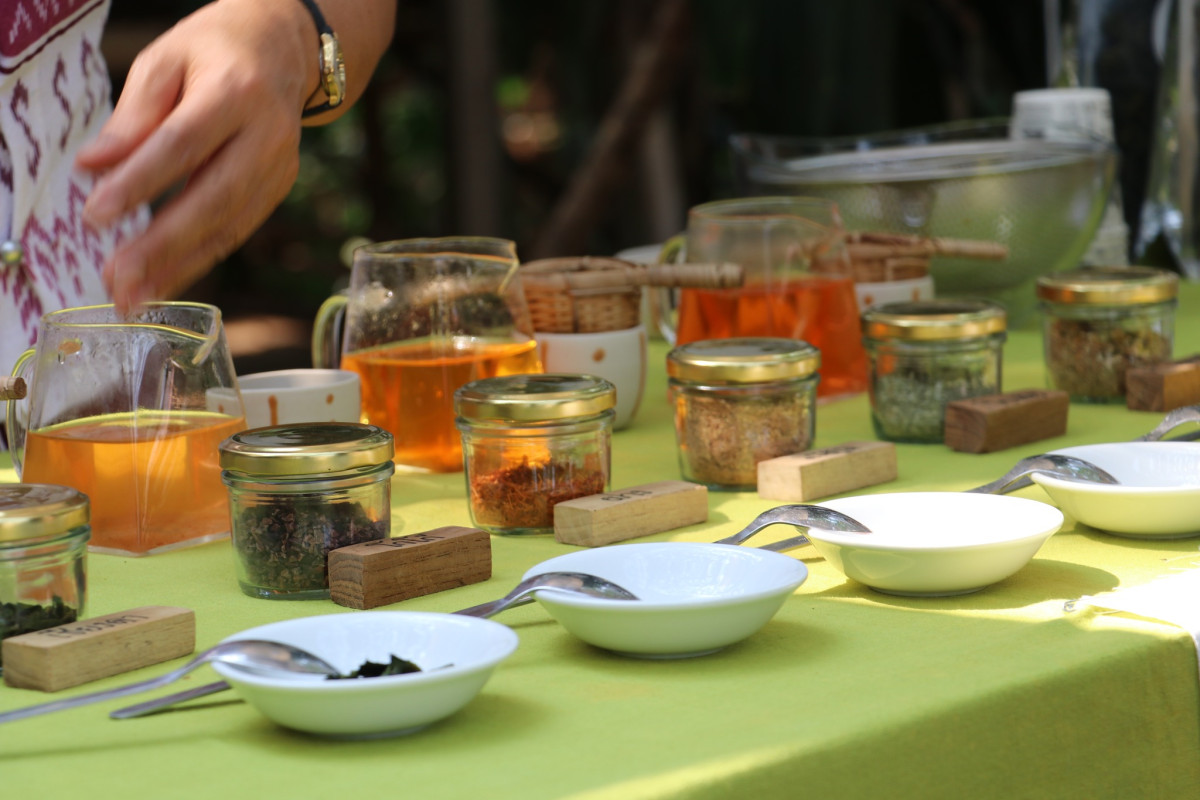
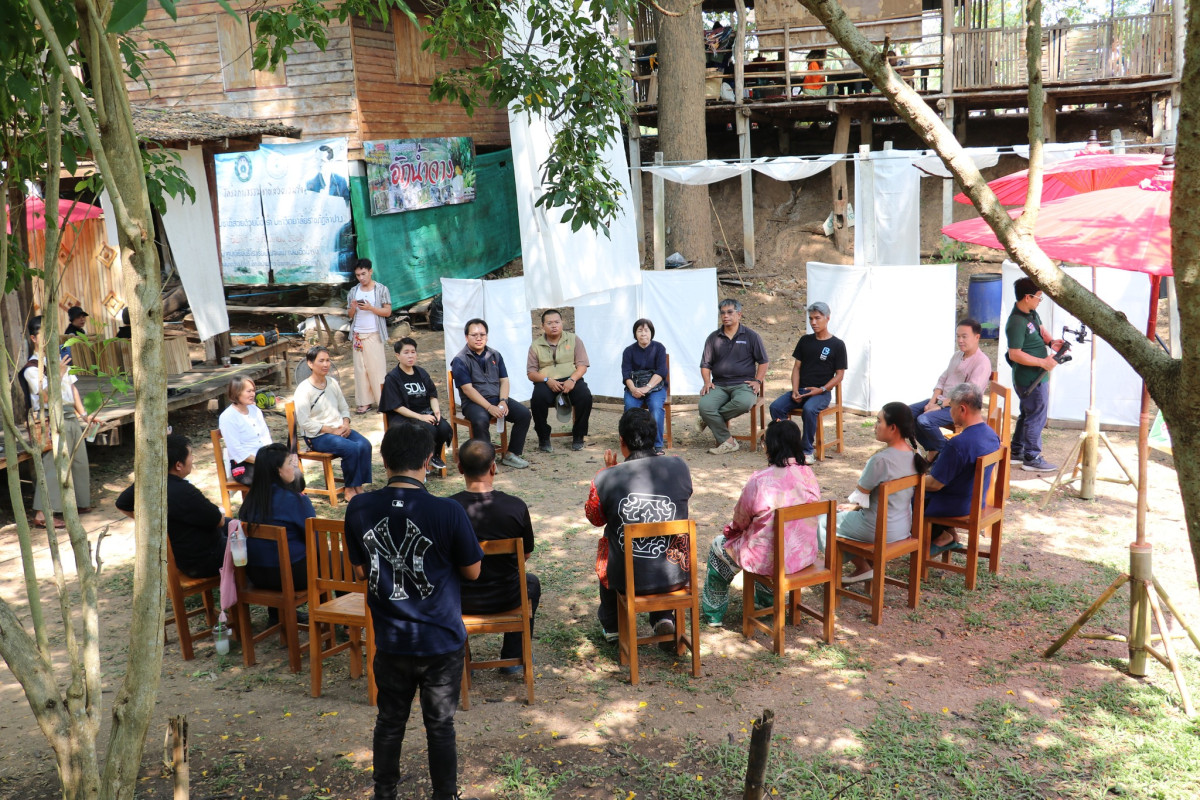
Educational and community learning activities included the discussion session “Sharing Together: Responding to a Changing World,” which created a space for exchanging experiences and practical knowledge related to changing community conditions. Other activities promoted safe agricultural products, local plant varieties, traditional wisdom, contemporary crafts, herbal products, and local knowledge.
Through these outreach educational activities, RMUTL supported knowledge exchange beyond the university campus and encouraged the application of university research and knowledge within local communities. The initiative connected academic research with community experience and practical learning, helping local residents strengthen their ability to adapt to changing social, economic, environmental, and climate conditions.
Linking Sustainability Education with the BCG Economy Model
The initiative also demonstrates how sustainability education can be integrated with local economic development. Through the research project, the university applies technology and innovation under the Bio-Circular-Green (BCG) Economy Model to support sustainable agricultural development and strengthen community resilience in response to climate change.
The green market also connected nearby community-based tourism destinations, including Khua Tae Merit Bridge, Wat Phra That Sandon, and Ban Luk Woodcarving Community, supporting the development of local tourism routes and creating opportunities for employment, income generation, and local economic development.
By connecting university research, community knowledge, sustainable agriculture, local products, cultural wisdom, and community-based tourism, the initiative provides local residents with opportunities to learn and apply sustainability concepts within their own community context.