
Rajamangala University of Technology Lanna (RMUTL) actively contributes to regional policy development through direct collaboration with government agencies, academic institutions, local authorities, and community stakeholders. The university applies its research expertise and facilitates stakeholder participation to identify environmental challenges, provide policy recommendations, and support the development of strategies for water resource management and flood disaster preparedness. These efforts demonstrate RMUTL’s role in connecting academic knowledge with government planning processes and community needs.
During 2025–2026, RMUTL contributed to two regional initiatives in Lampang and Chiang Rai provinces, focusing on long-term water resource management and community-based flood early warning systems. Both initiatives involved cooperation with government agencies and local stakeholders to identify existing problems, assess management challenges, and provide recommendations for improving regional planning and disaster risk management.
Supporting Regional Water Resource Management Policy and Strategic Planning
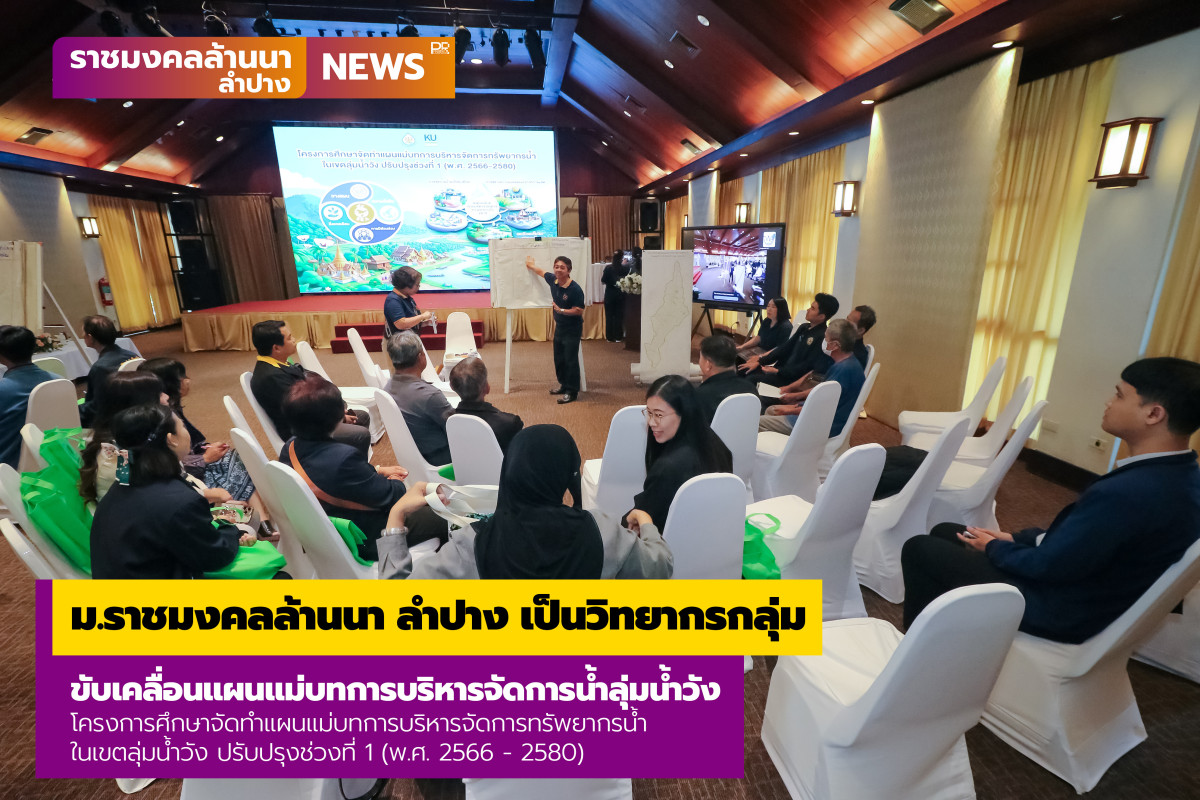
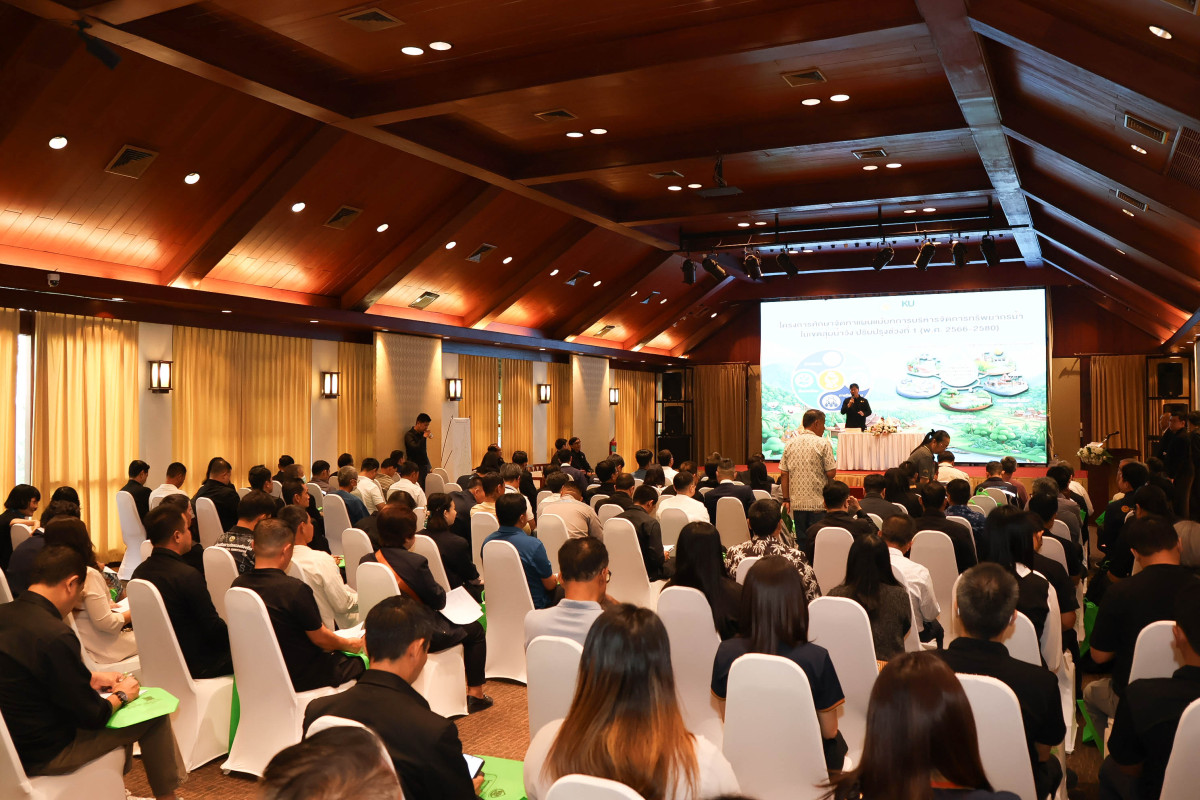
On March 25, 2026, RMUTL Lampang Campus collaborated with the Office of the National Water Resources (ONWR), Region 1, and Kasetsart University in organizing a stakeholder consultation to support the revision of the Wang River Basin Water Resources Management Master Plan (2023–2037).
The consultation brought together approximately 120 participants, including representatives from government agencies, the Wang River Basin Committee, local administrative organizations, water-user organizations, foundations, academic institutions, and local communities.
RMUTL faculty members and researchers served as facilitators, encouraging stakeholders to identify water management problems, discuss regional challenges, assess community needs, and propose recommendations for improving water resource management across the Wang River Basin and its tributaries.
The consultation provided a mechanism for incorporating local knowledge, technical expertise, and stakeholder perspectives into the government’s long-term water management planning process. The information and recommendations gathered are intended to inform the ongoing revision of the basin’s master plan, supporting more responsive and inclusive regional water management strategies.
Contributing to Regional Disaster Risk Management and Flood Early Warning Policy
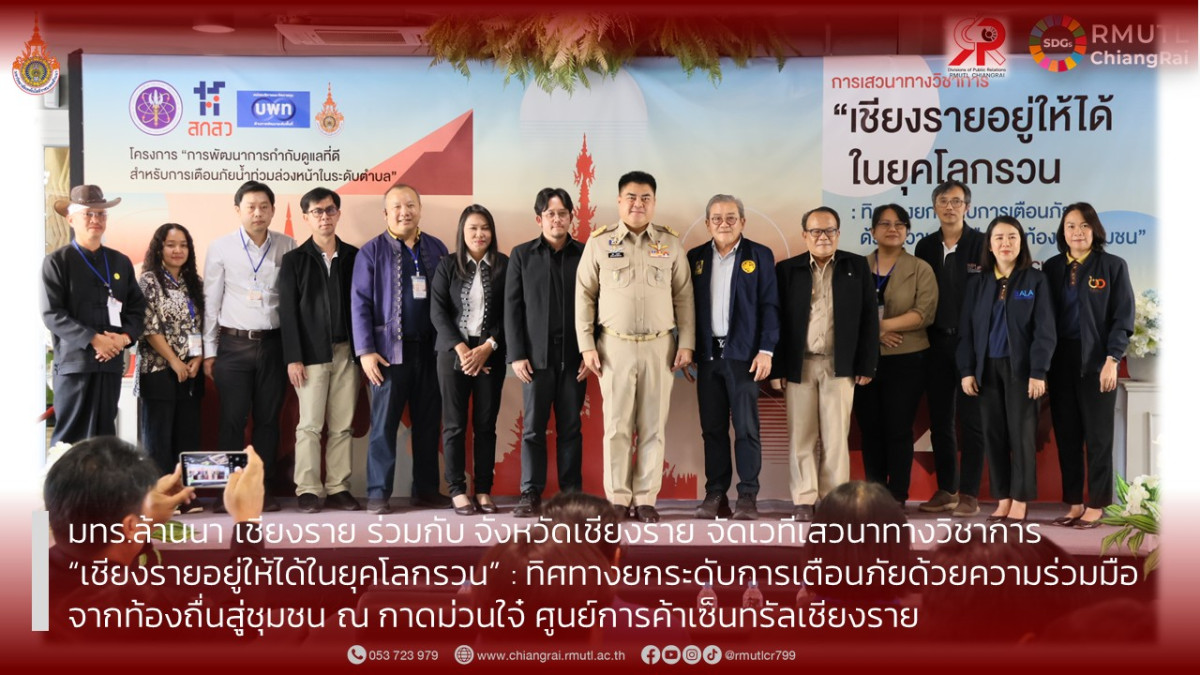
On December 25, 2025, RMUTL Chiang Rai Campus collaborated with the Chiang Rai Provincial Government to organize an academic forum entitled “Living with Climate Change in Chiang Rai: Strengthening Early Warning Systems through Local and Community Partnerships.”
The forum was conducted under a research project focused on strengthening governance mechanisms for flood early warning systems at the subdistrict level. Participants included representatives from disaster management agencies, water resource authorities, local administrative organizations, academic institutions, and flood-affected communities.
The discussions examined the relationship between national and provincial policy frameworks, local government implementation plans, and community participation in disaster monitoring and early warning systems. Participants also reviewed experiences and lessons learned from previous flood events to identify existing weaknesses, coordination challenges, and opportunities for improving local disaster preparedness.
The forum generated key lessons and policy recommendations aimed at strengthening flood early warning systems at the subdistrict level. It also identified opportunities for continued cooperation among provincial authorities, local governments, educational institutions, and communities.
By integrating research findings with practical experiences from government agencies and local communities, RMUTL contributed academic input to regional policy discussions and supported the development of more coordinated, community-responsive approaches to flood disaster risk management.
Institutional Contributions to Evidence-Informed Policy Development and Adaptive Management
Together, these initiatives demonstrate RMUTL’s direct participation in regional government policy development and planning processes through several interconnected contributions.
The university supported the identification of regional problems and challenges by facilitating discussions among government agencies, technical experts, and affected communities. It contributed to policy and strategy development by gathering stakeholder recommendations for the revision of the Wang River Basin Water Resources Management Master Plan and improvements to flood early warning governance in Chiang Rai.
RMUTL also supported evidence-informed decision-making by connecting academic research, local experiences, and lessons from previous flood events with government planning and policy discussions. These contributions provide a foundation for reviewing existing management approaches, identifying necessary improvements, and informing future adjustments to regional water management and disaster preparedness strategies.
Through these partnerships, RMUTL strengthened collaboration between higher education institutions, regional government agencies, local authorities, and communities. Its contributions demonstrate how universities can provide technical expertise, facilitate inclusive policy consultations, and support more responsive and sustainable regional governance.
The two initiatives establish a foundation for continued cooperation in regional planning, policy improvement, and the development of management approaches that respond to changing environmental conditions and community needs.