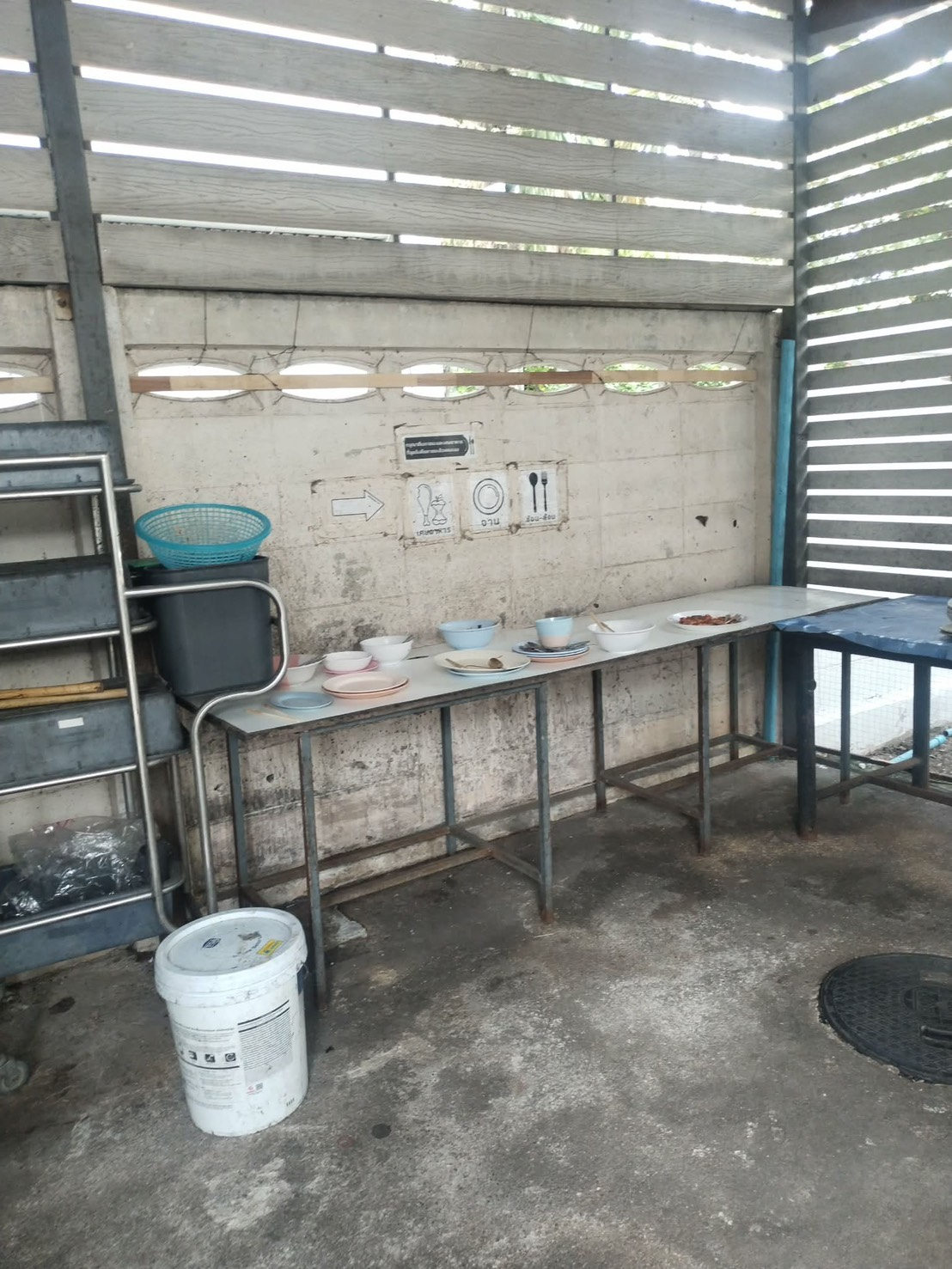
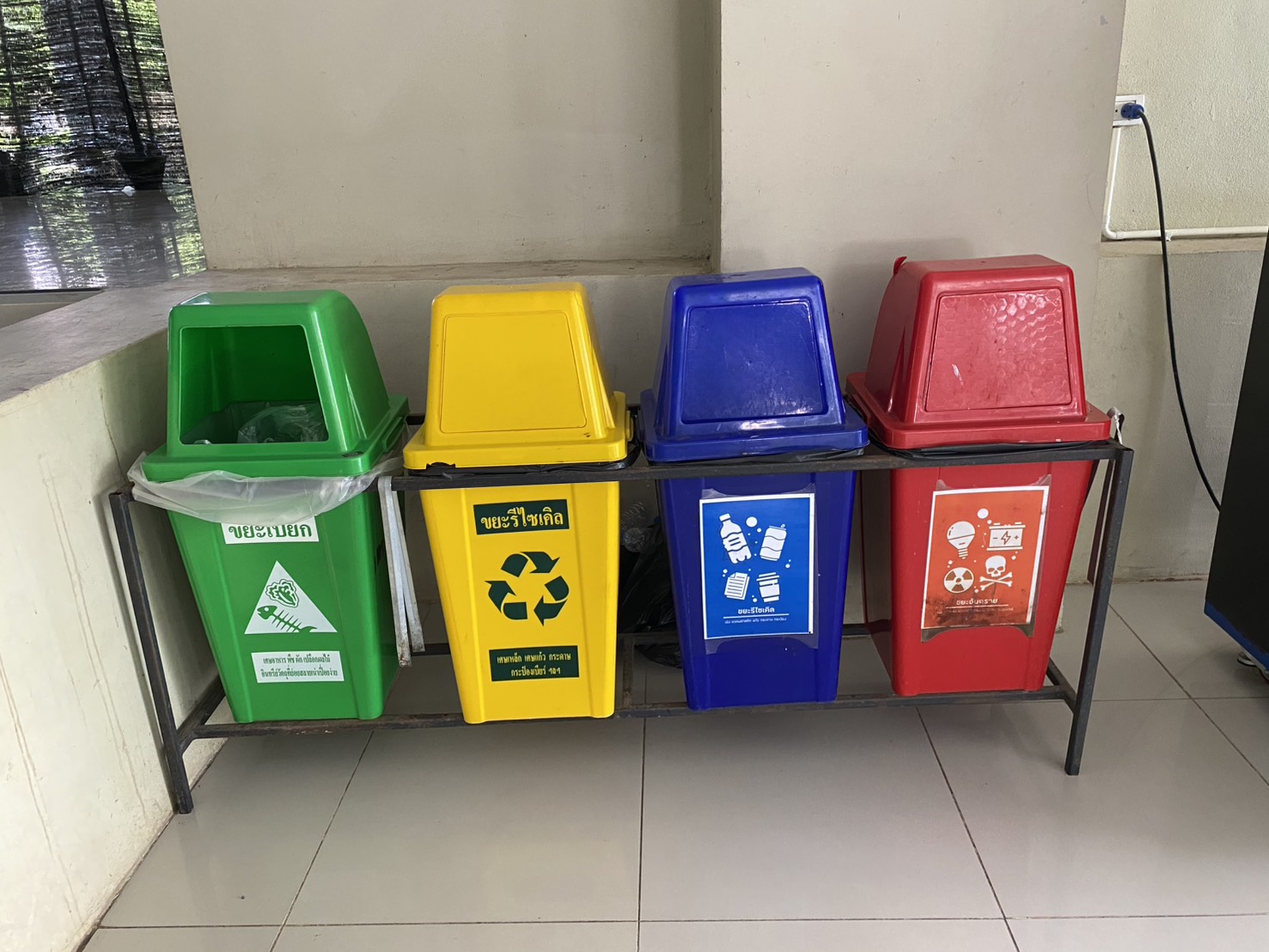
 Rajamangala University of Technology Lanna (RMUTL) is committed to promoting efficient and responsible food waste management in its university cafeterias to support sustainable development and Sustainable Development Goal 2 (SDG 2): Zero Hunger. The university encourages students, staff, and food vendors to work together to separate waste at the source.
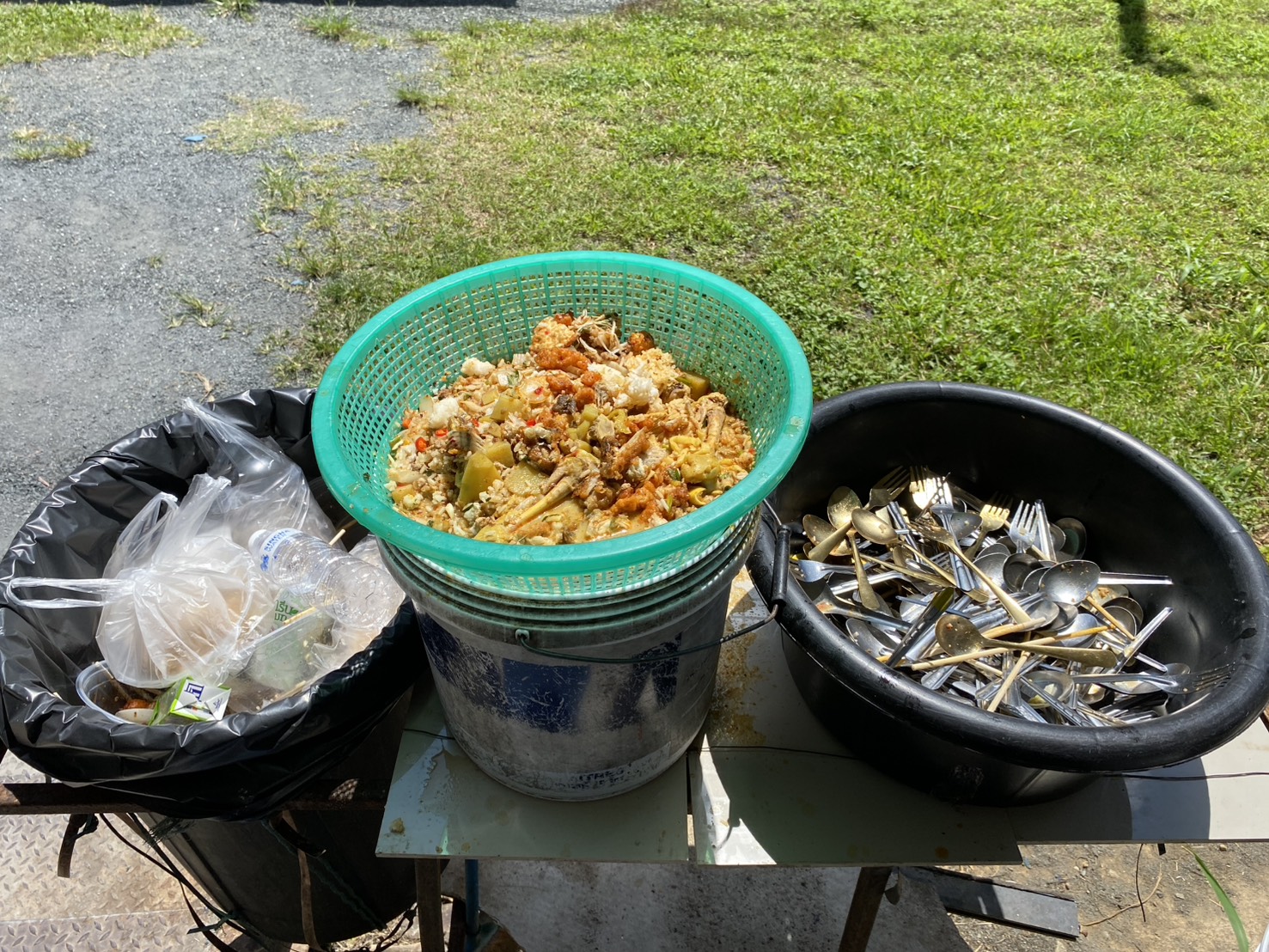
Food waste generated in the cafeterias, such as food scraps and uneaten meals, is properly sorted and collected. Organic waste that can be put to good use is processed for use as animal feed, helping to reduce food waste and maximize the value of residual resources.
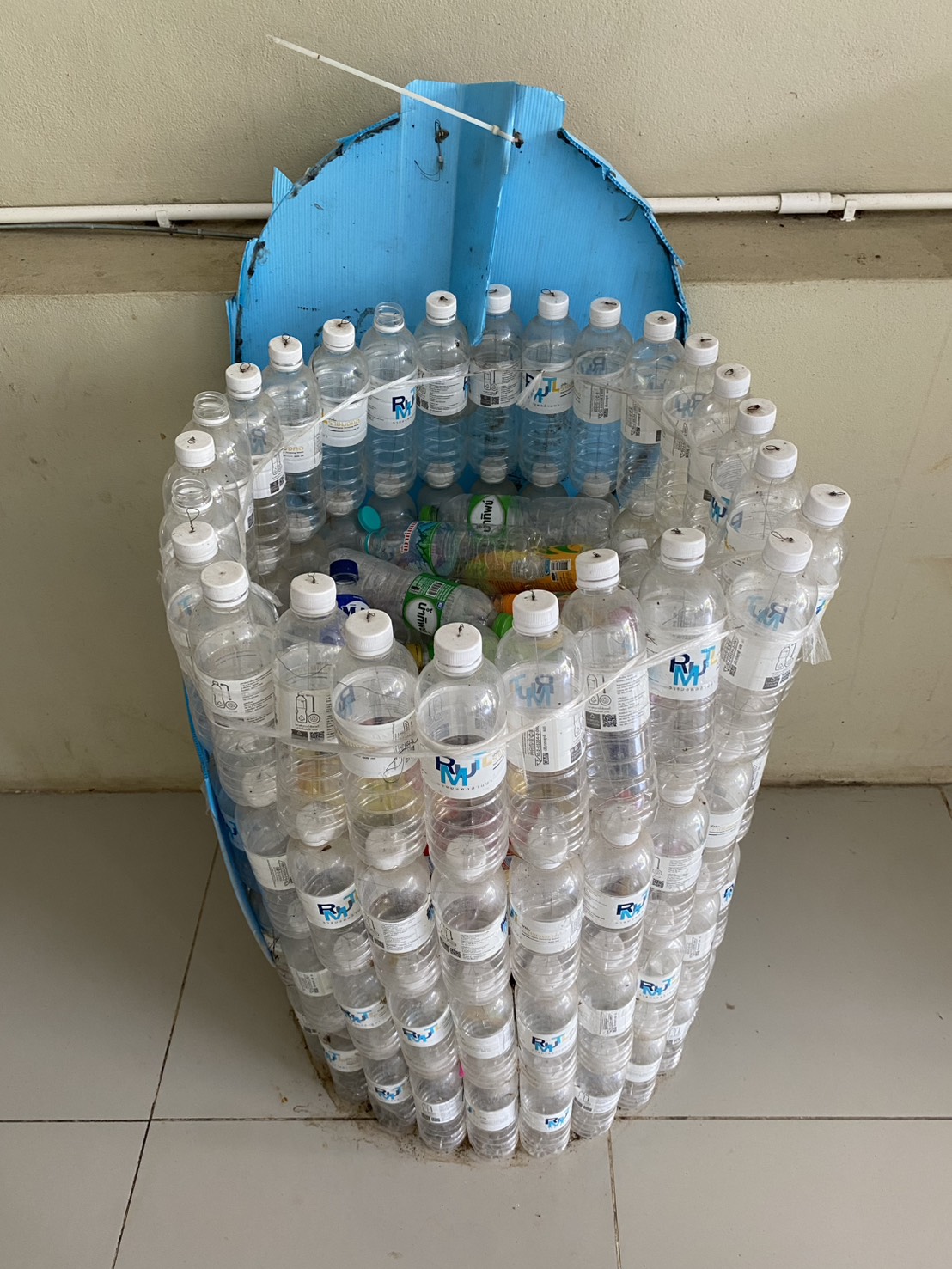
In addition, plastics and food containers from the cafeterias are separated from food waste and directed to appropriate reuse or recycling processes. This helps reduce the overall volume of waste and minimize contamination of recyclable materials.
These initiatives reflect RMUTL’s commitment to reducing food waste, making efficient use of resources, and promoting a sustainable food system. They also raise awareness within the university community about food security, responsible consumption, and sustainable resource management.
Table 1: A Comparison of the amount of RMUTL’s food waste measured during the period 2019 – 2025
| Year | 2019 | 2020 | 2021 | 2022 | 2023 | 2024 | 2025 |
| Amount of waste | 9.67 tons | Less than one ton | 4.05 tons | 9.00 tons | 9.52 tons | 9.52 | 9.52 |
| Remarks | Before Covid-19
Full-time onsite learning |
Online learning due to Covid-19 | Combined Online and onsite learning due to Covid-19 | Full time onsite learning | Full time onsite learning | Full time onsite learning | Full time onsite learning |
Food waste data collected at RMUTL from 2019 to 2025 provide insights into changes in waste generation associated with university operations and the COVID-19 pandemic. Based on Table 1 and records from the Department of Building and Facility Development, annual food waste volumes are reported in metric tons. In 2019, the pre-pandemic baseline year, RMUTL operated fully on campus and generated 9.67 tons of food waste, reflecting typical waste levels under normal conditions.
In 2020, following the Thai government’s declaration of a state of emergency due to COVID-19, online learning and work-from-home arrangements significantly reduced campus activities, causing food waste to fall to less than one ton. In 2021, as restrictions eased and RMUTL adopted hybrid learning, food waste remained relatively low, averaging approximately 4.05 tons during the hybrid and online learning period.
With the return to predominantly on-site learning in 2022 and 2023, food waste increased, reaching 9.52 tons in 2023. In 2024 and 2025, food waste data continued to be collected to monitor trends following the resumption of normal university operations. These records provide a basis for evaluating waste management practices and identifying opportunities to reduce food waste.
Overall, the data highlight the relationship between campus occupancy, teaching arrangements, and food waste generation. Continued monitoring supports evidence-based strategies to improve food waste management and promote more sustainable campus operations.