
Plan to Reduce Energy Consumption
Rajamangala University of Technology Lanna (RMUTL) has strengthened its institutional energy efficiency planning through formal energy conservation policies, operational measures, designated management responsibilities, and campus-level monitoring activities.
A major development was the issuance of the University Announcement on Energy Conservation Measures and Work-from-Home Guidelines on March 12, 2026, establishing university-wide requirements to reduce unnecessary energy consumption and improve resource efficiency.
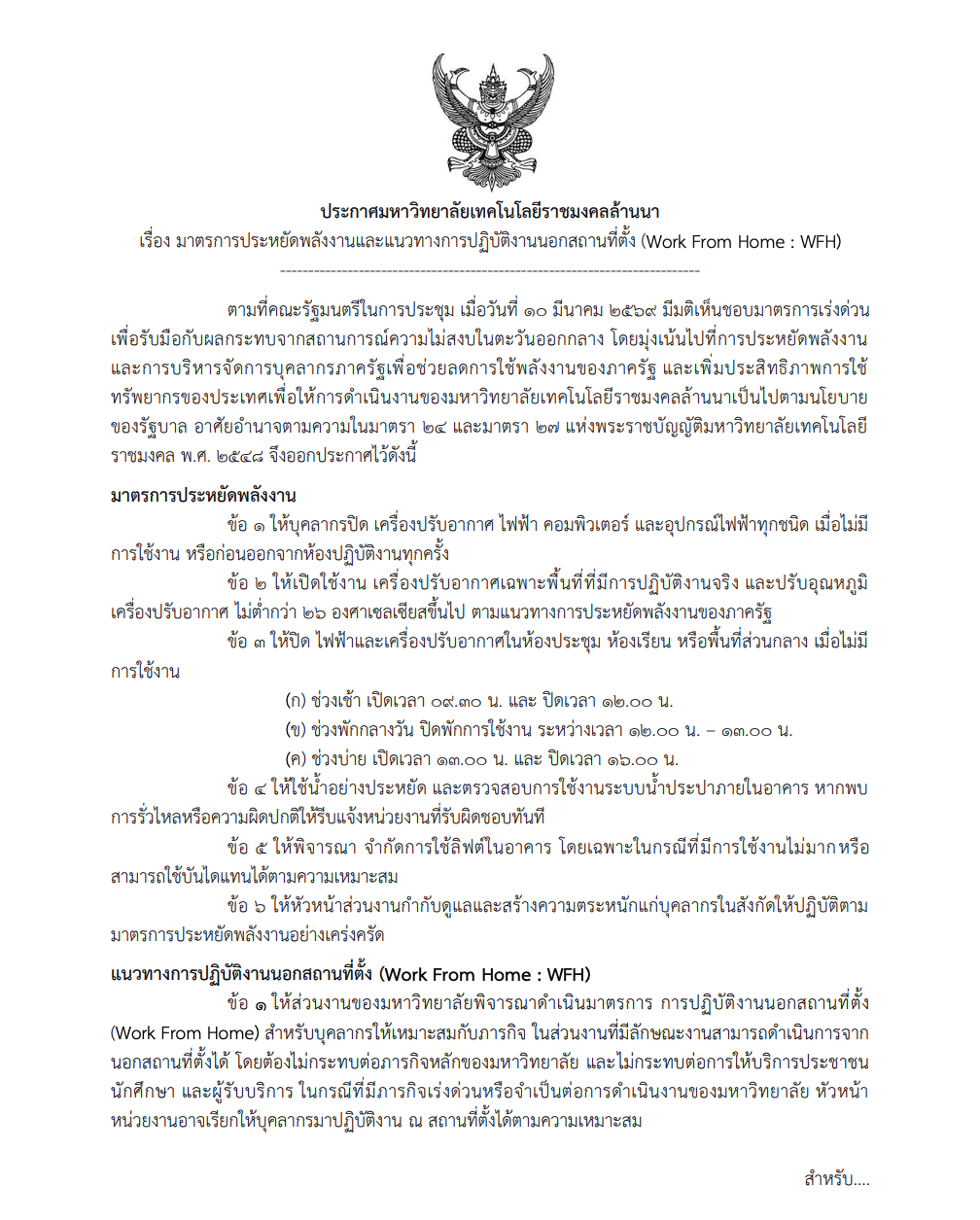
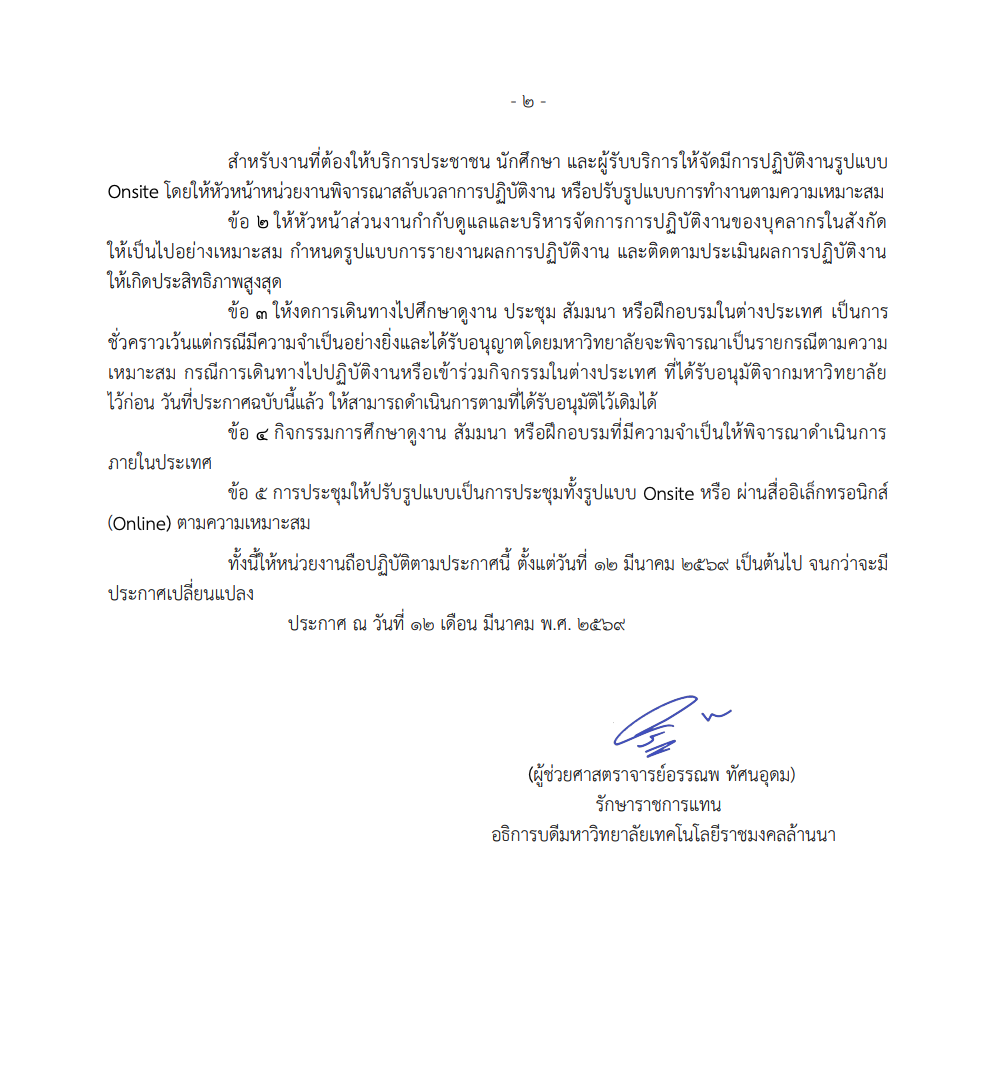
The announcement introduced six operational energy conservation measures, including:
- Switching off electrical equipment when not in use.
- Maintaining air-conditioning temperatures at 26°C or higher.
- Establishing electricity and air-conditioning operating schedules.
- Promoting water conservation and reducing unnecessary elevator use.
- Assigning heads of university units responsibility for supervising compliance.
- Introducing flexible work arrangements, including work-from-home options and online meetings, where appropriate.
These measures complement RMUTL’s existing energy conservation planning activities, including the Energy Conservation Committee at Chiang Rai Campus and practical building energy management initiatives.
Together, the initiatives demonstrate the university’s systematic approach to reducing energy consumption through institutional planning, administrative oversight, operational controls, and improved energy management practices.
1. University-Wide Energy Conservation Policy and Operational Measures
On March 12, 2026, RMUTL issued an official announcement entitled Energy Conservation Measures and Work-from-Home Guidelines, signed by Assistant Professor Annop Tatsanaudom, Acting President of RMUTL.
The announcement was introduced in response to the Thai Cabinet resolution of March 10, 2026, which called for urgent energy conservation measures across public institutions in response to international energy supply concerns.
The policy took effect on March 12, 2026, and remains applicable until officially amended.
The announcement establishes a university-wide operational framework designed to reduce unnecessary energy consumption, strengthen resource management, and promote efficient working practices.

1.1 Electrical Equipment Management
All university personnel are required to switch off air conditioners, lights, computers, and other electrical equipment when not in use or before leaving their workspaces.
This measure addresses avoidable electricity consumption associated with equipment operating unnecessarily.
It also promotes individual responsibility for energy conservation among university personnel.
1.2 Air-Conditioning Efficiency
The university requires air-conditioning systems to be operated only in occupied working areas.
Air-conditioning temperatures must be maintained at 26°C or higher, consistent with government energy conservation guidance.
This requirement is intended to reduce electricity demand from cooling systems while maintaining appropriate working conditions.
1.3 Electricity and Air-Conditioning Operating Schedules
The university established specific operating schedules for lighting and air-conditioning systems in meeting rooms, classrooms, and common areas.
The prescribed operating periods are:
| Operating Period | Required Schedule |
|---|---|
| Morning | 9:30 a.m.–12:00 p.m. |
| Lunch break | 12:00–1:00 p.m. — systems switched off |
| Afternoon | 1:00–4:00 p.m. |
Electrical equipment and air-conditioning systems must also be switched off when rooms or facilities are not in use.
These schedules provide practical operational controls to minimize unnecessary electricity consumption during periods of low occupancy or inactivity.
1.4 Water Resource Conservation
University personnel are required to use water efficiently and inspect water supply systems within buildings.
Any leaks or abnormalities must be reported promptly to responsible units.
Although water conservation is a broader resource management measure, it complements the university’s approach to efficient campus operations.
1.5 Elevator Use Optimization
University units are encouraged to limit unnecessary elevator use, particularly when building occupancy is low or when stairs provide a practical alternative.
This measure promotes more efficient electricity use in building transportation systems.
1.6 Administrative Oversight and Staff Awareness
Heads of university units are responsible for supervising the implementation of energy conservation measures and promoting awareness among personnel.
This provision establishes management responsibility for ensuring that the university’s conservation measures are communicated and followed.
It also connects institutional policy with day-to-day operational practices.
2. Flexible Work Arrangements to Support Resource Efficiency
In addition to direct energy conservation measures, RMUTL introduced work-from-home guidelines to support more efficient use of institutional resources.
The university allows individual units to consider work-from-home arrangements for duties that can be performed outside university premises without affecting essential operations.
The guidelines require university units to maintain necessary services for students, members of the public, and other service users.

For activities requiring physical presence, unit heads may organize on-site work schedules or adjust staffing arrangements as appropriate.
The guidelines also include the following measures:
Online and Hybrid Meetings: University meetings may be organized on-site or through electronic communication platforms, depending on operational requirements.
Management and Performance Monitoring: Heads of university units are responsible for determining suitable working arrangements, establishing reporting procedures, and evaluating staff performance.
Temporary Restrictions on International Travel: International study visits, conferences, seminars, and training activities are temporarily restricted, except where necessary and specifically authorized. Activities approved before the announcement may proceed under their original approvals.
Prioritization of Domestic Activities: Necessary study visits, seminars, and training activities should be considered for implementation within Thailand where appropriate.
These measures are intended to support resource efficiency and maintain university operations while adapting working practices to energy conservation requirements.
Work-from-home arrangements and online meetings may reduce certain forms of campus energy demand and travel-related resource consumption. However, their actual effects depend on implementation patterns and would require further assessment.
3. Campus-Level Energy Conservation Planning and Governance
RMUTL’s university-wide measures are supported by existing energy conservation management activities at its campuses.
On February 5, 2025, RMUTL Chiang Rai Campus organized a meeting of its Energy Conservation Committee to discuss energy conservation policies, operational measures, and the preparation of the committee appointment order for 2025.
The meeting provided a formal mechanism for coordinating energy conservation responsibilities and considering approaches to more efficient energy management.
The campus also continued its energy management activities through its Energy Conservation Committee and Energy Management Assessment Committee in January 2026.
These activities demonstrate the importance of designated management structures in coordinating conservation planning, reviewing implementation, and identifying opportunities for improvement.
The combination of university-wide policy and campus-level committee activities provides an institutional foundation for a more coordinated approach to energy conservation.
4. Supporting Energy Efficiency through Building Technology and Monitoring
RMUTL complements its administrative conservation measures with practical technologies intended to improve building energy management.
On July 16, 2025, electrical engineering students at RMUTL Chiang Rai Campus participated in the installation of 18 Tuya Smart Switch devices in the university’s administrative building.
The installation formed part of a pilot energy conservation room project.
The devices provide capabilities for remote control, scheduled switching, and electricity monitoring.
These functions can help facility users and managers reduce unnecessary equipment operation and obtain information relevant to improving electricity management.
The pilot project also established opportunities to expand similar technology to other campus buildings.
The initiative demonstrates how technological improvements can support institutional energy efficiency planning by enabling more precise equipment control and monitoring.
However, the installation alone does not establish the amount of electricity saved. Actual energy performance improvements will require baseline measurements and follow-up consumption data.
5. Institutional Energy Efficiency Planning and Implementation Mechanisms
RMUTL’s energy conservation activities demonstrate an approach involving policy development, operational implementation, administrative responsibility, and monitoring.
The approach includes four interconnected components.
Institutional Planning: University-wide energy conservation measures establish common operating requirements and define expectations for efficient electricity and resource use.
Operational Implementation: Specific measures concerning air conditioning, lighting, equipment shutdown, elevator use, and working arrangements provide practical guidance for personnel and university units.
Administrative Governance: Heads of university units and campus energy conservation committees contribute to oversight, awareness, and coordination of conservation activities.
Energy Monitoring and Improvement: Building energy management activities and smart electrical technologies support the review of electricity use and provide opportunities for identifying further improvements.
These components establish a framework through which university-wide policies can be translated into campus-level and daily operational practices.
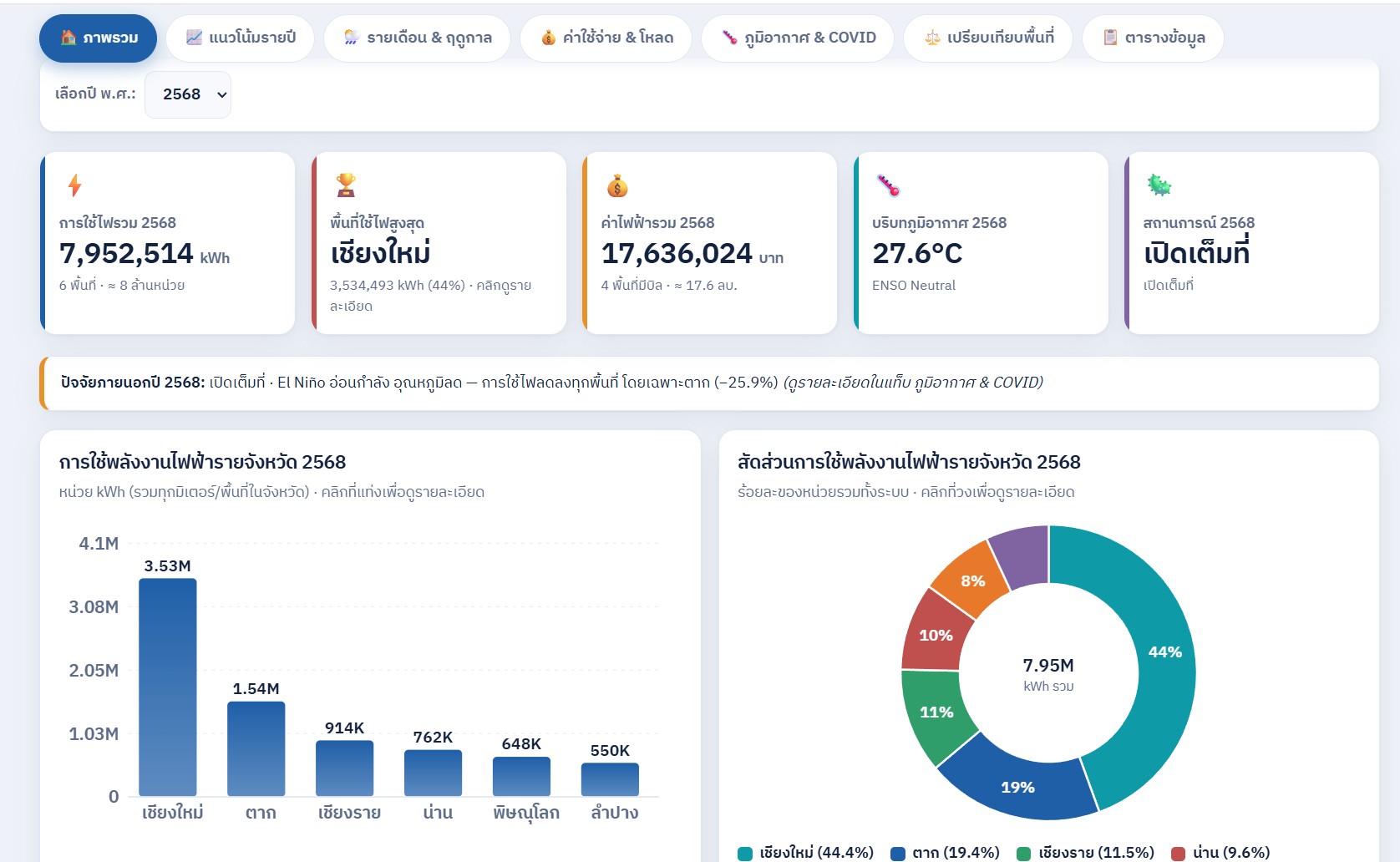
Continued monitoring of electricity consumption and evaluation of compliance will be important for determining the effectiveness of the measures and improving future energy conservation planning.
6. Institutional Contributions and Expected Impact
The implementation of RMUTL’s energy conservation measures contributes to the development of a more systematic institutional approach to resource efficiency.
The announcement of March 12, 2026, provides clearly defined operating requirements, including a minimum air-conditioning temperature of 26°C, scheduled electricity use, and management responsibilities.
The measures also extend beyond technical equipment management to include working arrangements, staff awareness, and administrative supervision.
Campus-level conservation committees and smart electricity monitoring technologies provide complementary mechanisms that can support implementation and improvement.
The anticipated benefits include reduced unnecessary electricity consumption, improved resource management, greater staff awareness of energy conservation, and opportunities to reduce operating costs.
However, the available public evidence does not provide an overall electricity reduction target, quantified energy savings, or verified performance against a university-wide baseline.
These outcomes should therefore be assessed through subsequent energy consumption reviews and implementation reports.
7. Summary of Activities and Impacts
| Activity / Event | Promoted Theme | Stakeholders / Participants | Timeframe / The Impact |
|---|---|---|---|
| Energy Conservation Committee Meeting, Chiang Rai Campus | Energy efficiency planning, conservation policies, and management responsibilities | RMUTL Chiang Rai administrators, Energy Conservation Committee, and responsible personnel | February 5, 2025 — Supported the development and coordination of campus energy conservation measures |
| Smart Energy Conservation Room Pilot | Digital electricity monitoring, scheduled equipment control, and building energy efficiency | RMUTL Chiang Rai, electrical engineering students, and building facility personnel | July 16, 2025 — Installed 18 smart switches to improve electricity management and provide a pilot for future expansion |
| Energy Conservation and Management Review, Chiang Rai Campus | Continued energy management oversight and performance review | Campus Energy Conservation Committee and Energy Management Assessment Committee | January 2026 — Supported continued review and improvement of energy conservation practices |
| University-Wide Energy Conservation Announcement | Electrical equipment shutdown, air-conditioning temperatures of 26°C or higher, and scheduled electricity use | RMUTL administration, academic and support staff, and all university units | March 12, 2026 onward — Established formal operational requirements for reducing unnecessary energy consumption |
| Water Conservation and Elevator Optimization Measures | Efficient resource use and improved building operations | RMUTL personnel, building managers, and campus facility units | March 12, 2026 onward — Introduced conservation requirements for water systems and guidance to limit unnecessary elevator use |
| Work-from-Home and Flexible Working Guidelines | Resource-efficient work arrangements, online meetings, and travel management | University administrators, heads of units, academic and support staff | March 12, 2026 onward — Established flexible working and meeting arrangements intended to support resource efficiency while maintaining essential services |
| Administrative Supervision and Staff Awareness | Institutional compliance, energy conservation awareness, and management accountability | Heads of university units and university personnel | March 12, 2026 onward — Assigned responsibility for supervising conservation measures and promoting staff compliance |
8. Overall Institutional Impact
Between January 2025 and March 2026, RMUTL strengthened its energy efficiency planning through the development and implementation of institutional conservation measures, campus-level management activities, and building energy control technologies.
The university-wide announcement issued on March 12, 2026, represents a significant institutional measure because it establishes specific requirements for electricity consumption, including air-conditioning temperature settings, equipment operating schedules, and administrative responsibilities.
The policy is complemented by energy conservation committee activities at Chiang Rai Campus and the introduction of smart electrical controls in an existing university building.
Together, these initiatives demonstrate RMUTL’s commitment to integrating energy efficiency into institutional planning and daily operations.
The measures support a coordinated approach involving university leadership, campus administrators, facility personnel, academic staff, and support staff.
Their anticipated long-term contributions include more efficient electricity consumption, improved operational practices, reduced avoidable resource use, and stronger institutional capacity for energy management.
Although quantified savings have not yet been established from the reviewed public evidence, the university has documented formal policies and operational mechanisms designed to reduce overall energy consumption.
Through continued implementation, monitoring, and evaluation, these measures provide a foundation for more effective energy conservation and environmentally responsible university operations.
Sources
- RMUTL Official Announcement: Energy Conservation Measures and Work-from-Home Guidelines — March 12, 2026. Signed by Assistant Professor Annop Tatsanaudom, Acting President of RMUTL.
https://e-cms.rmutl.ac.th/assets/upload/files/2026/03/20260313102003_77531.pdf - RMUTL Public Relations: University Energy Conservation Measures and Work-from-Home Guidelines — March 12, 2026.
https://president.rmutl.ac.th/pr/news/32030-12-03-2569 - Energy Conservation Committee Meeting, RMUTL Chiang Rai Campus — February 5, 2025.
https://chiangrai.rmutl.ac.th/news/28075 - Smart Switch Installation for Building Energy Conservation, RMUTL Chiang Rai Campus — July 16, 2025.
https://chiangrai.rmutl.ac.th/news/29500 - RMUTL Chiang Rai Energy Conservation Activities and Management Reports
https://chiangrai.rmutl.ac.th/category/28-ข่าวอนุรักษ์พลังงาน?page=1