Rajamangala University of Technology Lanna (RMUTL) actively engages in international collaboration and comparative research to identify, review, and develop effective practices for addressing sustainability challenges in higher education. Through partnerships with universities in Thailand, Vietnam, Finland, and Spain, RMUTL contributes to the international exchange of research knowledge, educational innovations, and practical approaches to sustainable development.
Between January 2025 and March 2026, RMUTL participated in international activities under the Erasmus+ project “Learning for Sustainable Future – Higher Education for Green Transition in Southeast Asia” (GreenEdAsia). The collaboration provided opportunities for participating institutions to examine different educational approaches, compare European and Southeast Asian experiences, and develop adaptable practices for integrating sustainability into teaching, learning, research, and university engagement with society.
The initiative demonstrates RMUTL’s participation in international efforts to move beyond conventional knowledge exchange toward the systematic review of comparative approaches and the collaborative development of innovative educational practices.
International Partnership for Comparative Research and Sustainable Education
GreenEdAsia is a 36-month international project supported by the European Union through the Erasmus+ Programme, involving six higher education institutions from four countries:
- Rajamangala University of Technology Lanna (RMUTL), Thailand
- Rajamangala University of Technology Thanyaburi (RMUTT), Thailand
- Ho Chi Minh City University of Technology and Education (HCMUTE), Vietnam
- Dong Thap University (DThU), Vietnam
- Häme University of Applied Sciences (HAMK), Finland
- University of Burgos (UBU), Spain
The international partnership creates a collaborative framework for strengthening the capacity of Southeast Asian higher education institutions to respond to the transition toward environmentally responsible and sustainable development.
The project focuses on educational innovation, future competencies, environmental responsibility, green technologies, and cooperation among universities, industry, and society.
Through this network, RMUTL participates in examining educational models and practices from different countries, identifying approaches relevant to sustainability challenges, and considering their applicability within Thailand’s higher education and regional development contexts.
The collaboration began with the international project launch hosted by HCMUTE in Vietnam during February 17–21, 2025. The meeting established a foundation for cooperation, institutional knowledge sharing, and subsequent activities focused on reviewing and developing educational practices.
Comparative Review of European Approaches to Sustainable Higher Education and Innovation
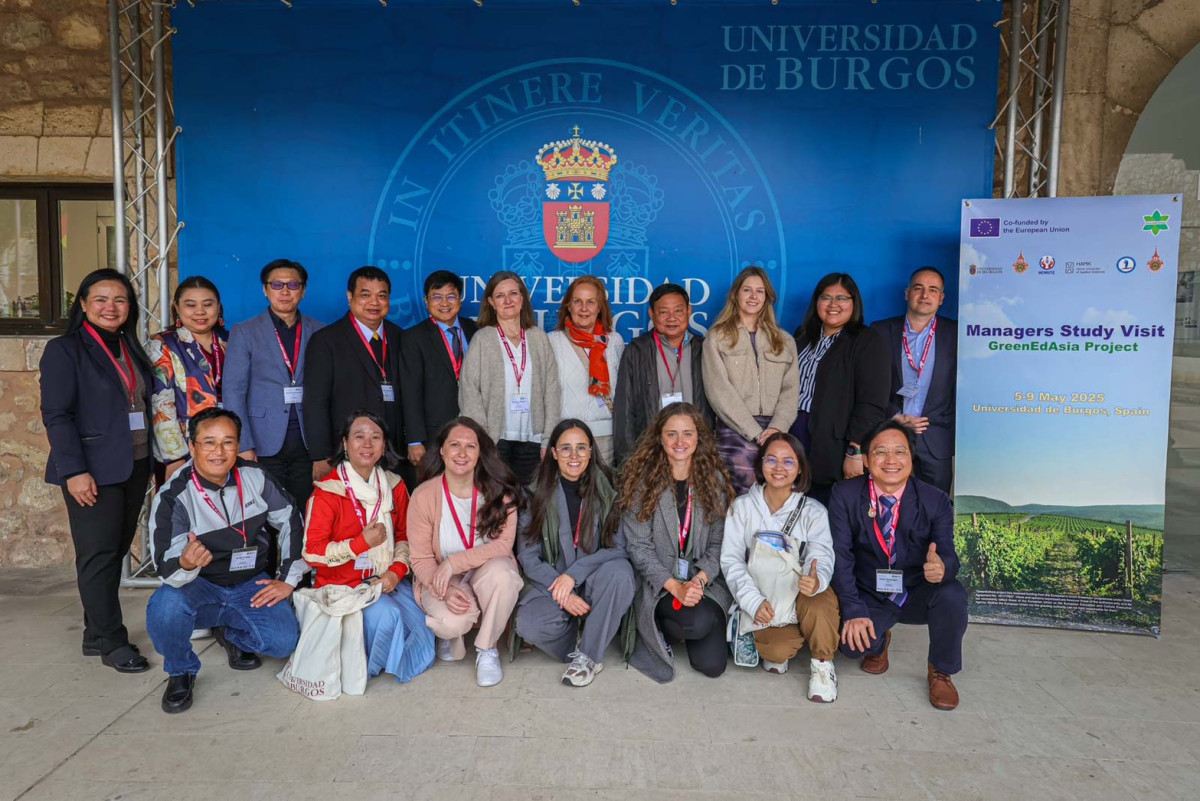
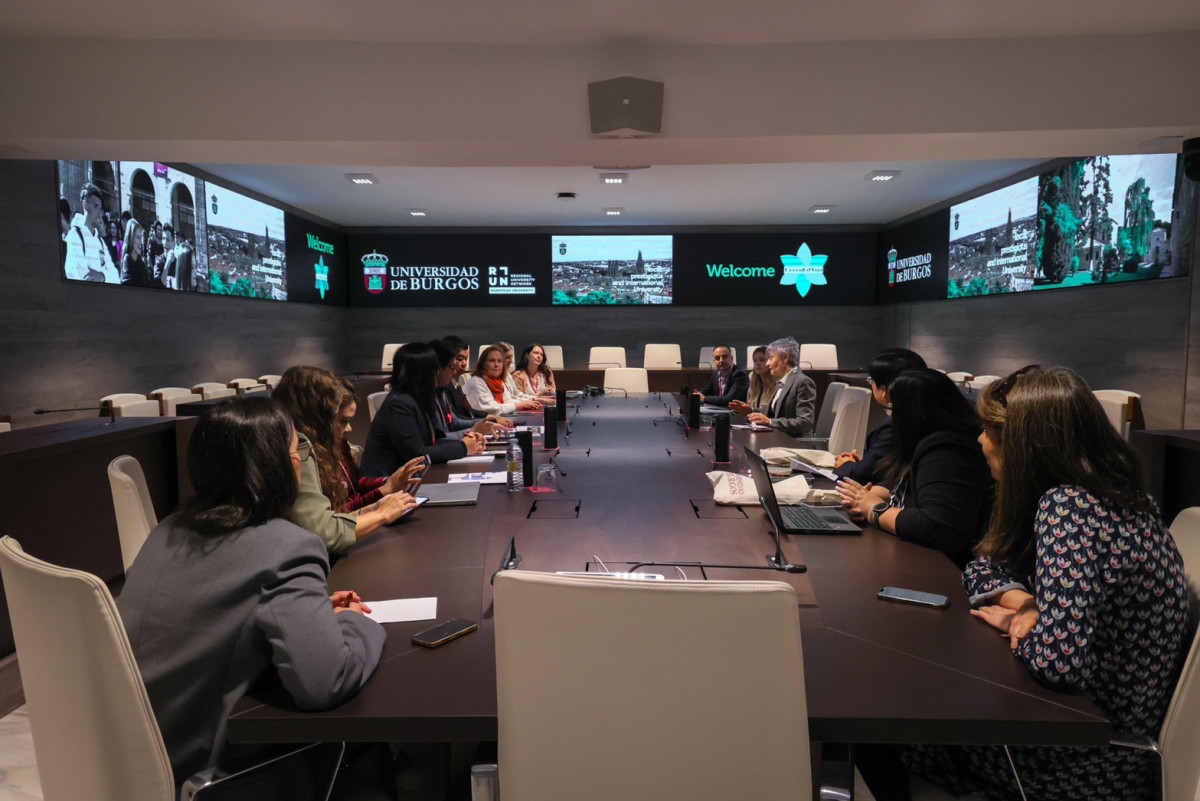
During May 2–11, 2025, RMUTL participated in international research and capacity-building activities hosted by the University of Burgos, Spain, under Work Package 5: Strengthening Capacities of Partner Higher Education Institutions.
RMUTL was represented by Associate Professor Dr. Pracha Yuenyongkul, Project Leader, and Ms. Sumana Sorathiwa, Project Coordinator.
The activities brought together international university partners to examine educational innovations and practical approaches to sustainable development, with particular attention to the relationship between higher education, technological innovation, industry, and society.
A major component involved examining Future Foresight Methods to identify competencies required for future labor markets and a low-carbon economy. Participants considered how universities could anticipate emerging environmental, technological, and social challenges and incorporate relevant competencies into educational development.
The collaboration also provided opportunities to compare practical approaches through study visits and discussions involving organizations in Spain:
University–Community Collaboration: The study visit to Yacimientos de Atapuerca offered insights into relationships between academic institutions, cultural and scientific resources, and broader society. It provided a reference for considering how universities can connect education and research with community development and public engagement.
University–Industry Collaboration: The visit to Pradorey Vineyard enabled participants to examine cooperation between academic knowledge and industry practices, providing perspectives on innovation, resource management, and university engagement with the productive sector.
Sustainable Technology and Energy Innovation: The visit to Hiperbaric introduced participants to renewable hydrogen technology and industrial innovation, supporting discussions on technological approaches relevant to the transition toward a low-carbon economy.
These activities allowed RMUTL and its international partners to review approaches adopted in different institutional and industrial environments.
Rather than treating international examples as directly transferable models, the comparative activities encouraged participants to consider the relevance of different practices to local educational systems, institutional capacities, and development needs.
The discussions contributed to identifying promising approaches for strengthening university–community relationships, integrating sustainability into institutional development, and preparing graduates for future economic and environmental challenges.
International Review and Collaborative Development of Innovative Teaching Practices in Finland
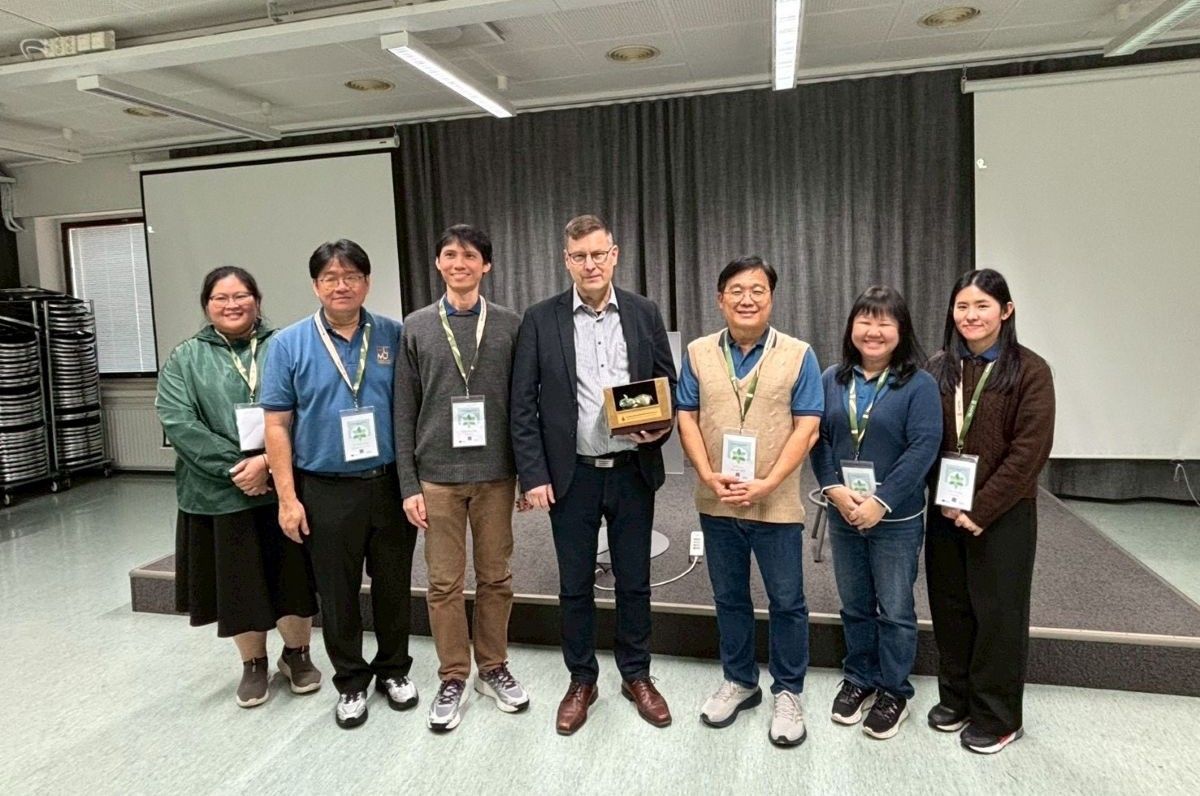
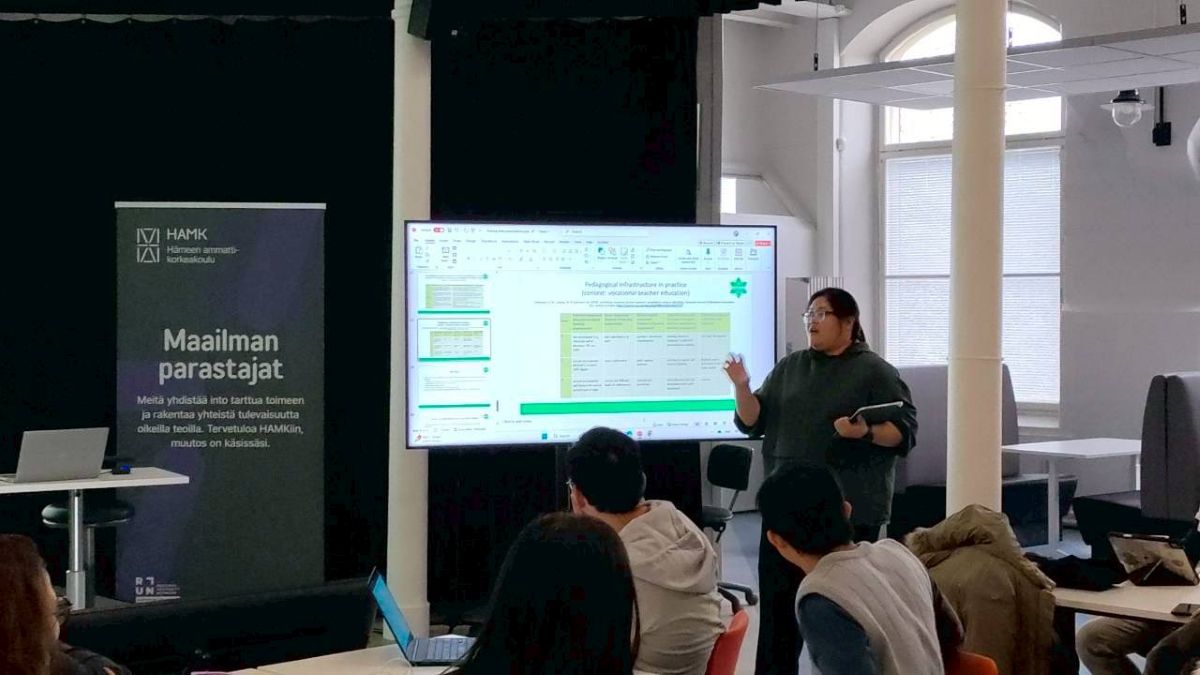
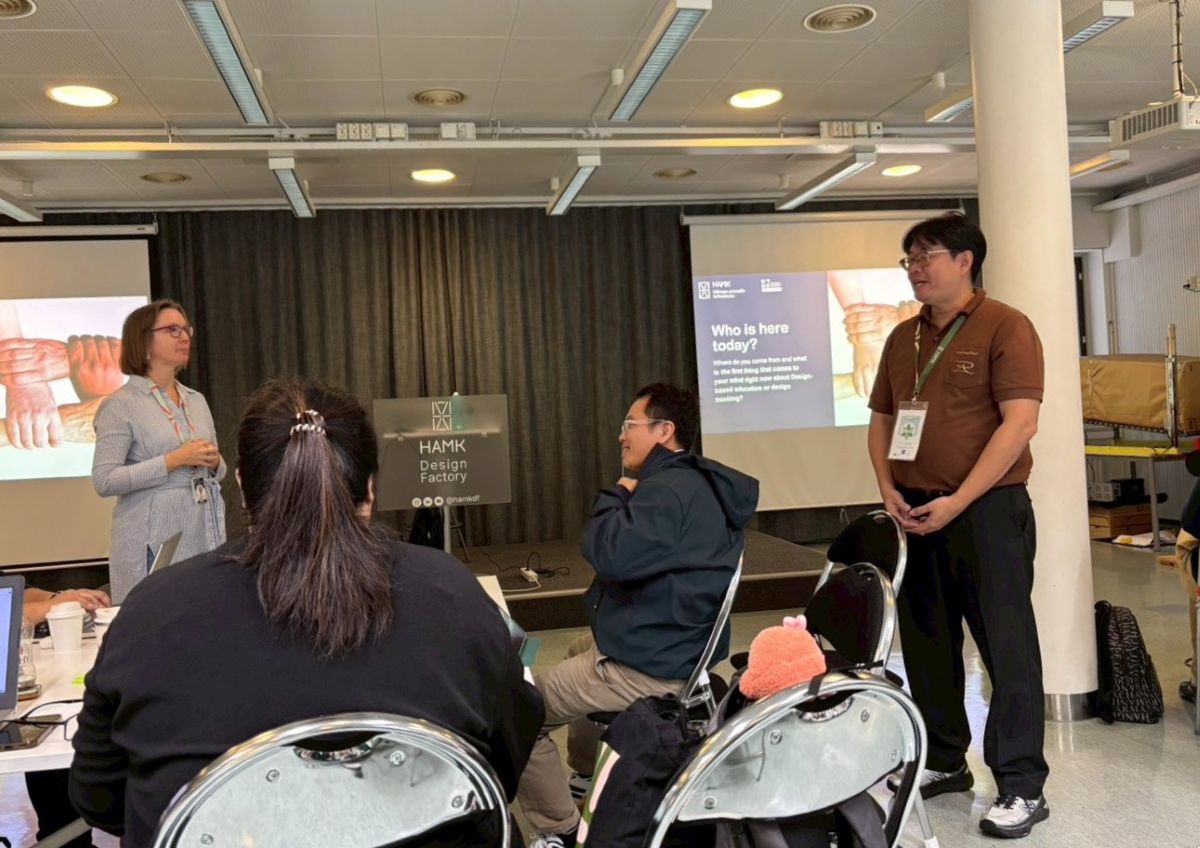
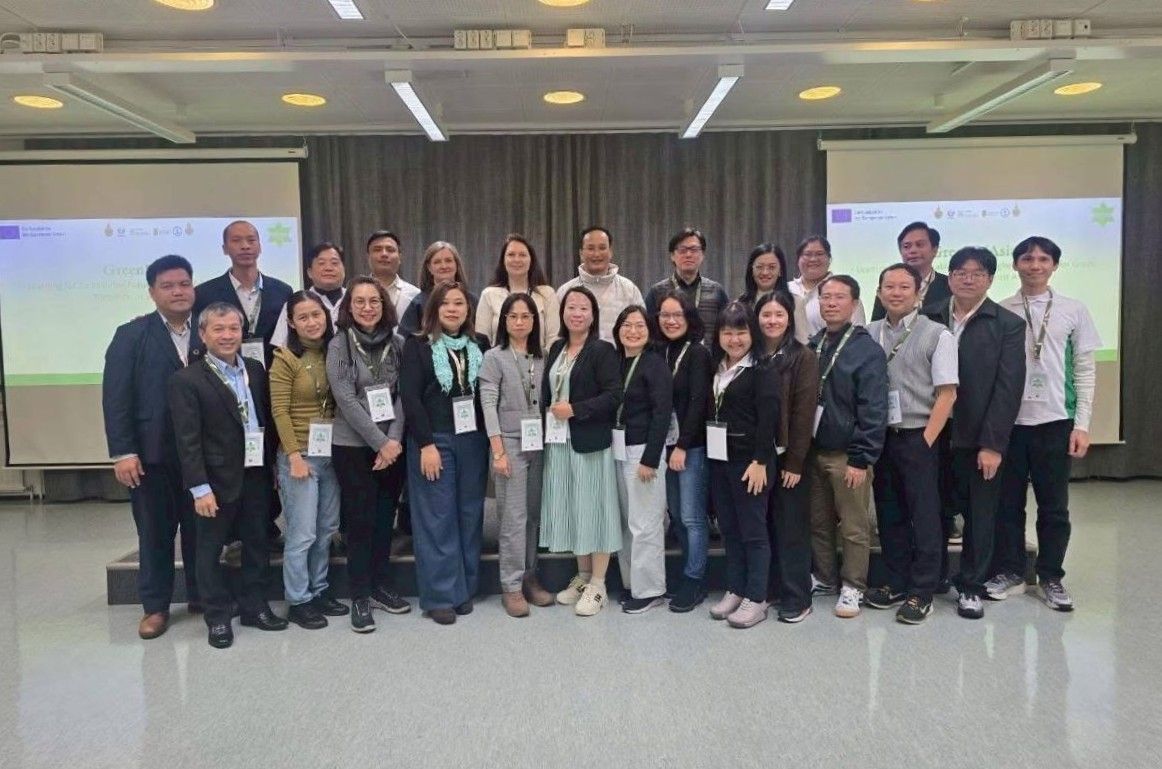
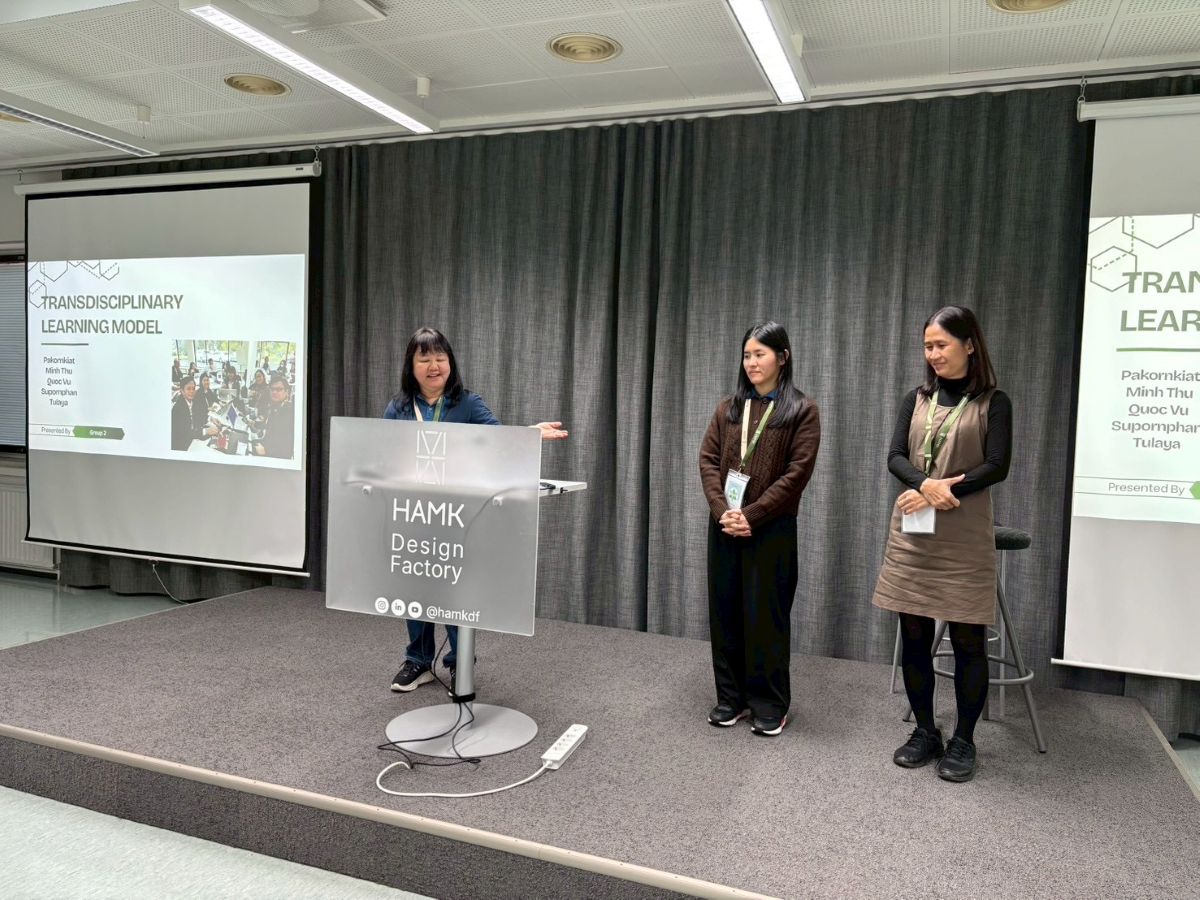
During October 6–10, 2025, the RMUTL GreenEdAsia team participated in the international Teacher Training Week hosted by Häme University of Applied Sciences (HAMK) in Hämeenlinna, Finland.
The program brought together academic staff from RMUTL, RMUTT, HCMUTE, DThU, and HAMK to examine innovative approaches to teaching and learning that could support sustainability-oriented educational transformation.
The training provided a structured opportunity to review and compare different pedagogical models, including:
- Problem-Based Learning: Encouraging learners to investigate and address real-world problems through inquiry and collaborative problem-solving.
- Transdisciplinary Learning: Integrating perspectives from multiple disciplines and practical contexts to address complex challenges.
- Dialogical Methods and Student-Centered Teaching: Supporting active participation, knowledge exchange, and learner engagement.
- Design-Based Learning and Design-Based Education: Connecting learning objectives with practical design processes and the development of potential solutions.
- DIANA and Five-Stage Online Scaffolding: Exploring approaches that support collaborative, dialogical, and structured learning processes.
Participants examined how these approaches could strengthen students’ abilities to identify problems, collaborate across disciplines, and develop solutions to environmental, technological, and social challenges.
The program also introduced practical examples of sustainability-oriented research, technology, and education through HAMK’s SmartBio, SmartBuilt, and SmartEdu initiatives.
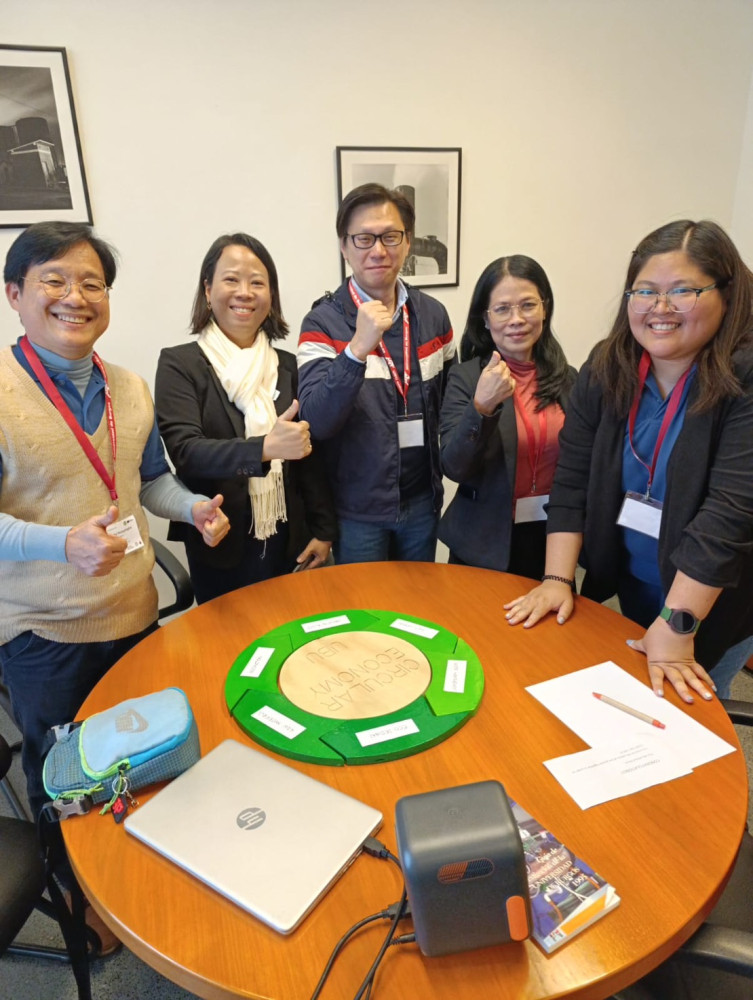
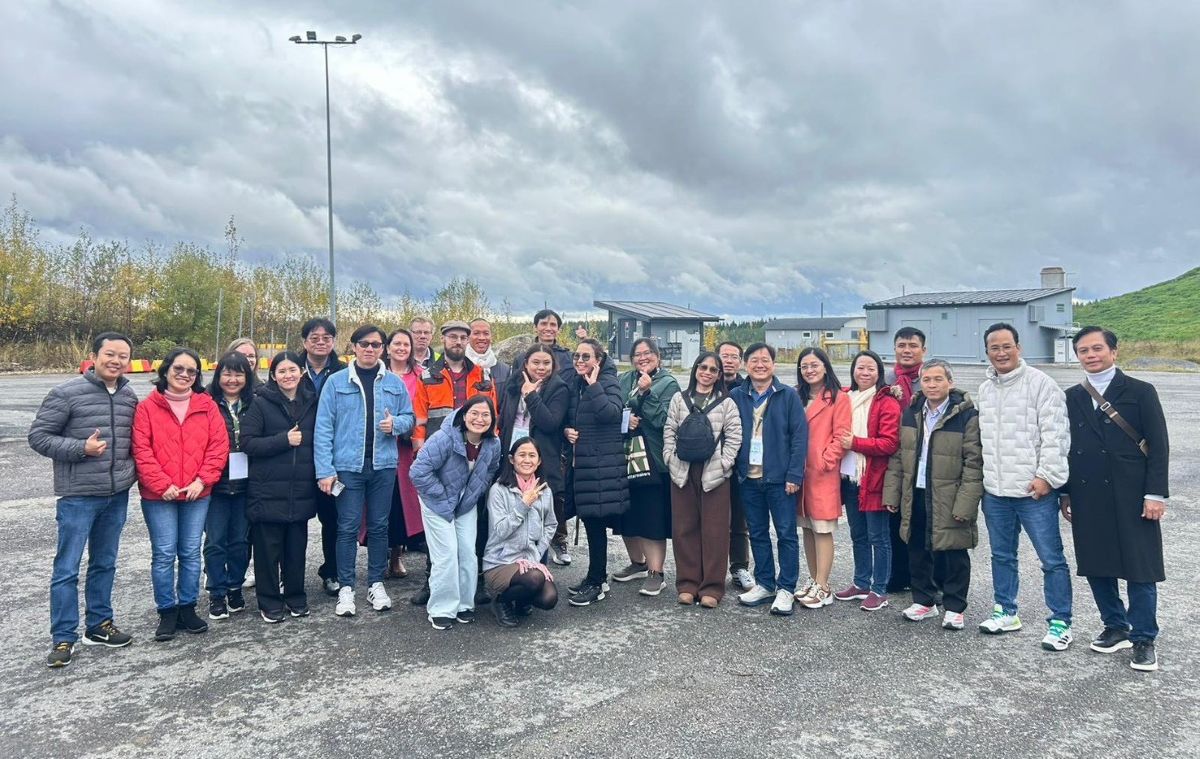
International participants explored applications involving circular economy principles, biochar carbon removal, smart agricultural technology, and agricultural automation. Study visits to relevant facilities, including HAMK’s Mustiala Campus and Forssa Campus, provided opportunities to observe how educational activities connect with applied research and technological development.
These experiences enabled participating institutions to compare teaching approaches and examine how sustainability-related knowledge and technologies can be integrated into higher education.
Collaborative Development of Educational Models and Transferable Practices
An important outcome of the international collaboration was the opportunity for participants to move from reviewing existing approaches toward collaboratively designing learning activities.
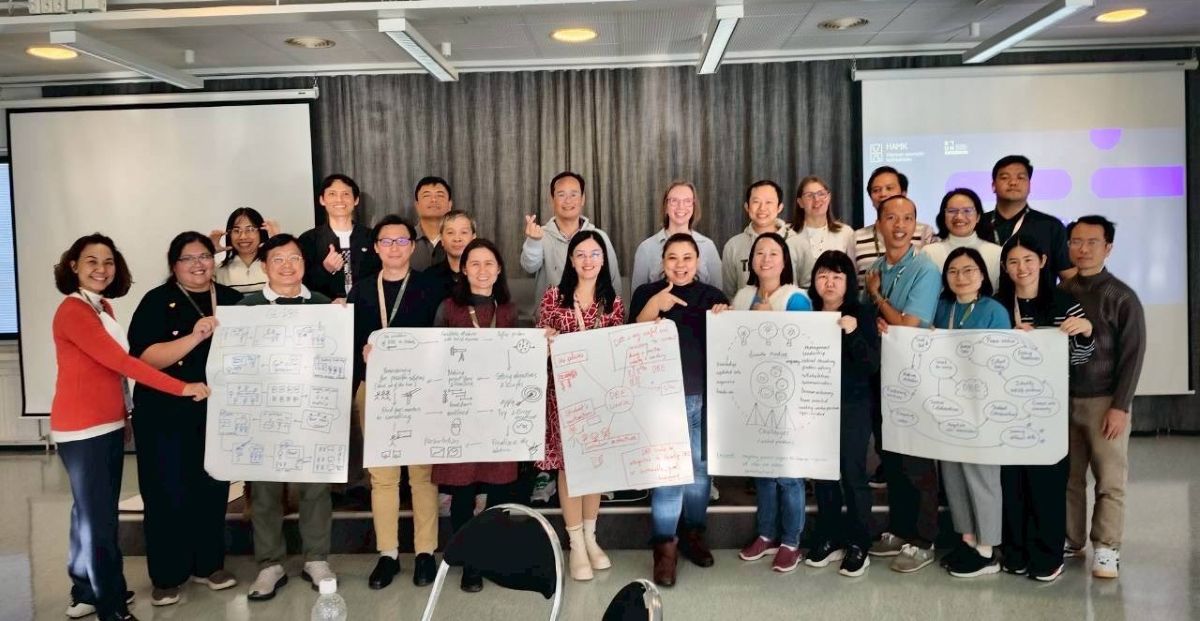
During the Teacher Training Week in Finland, participants applied educational design tools, including the Inno Competence Flower, Empathy Map, and Crazy Eight, in practical workshops.
These tools supported different stages of educational design, from identifying learner needs and required competencies to generating ideas and developing prototype learning activities.
International teams exchanged perspectives on educational challenges, considered the relevance of different teaching approaches, and presented prototype outcomes for discussion and feedback.
The workshops demonstrated a practical process for developing transferable educational practices through international cooperation:
- Review existing approaches: Examine educational models and sustainability-related practices applied by international partner institutions.
- Compare different contexts: Consider differences in teaching methods, institutional environments, learner needs, and technological resources.
- Identify adaptable practices: Determine which approaches may be relevant to participating universities and their local development priorities.
- Develop prototype learning activities: Apply shared educational design methods to create and present potential learning solutions.
- Review and refine approaches: Exchange feedback, summarize lessons learned, and identify priorities for further collaborative development.
This process provides a practical foundation for developing educational practices informed by international experience rather than relying on the adoption of a single institutional model.
The program concluded with a collective review of lessons learned and planning for subsequent GreenEdAsia activities.
Translating International Knowledge into Institutional Development
The international activities in Spain and Finland provided RMUTL with complementary perspectives on sustainable higher education.
The activities in Spain emphasized institutional development, university engagement with industry and society, future competencies, and the application of research and technology to sustainability challenges.
The activities in Finland focused more directly on pedagogical innovation, learner-centered education, interdisciplinary learning, practical teaching tools, and the collaborative design of learning activities.
Together, these approaches provide a basis for considering how sustainability can be integrated into higher education at different levels, including institutional strategies, academic programs, teaching methods, research applications, and engagement with external stakeholders.
For RMUTL, the international collaboration offers opportunities to:
- Review and adapt effective educational practices to support teaching and learning.
- Strengthen faculty competencies in learner-centered and interdisciplinary education.
- Incorporate sustainability-related knowledge and future competencies into educational development.
- Develop learning activities that connect students with practical environmental, industrial, and community challenges.
- Strengthen cooperation with international universities for continued comparative research and educational innovation.
The collaboration also established opportunities for further activities under GreenEdAsia, including a planned workshop on “Collaborative Learning Ecosystem with Industry and Academia” at RMUTL in April 2026.
As this activity was scheduled beyond the reporting period, it represents a planned continuation rather than a completed outcome of the current reporting cycle.
Institutional Contributions to International Best Practice Development
RMUTL’s participation in GreenEdAsia demonstrates a collaborative approach to identifying and developing educational practices through international research, comparative learning, and practical experimentation.
The university’s contributions can be understood through four interconnected dimensions.
International Research and Knowledge Exchange: RMUTL participated in a multinational academic network involving European and Southeast Asian universities, creating opportunities to exchange research-based knowledge and institutional experiences concerning sustainable higher education.
Comparative Review of International Approaches: RMUTL examined different approaches to future competencies, university–industry engagement, sustainable technologies, and innovative teaching methods. The activities provided opportunities to consider their relevance and adaptability across institutional and national contexts.
Collaborative Development of Educational Practices: International workshops enabled participants to apply shared educational design tools, develop prototype learning activities, exchange feedback, and identify potential approaches for further refinement.
Institutional Learning and Future Application: The outcomes provided RMUTL with practical knowledge and a foundation for improving educational approaches, strengthening academic staff competencies, and supporting continued international cooperation in sustainability-oriented education.
These contributions demonstrate RMUTL’s active participation in reviewing international experiences and exploring how effective practices can be adapted to address shared educational and sustainability challenges.
Summary of International Collaboration and Best Practice Development Activities
| Date | International Collaboration and Partners | Comparative Review and Development Focus | Outcomes and Potential Institutional and Societal Benefits |
|---|---|---|---|
| February 17–21, 2025 | GreenEdAsia project launch at HCMUTE, Vietnam, involving six universities from Thailand, Vietnam, Finland, and Spain | Establishing international cooperation, exchanging institutional knowledge, and identifying shared priorities for sustainable higher education | Established a multinational collaboration framework supporting future comparative research, knowledge exchange, and educational innovation |
| May 2–11, 2025 | GreenEdAsia research and capacity-building activities at the University of Burgos, Spain | Reviewing Future Foresight Methods, university–society and university–industry cooperation, bioeconomy, renewable hydrogen technology, and sustainable institutional practices | Expanded understanding of international approaches to future competencies, applied research, and sustainable innovation, providing reference practices for potential adaptation in Thailand |
| October 6–10, 2025 | GreenEdAsia Teacher Training Week at Häme University of Applied Sciences, Finland | Comparing Problem-Based Learning, Transdisciplinary Learning, student-centered methods, Design-Based Learning, circular economy applications, and smart technologies | Strengthened faculty knowledge of innovative pedagogical approaches and international practices relevant to sustainability-oriented teaching |
| October 6–10, 2025 | International collaborative educational design workshops under GreenEdAsia, Finland | Applying the Inno Competence Flower, Empathy Map, and Crazy Eight; developing prototype learning activities; reviewing lessons learned and planning future activities | Produced prototype learning activities, supported international peer learning, and identified approaches for further adaptation and development across partner institutions |
Overall Contributions and Institutional Impact
Through GreenEdAsia, RMUTL participated in an international process of examining, comparing, and developing educational approaches to sustainability challenges.
The collaboration combined comparative study of European institutional and technological practices with international training and prototype development in innovative teaching methods.
Documented activities included the examination of university–industry and university–community cooperation, the review of future-oriented competencies, the exploration of sustainability-related technologies, and the collaborative design of prototype learning activities.
These activities strengthened RMUTL’s access to international knowledge and provided practical experience in examining educational approaches across different national and institutional contexts.
The outcomes contribute to a foundation for future curriculum improvement, faculty development, sustainability-oriented teaching, and continued collaborative research with international partners.
The GreenEdAsia partnership demonstrates how international cooperation can support the review and development of transferable practices, helping higher education institutions respond more effectively to environmental, technological, economic, and social challenges.
Sources
- GreenEdAsia International Project Launch, Vietnam (February 17–21, 2025)
https://sdgs.rmutl.ac.th/17/rmutl-joins-international-greenedasia-collaboration-to-support-sustainability-data-and-the-sdgs/ - International Research and Comparative Study through GreenEdAsia, University of Burgos, Spain (May 2–11, 2025)
https://sdgs.rmutl.ac.th/17/mutl-strengthens-international-collaboration-and-research-to-develop-best-practices-for-the-sdgs-through-greenedasia/ - GreenEdAsia Teacher Training Week, Häme University of Applied Sciences, Finland (October 6–10, 2025)
https://sdgs.rmutl.ac.th/17/rmutl-and-international-partners-exchange-best-practices-for-sustainable-education-through-greenedasia-teacher-training-week/ - RMUTL Official News: GreenEdAsia Teacher Training Week in Finland (Published October 11, 2025)
https://nan.rmutl.ac.th/news/30517-the-rmutl-greenedasia-members-participated-in-the