
Rajamangala University of Technology Lanna (RMUTL) promotes lifelong learning by organizing short-term vocational training, professional development workshops, and practical skills programs that extend educational opportunities beyond formal degree programs. Through its faculties, research institutes, and technology transfer units, the university provides opportunities for external learners, industry professionals, community members, and the general public to access specialized knowledge, technical facilities, and professional expertise.
Between January 2025 and March 2026, RMUTL organized vocational and skills development activities in electric vehicle technology, traditional craftsmanship, ceramic production, and professional Thai culinary arts. These initiatives demonstrate the university’s contribution to workforce development, occupational skills enhancement, traditional knowledge preservation, and continuing education.
The activities were delivered through two complementary approaches: ad-hoc training events designed to address specific technical or learning needs, and structured training programs implemented through planned educational projects or multiple training cohorts.
Together, these approaches provide flexible learning opportunities for individuals seeking to develop new occupational competencies, update existing skills, or explore opportunities for employment, self-employment, and entrepreneurship.
1. Ad-hoc Vocational Training and Professional Skills Development
RMUTL organizes specialized training activities in response to emerging technologies, industry developments, and occupational learning needs. These activities provide opportunities for participants to gain practical knowledge and skills without enrolling in full-time university degree programs.
Electric Vehicle Charging Technology and Professional Upskilling
During February 3–4, 2025, RMUTL, through its Research and Development Institute, organized a training workshop on “DC Charger Technology” at the Modern Automotive Laboratory, Building C4, Doi Saket Campus, Chiang Mai Province.
The workshop was conducted under a research and development project focused on bidirectional electric vehicle charging technology. The activity involved cooperation among RMUTL’s Clean Energy Systems Research Unit, KBM Technology Co., Ltd., and P.G. Intergroup.
Participants included university academic staff, students, and professionals from the electric vehicle industry.
The training addressed emerging technologies in electric vehicle charging, with particular attention to bidirectional charging systems and Vehicle-to-Grid (V2G) applications. Participants gained knowledge of charging technologies that enable electric vehicles to interact with power systems, including the potential use of vehicles as distributed energy resources.
The workshop also introduced approaches to the design and development of bidirectional charging equipment and provided opportunities for knowledge exchange with industry specialists.
For external industry participants, the activity offered professional upskilling opportunities relevant to the development, operation, and future application of electric vehicle technologies.
The training illustrates how RMUTL uses its technical laboratories and research expertise to support continuing professional education in response to technological changes in the energy and automotive sectors.


Training classification: Ad hoc
The workshop was organized as a specialized two-day event under a research and development project. It responded to specific technological and professional development needs rather than forming part of a documented recurring public training schedule.
Traditional Lanna Metal Embossing and Craftsmanship Skills

On August 27, 2025, RMUTL’s Faculty of Arts and Architecture organized a practical workshop on traditional Lanna metal embossing and artistic craftsmanship.
The activity was designed to develop specialized craft skills, promote hands-on learning, and preserve traditional Lanna artistic knowledge.
The training combined presentations by experienced craft specialists with academic perspectives on Lanna decorative patterns and artistic traditions.
Participants learned about the cultural background of traditional metal embossing, the characteristics of Lanna artistic motifs, and the professional knowledge associated with traditional craftsmanship.
The activity emphasized learning from experienced artisans and connecting traditional knowledge with contemporary creative practices.
By organizing this workshop, RMUTL supported the transfer of specialized craft knowledge and provided a practical learning opportunity that could contribute to future artistic production, cultural preservation, and creative occupational development.
The workshop also demonstrated how university expertise in arts and design can support the continuity of local craftsmanship and provide opportunities for skills development beyond formal degree-based education.


Training classification: Ad hoc
The activity was implemented as a dedicated short-term workshop focusing on a specific traditional craft. The available news report does not establish that it was part of a recurring public training schedule.
2. Vocational Training Delivered on a Programmed Basis
RMUTL also provides vocational education through structured programs with defined learning objectives, training periods, practical activities, and intended professional competencies.
These programs demonstrate a more systematic approach to lifelong learning by organizing learning activities within broader educational or workforce development initiatives.

Ceramic Art and Product Development Training for External Learners
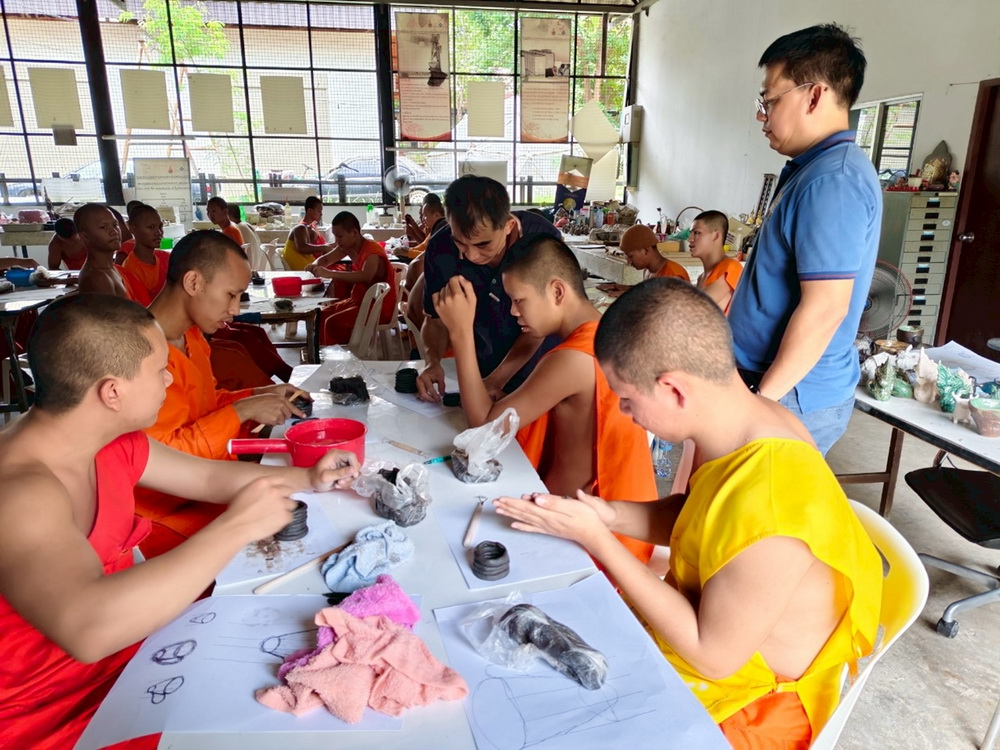
On July 19, 2025, RMUTL’s Community Technology Transfer Institute conducted practical training in ceramic art and Buddhist artistic craftsmanship for 25 novice monks from general education Buddhist schools.
The activity was held at the university’s Ceramic Learning and Technology Transfer Center in Doi Saket District, Chiang Mai Province.
The training formed part of the 2025 Educational Innovation Project for Developing the Potential of Youth in Buddhist Schools, implemented by RMUTL’s College of Integrated Science and Technology during July 5–August 17, 2025.
Under the guidance of university specialists, participants received practical instruction in ceramic product creation and development.
The activity integrated artistic knowledge, ceramic technology, and cultural learning through a hands-on educational approach.
Participants were introduced to practical skills relevant to ceramic craftsmanship and product development, providing opportunities to explore creative and technical competencies that may be useful in future vocational learning.
The program also connected traditional Buddhist artistic knowledge with contemporary technology and product development practices.
By providing access to specialized learning facilities and university instructors, RMUTL expanded practical educational opportunities for learners from outside the university.


Training classification: On a programmed basis
The ceramic workshop was one component of a structured educational development project conducted over a defined period. Its classification reflects its inclusion in a planned program rather than evidence of recurring public enrollment.
Master Thai Chef Program: Structured Culinary Training for the General Public
RMUTL expanded its public vocational education through the “Master Thai Chef Program,” a professional culinary training initiative supported by the Department of Industrial Promotion, Ministry of Industry.
The program aimed to develop professional cooking skills, strengthen workforce capabilities in the food industry, and create occupational opportunities through Thai culinary knowledge.
The training was designed for members of the general public interested in developing culinary competencies and exploring opportunities for employment or entrepreneurship in the food sector.
The program covered more than 50 Thai dishes and combined theoretical instruction with practical culinary training delivered by qualified instructors.
The curriculum emphasized the development of practical cooking abilities that participants could apply to professional food preparation and potential business activities.
The training also incorporated digital learning components, providing participants with additional opportunities to access instructional information through online learning resources.
The fourth training cohort was formally launched at RMUTL on December 8, 2025, with 30 members of the general public from Chiang Mai and nearby areas enrolled in the program.
The fourth cohort was scheduled for December 10–25, 2025, comprising 12 training days.
According to the university’s report, the program had already delivered three training cohorts since September 2025, with more than 210 participants involved before the fourth cohort.
These multiple cohorts provide clear evidence of structured and repeated vocational training opportunities for learners outside the university’s formal degree programs.
Beyond culinary knowledge, the initiative aimed to improve participants’ employability, support the development of new occupations, and strengthen professional skills relevant to Thailand’s food industry.
The program also supported the preservation and economic application of Thai culinary knowledge by connecting traditional food culture with workforce development and professional training.
Training classification: On a programmed basis
The Master Thai Chef Program was delivered through multiple planned training cohorts with a defined curriculum, scheduled training periods, practical instruction, and participation by members of the general public.
3. Supporting Lifelong Learning through University Facilities and Professional Expertise
RMUTL’s vocational training activities demonstrate how university resources can support continuing education for individuals beyond the enrolled student population.
The university provides access to specialized technical and educational environments, including automotive laboratories, ceramic training facilities, and professional teaching and learning spaces.
Its faculty members, researchers, technical specialists, and external professional partners contribute expertise that supports occupational training in emerging technologies as well as traditional industries.
The training activities cover several areas of workforce development:
Emerging Technology Skills: Training in electric vehicle charging and energy technologies supports professionals seeking to update their competencies in response to industry changes.
Traditional Craft and Creative Skills: Workshops in metal embossing and ceramic craftsmanship provide opportunities for developing artistic and production-related skills while preserving regional cultural knowledge.
Food Industry and Entrepreneurship Skills: Structured professional culinary training supports the development of practical cooking competencies relevant to employment, self-employment, and food-related businesses.
Flexible Continuing Education: Short-term workshops and scheduled training cohorts allow participants to access university knowledge without enrolling in a degree program.
These activities reinforce RMUTL’s role as a provider of practical education for the wider public and a contributor to regional workforce and professional skills development.
4. Institutional Contributions to Vocational Training and Lifelong Learning
The university’s activities demonstrate four interconnected contributions to public vocational education.
Access to Non-Degree Education: RMUTL offers practical learning opportunities outside traditional degree programs, enabling external participants to access technical and professional knowledge through short-term training.
Development of Occupational Competencies: Training activities address skills relevant to technology, craftsmanship, food preparation, and potential occupational development.
Flexible Training Delivery: RMUTL implements both one-time specialized workshops and structured programs delivered over defined periods or multiple cohorts, allowing educational activities to respond to different learning needs.
Collaboration with Industry and Development Partners: Cooperation with private companies, professional specialists, and government agencies helps connect training content with technological developments and occupational requirements.
Through these approaches, RMUTL contributes to an inclusive lifelong learning environment that supports the development of practical skills among people from different educational and professional backgrounds.
5. Summary of Vocational Training Activities and Community Benefits
| Date | Vocational Training Activity | Target Participants | Delivery Classification | Training Outputs and Potential Benefits |
|---|---|---|---|---|
| February 3–4, 2025 | DC Charger Technology Workshop, RMUTL Doi Saket Campus | Academic staff, students, and EV industry professionals | Ad hoc | Provided specialized knowledge in bidirectional EV charging and V2G technology, supporting professional upskilling and future applications in the energy and automotive industries |
| July 19, 2025 | Ceramic Art and Buddhist Craftsmanship Training, Ceramic Learning and Technology Transfer Center, Doi Saket | 25 novice monks from Buddhist schools | On a programmed basis | Provided practical ceramic production skills, supported artistic and technical learning, and introduced occupationally relevant craftsmanship competencies |
| August 27, 2025 | Traditional Lanna Metal Embossing Workshop, Faculty of Arts and Architecture | Workshop participants interested in traditional craftsmanship; public enrollment status requires confirmation | Ad hoc | Strengthened craft knowledge, promoted cultural preservation, and supported opportunities for creative skills development |
| September–December 2025 | Master Thai Chef Program, RMUTL Chiang Mai | General public and prospective culinary professionals | On a programmed basis | Delivered structured culinary education covering more than 50 Thai dishes; more than 210 participants in the first three cohorts and 30 enrolled in the fourth cohort, supporting professional cooking skills and potential occupational opportunities |
6. Overall Contributions and Institutional Impact
Between January 2025 and March 2026, RMUTL demonstrated its commitment to lifelong learning through vocational training and professional development activities organized at university facilities.
The university delivered learning opportunities in emerging energy technology, traditional craftsmanship, ceramic production, and professional culinary arts, using both ad-hoc workshops and structured training programs.
The Master Thai Chef Program provides particularly strong evidence of public vocational education through its repeated training cohorts, clearly defined curriculum, scheduled learning periods, and participation by members of the general public.
Other specialized workshops demonstrate the university’s capacity to respond to technological developments and provide practical educational opportunities for external professional and educational groups.
The documented training activities provided access to university expertise, specialist instructors, and practical learning facilities. Their anticipated longer-term benefits include improved occupational competencies, stronger workforce adaptability, greater opportunities for entrepreneurship, and preservation of traditional skills.
Although employment outcomes and income changes have not been established for all activities, the available evidence demonstrates RMUTL’s active provision of non-degree vocational and professional education.
Through these initiatives, RMUTL strengthens its role as a regional center for lifelong learning and workforce development, connecting higher education resources with practical skills needed by individuals, industries, and communities.
Sources
- DC Charger Technology Training for EV Industry Professionals — February 3–4, 2025
https://engineering.rmutl.ac.th/news/27975 - Ceramic Art and Buddhist Craftsmanship Training for Novice Monks — July 19, 2025
https://trpb.rmutl.ac.th/news/29521-2025-07-19 - Traditional Lanna Metal Embossing Workshop for Lifelong Learning — August 27, 2025
https://arts.rmutl.ac.th/news/29986 - Master Thai Chef Program: Professional Culinary Training for the General Public — December 2025
https://www.rmutl.ac.th/news/31073-8-12-2568