Food security is an important concern at Rajamangala University of Technology Lanna (RMUTL), as access to sufficient, affordable, and nutritious food is essential for students’ well-being and sustainable development. In 2025, the university promoted food security and sustainability through three key activities: “Rajamangala United in Planting Rice for the Land,” which applied the King’s Philosophy through rice cultivation; Father’s Day Rice Harvesting at RMUTL Lampang, which aimed to preserve the purity of the “Thanyasirin” rice variety; and “Na Pan Suk,” which encouraged sustainable rice production and consumption. Together, these activities supported agricultural conservation, promoted sustainable food systems, and contributed to long-term food security within the university community.
“Rajamangala United in Planting Rice for the Land”
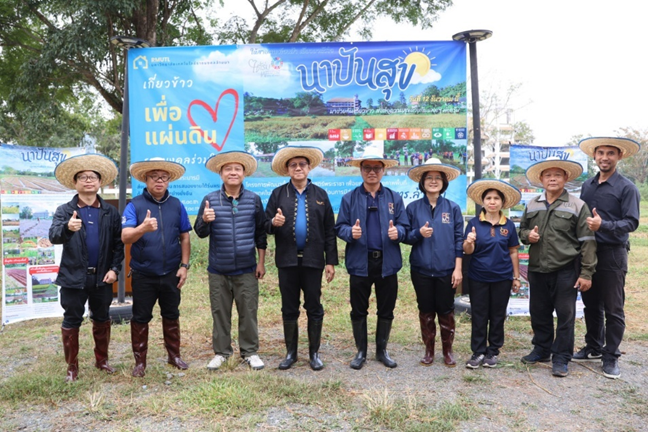
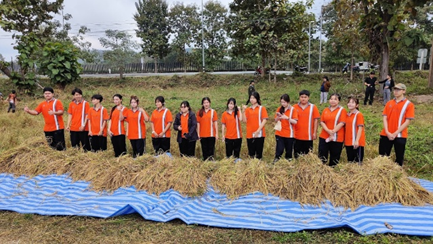
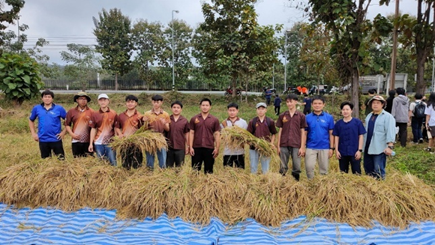
On 12 December 2025, the Under the Royal Patronage Planning Group of Rajamangala University of Technology Lanna (RMUTL) joined in the rice harvest as part of the activity “Rajamangala United in Planting Rice for the Land,” which aims to carry forward the King’s Philosophy. The rice had been planted on 26 August 2025 at the Sufficiency Economy Learning Centre, Institute of Technology Transfer to Communities, Rajamangala University of Technology Lanna, Doi Saket, Chiang Mai Province. The event was presided over by Lecturer Warit Jittham, Assistant to the President.
The university established two rai of safe rice cultivation plots, comprising a glutinous rice plot covering one ngan, with an estimated yield of 100–120 kilograms of unmilled rice, and a Hom Surin fragrant non-glutinous rice plot covering one rai and three ngan, cultivated in collaboration with local farmers, which yielded 680 kilograms of unmilled rice.
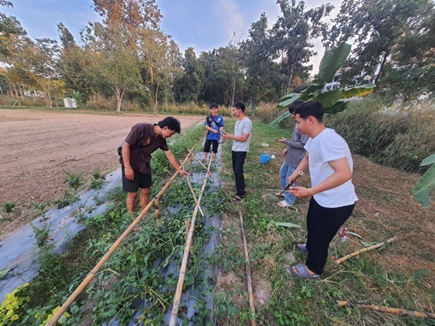
In addition, the university established demonstration plots for alternative crops grown using organic farming practices. These included two plots of Tiger Stripe beans (ถั่วลายเสือ), which yielded a total of 18 kilograms during the rainy season; two plots of yellow cherry tomatoes, which yielded 22 kilograms in total during the rainy season; and two plots of eggplant, which produced 10 kilograms.
The harvested rice will be milled, and the resulting rice products will be donated to temples and various foundations to share happiness and abundance while strengthening Thai society in a sustainable manner.
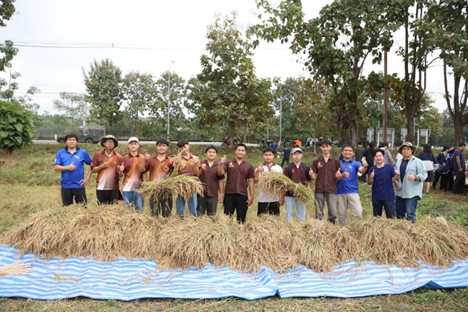
Father’s Day Rice Harvesting at RMUTL Lampang,
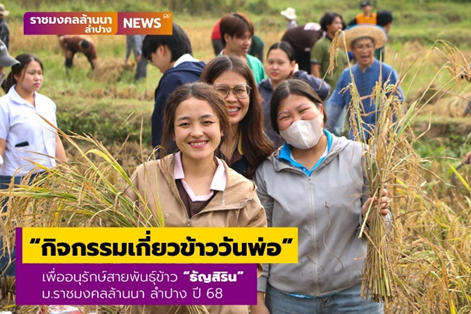
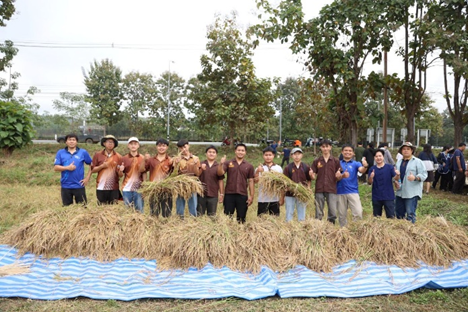
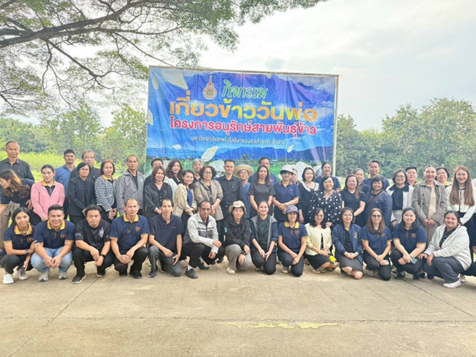
On 11 December 2025, at the Sufficiency Economy Demonstration Rice Field, Assistant Professor Jaroon Sintaweeworakul, Director of the Division of Education, presided over the opening ceremony of the “Father’s Day Rice Harvesting” activity under the Rice Variety Conservation Project at Rajamangala University of Technology Lanna, Lampang (RMUTL Lampang). The activity brought together lecturers, university staff, and students to participate in the rice harvest.
The activity integrates practical learning into the university’s teaching and learning process by providing students and staff with hands-on experience in rice production. The harvested rice will be divided, with a portion of the seeds preserved for conservation purposes and used in student education and training.
The rice variety conserved by RMUTL Lampang is Thanyasirin glutinous rice, which was graciously named by Her Royal Highness Princess Maha Chakri Sirindhorn. It was originally developed from the RD6 rice variety. Rajamangala University of Technology Lanna began improving and developing this rice strain in 2002, completing the breeding process in approximately four years.
Thanyasirin glutinous rice offers several advantages, including strong tillering ability, sturdy stems that are less prone to lodging, an average plant height of approximately 130 centimetres, and a high yield of 1,500–1,600 kilograms per rai. It is also suitable for mechanical harvesting, helping to reduce crop lodging, and has good cooking quality.
Thanyasirin glutinous rice has been developed into two varieties: a short-stem variety and a tall-stem variety. The short-stem variety is suitable for fertile soils and lowland rice fields. The tall-stem variety has similar quality characteristics to the short-stem variety and is more resistant to lodging than the original RD6 variety, although lodging remains a potential concern. It is therefore more suitable for less fertile soils and upland rice fields.
“Na Pan Suk Project”
The Under the Royal Patronage Planning Group of Rajamangala University of Technology Lanna (RMUTL) implemented the “Development of Learning Areas on the King’s Philosophy” project in Fiscal Year 2025. The project aimed to develop agricultural learning areas based on the King’s Philosophy and the Sufficiency Economy Philosophy, while promoting sustainable agriculture, technology and innovation, and university–community participation.
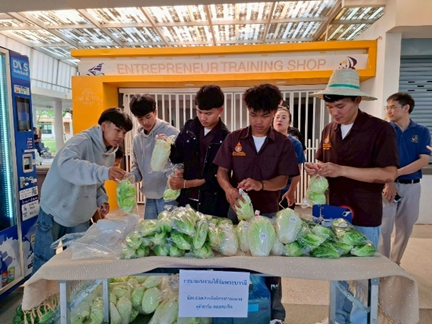
The Khok Nong Na RMUTL Learning Area in Doi Saket was developed as a learning center featuring an off-season rice field, agricultural and post-rice crop plots, and a laying-hen learning station. The area provides learning and vocational opportunities for students, staff, and surrounding communities, particularly students supported by the Equitable Education Fund (EEF), while providing agricultural produce to help reduce students’ food expenses.
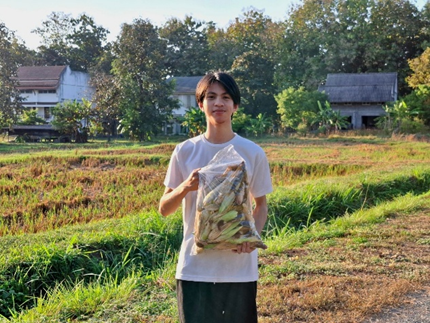
Key activities included restoring agricultural land, growing rice and post-rice crops, cultivating vegetables, and raising laying hens. Produce was shared with local farmers and communities, used for food preparation, and sold at affordable prices to university staff, providing students with additional income.
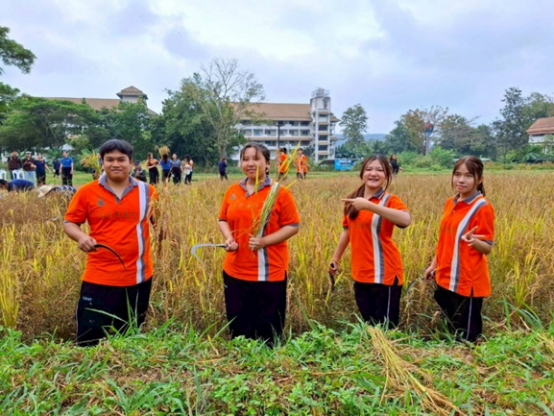
On 12 December 2025, RMUTL organized the “Na Pan Suk” (Sharing Rice for Happiness) activity, bringing together faculty, staff, and students for communal rice harvesting. The organic rice produced was shared with disadvantaged and low-income individuals and used to provide food for students and university staff, while some was retained as seed for future cultivation.